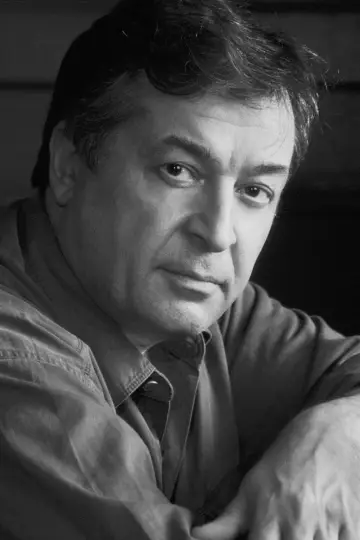
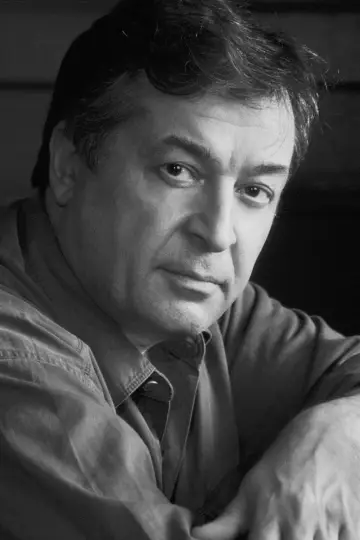
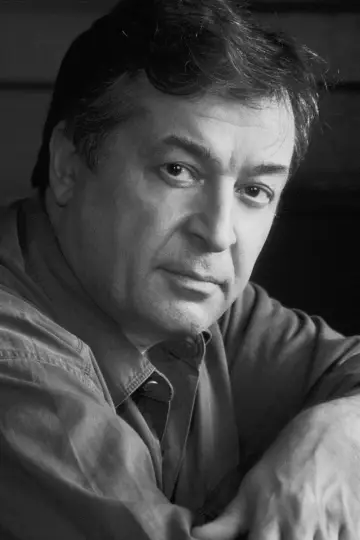
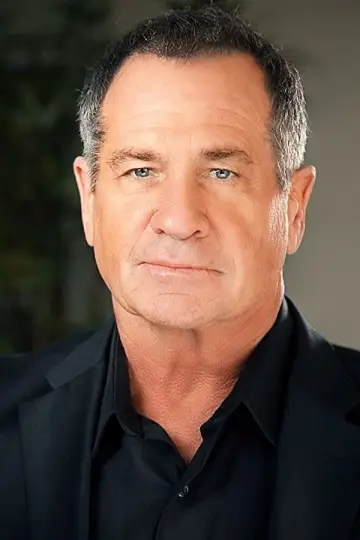
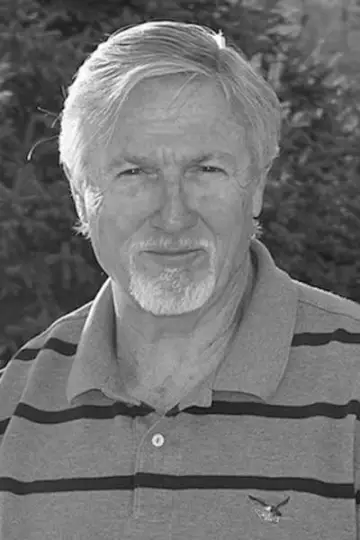
Gettysburg - crew, film crew

The entire team, the film crew of the film "Gettysburg"
Gettysburg (1993)
Timing: 4:14 (254 min)
Gettysburg - TMDB rating
6.888/10
282
Gettysburg - Kinopoisk rating
7.361/10
1620
Gettysburg - IMDB rating
7.6/10
33000

Film crew

Director

Producer

Robert Katz
Producer
Moctesuma Esparza
Producer

Executive Producer

Mace Neufeld
Executive Producer
Robert Rehme
Executive Producer

Casting

Joy Todd
Casting

Editor

Corky Ehlers
Editor

Additional Second Assistant Director

Chemen A. Ochoa
Additional Second Assistant Director

Art Direction

Michael J. Sullivan
Art Direction

Costume Design

Michael T. Boyd
Costume Design

Production Design

Cary White
Production Design

Stunt Coordinator
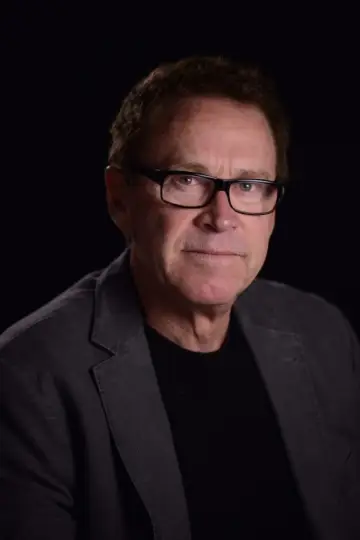
Photo Steve Boyum #70672

Steve Boyum

Steve Boyum
Stunt Coordinator

Second Unit Director

Photo Steve Boyum #70672

Steve Boyum

Steve Boyum
Second Unit Director

Set Decoration

Barbara Haberecht
Set Decoration

Makeup Artist

Adam Brandy
Makeup Artist

Key Makeup Artist

Michael Spatola
Key Makeup Artist

Sound Re-Recording Mixer

Gerry Lentz
Sound Re-Recording Mixer
J. Stanley Johnston
Sound Re-Recording Mixer

Original Music Composer
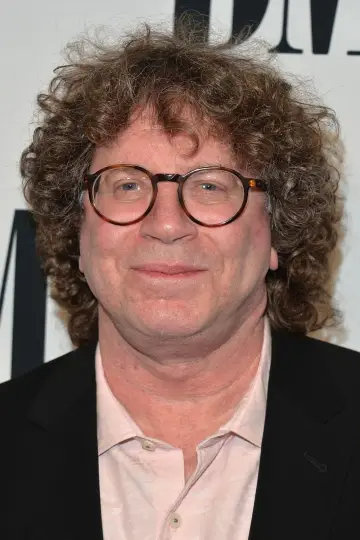
Photo Randy Edelman #20032

Randy Edelman

Randy Edelman
Original Music Composer

Unit Production Manager

Graham Ford
Unit Production Manager

Co-Producer

Nick Lombardo
Co-Producer

Second Assistant Director

Karen Collins
Second Assistant Director
Jay Smith
Second Assistant Director

Utility Stunts
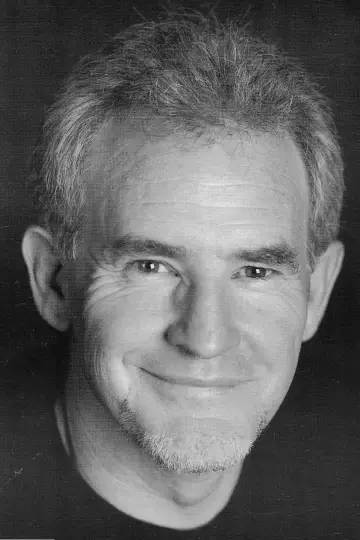
Photo Mic Rodgers #12353

Mic Rodgers

Mic Rodgers
Utility Stunts
Photo Gary McLarty #27776

Gary McLarty

Gary McLarty
Utility Stunts

Bob Brown

Bob Brown
Utility Stunts
Tom Elliott
Utility Stunts
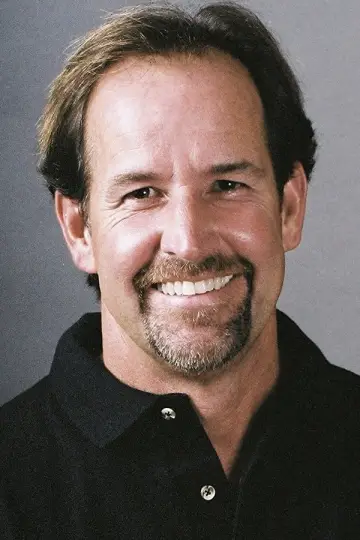
Director of Photography

Kees Van Oostrum
Director of Photography

Costume Supervisor

Stanley Moore
Costume Supervisor

Script Supervisor

Dawn C. Dreiling
Script Supervisor

Hairstylist

Hala Iqual
Hairstylist
Katherine Rees
Hairstylist

Special Effects Coordinator

Matt Vogel
Special Effects Coordinator

Sound Mixer

Stephen Halbert
Sound Mixer
Dennis S. Sands
Sound Mixer
Elton Ahi
Sound Mixer

First Assistant Director

Skip Cosper
First Assistant Director

Boom Operator

Peter Halbert
Boom Operator

Screenplay

Novel

Michael Shaara
Novel

Art Department Coordinator

John Lindsey McCormick
Art Department Coordinator

Key Grip

Tim Pershing
Key Grip

Key Hair Stylist

Gunnar Swanson
Key Hair Stylist

Music Supervisor

David Franco
Music Supervisor

Makeup Supervisor
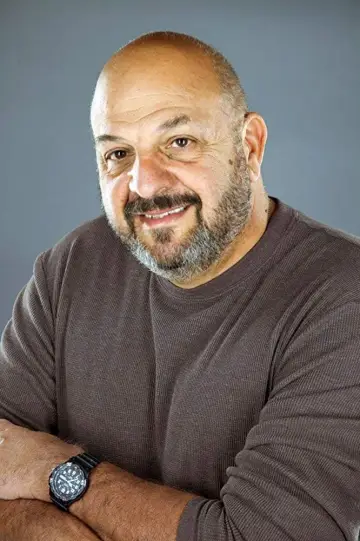
Photo Allan A. Apone #15513
Allan A. Apone
Makeup Supervisor

Gaffer

Curtis Bradford
Gaffer

Second Unit Director of Photography

Eduard van der Enden
Second Unit Director of Photography

"B" Camera Operator

Jonathan Herron
"B" Camera Operator

First Assistant Camera

David A. Harp
First Assistant Camera

Camera Loader

Thomas Greco
Camera Loader
Maria Varni
Camera Loader

Second Assistant Camera

Onofrio Nino Pansini
Second Assistant Camera

Unit Manager

Cal Naylor
Unit Manager

Executive In Charge Of Production

James Wilberger
Executive In Charge Of Production

What's left behind the scenes

  • The film is based on Michael Shaara's novel "The Angels of the Battlefield".
  • The film was made to commemorate the 130th anniversary of the battle.
  • One of the costumes used during the filming of the movie was later used in the prequel film "Gods and Generals" by the well-known American media mogul Ted Turner.
  • Sam Elliott was the only actor who wore the old, faded uniform. After receiving a brand new uniform, he turned to costume designer Luster Bayless for advice on how to best age it, and then meticulously followed the instructions in his motel room.
  • During the film’s premiere in Atlanta, Martin Sheen (who played General Robert E. Lee, 1807-1870) was extremely irritated by someone in the audience sitting directly behind him who constantly made comments about the film’s characters. When the lights came up during an intermission, the actor turned to the back row to express his frustration and discovered that sitting behind him was none other than former US President Jimmy Carter.
  • During filming, only some of the explosions were truly loud, as the filmmakers feared the explosions might frighten the numerous horses on set, and they might get spooked and throw their riders. A significant portion of the sound for the explosion scenes was added during post-production.
  • The project was initially conceived as a miniseries for the “TNT,” or “Turner Network Television” channel. Once, while reviewing the footage shot that day, the founder of “TNT,” Ted Turner, realized that this could become a great project – on the level of “Lawrence of Arabia” (David Lean, 1962) and “Gone with the Wind” (Victor Fleming, George Cukor and Sam Wood, 1939). Turner came up with the idea of first releasing the film in theaters to build popularity before its broadcast on “TNT,” and releasing it on video cassettes. The most serious objection to his idea was that the film was too long, and even with ruthless editing, it would be difficult to make it less than 5 hours long.
  • News of the death of actor Richard Jordan reached the filmmakers at the moment they were editing the scene of his character's death (Brigadier General Lewis Armistead, 1817-1863).
  • The role of General Lee, played by Martin Sheen, was originally intended for William Hurt, but he left the project due to the financial difficulties of the film studio working on it at the time (the studio went bankrupt altogether). The role was offered to Tommy Lee Jones, but he was busy with other projects. Robert Duvall was the next candidate. He prepared for the role and offered his candidacy to the filmmakers himself, but at the very last moment they preferred to see Martin Sheen in the role.
  • At the very beginning of work on the project, Tom Berenger (who played General James Longstreet, 1821-1904) gifted each member of the film’s cast who played a Confederate officer with a saber engraved with the names of that officer and General Longstreet on the blade. Berenger paid for this gift to the actors out of his own pocket.
  • Almost all of the extras in the film were participants in historical reenactments. They owned the army uniforms, weaponry, clothing items, tents, and telescopes of the appropriate era, which were used as props. During filming, they also acted as consultants on a wide range of issues and aspects of the corresponding historical period.
  • After filming ended, by agreement with the historical reenactors involved in the film, “Turner Pictures” donated $100,000 to the preservation of Civil War battlefields.
  • Approximately $40,000 was spent on building a model of the Lutheran Theological Seminary building. The authentic building itself was shown in only one shot, filmed from a carefully chosen angle. This building can be seen in a night scene before the battle, when Sam Elliott's character writes a dispatch to General Reynolds (1816-1876), played by John Rothenberg.
  • Director Ron Maxwell instructed James Lancaster (who played a British Army officer) to wear a bright red uniform and carry a cup of tea. In reality, a British Army officer's uniform should have been dark blue, similar to the uniforms of Union Army officers. Furthermore, the character played by Lancaster did not wear a uniform at all while in America, but rather civilian clothes.
  • George Lazenby (who played General James Pettigrew, 1828-1863) insisted on growing a real beard, like his historical counterpart. Scenes with Pettigrew were not started until the actor's beard had grown in.
  • To prepare for the role of Colonel Joshua Chamberlain, actor Jeff Daniels deliberately stayed awake and refused to eat.
  • Work on the film took almost 15 years – from the first ideas and script drafts to the final editing and post-production.
  • The hat that Tom Berenger wore during filming as General Longstreet was a source of constant contention. Consultants disliked it because it wasn't authentic, while cinematographers argued that it obscured the actor's face. During close-ups, Berenger was sometimes persuaded to do without the hat. The actor's fondness for this particular headwear remained a mystery to everyone.
  • The stone wall that the military used as cover was built by the extras (historical reenactors) literally a couple of minutes before the start of filming.
Did you like the film?

© ACMODASI, 2010-2026

All rights reserved.
The materials (trademarks, videos, images and text) contained on this site are the property of their respective owners. It is forbidden to use any materials from this site without prior agreement with their owner.
When copying text and graphic materials (videos, images, text, screenshots of pages) from this site, an active link to the site www.acmodasi.in must necessarily accompany such material.
We are not responsible for any information posted on this site by third parties.