The Thing - crew, film crew

The entire team, the film crew of the film "The Thing"
The Thing (1982)
Timing: 1:49 (109 min)
The Thing - TMDB rating
8.1/10
7823
The Thing - Kinopoisk rating
7.939/10
169343
The Thing - IMDB rating
8.2/10
522000

Film crew

Director

Producer

Executive Producer

Wilbur Stark
Executive Producer

Casting

Anita Dann
Casting

Editor

Todd C. Ramsay
Editor

Art Direction

Henry Larrecq
Art Direction

Stunts

Denver Mattson
Stunts
Eric Mansker
Stunts
Melvin Jones
Stunts
Ken Strain
Stunts
Jerry Wills
Stunts
Kent Hays
Stunts
Anthony Cecere
Stunts
Clint Rowe
Stunts

Production Design
Photo John J. Lloyd #72675
John J. Lloyd
Production Design

Stunt Coordinator
Photo Dick Warlock #46826

Dick Warlock

Dick Warlock
Stunt Coordinator

Set Decoration

John M. Dwyer
Set Decoration
Graeme Murray
Set Decoration

Makeup Artist

Ken Chase
Makeup Artist
Phyllis Newman
Makeup Artist

Sound Re-Recording Mixer

Steve Maslow
Sound Re-Recording Mixer

Original Music Composer
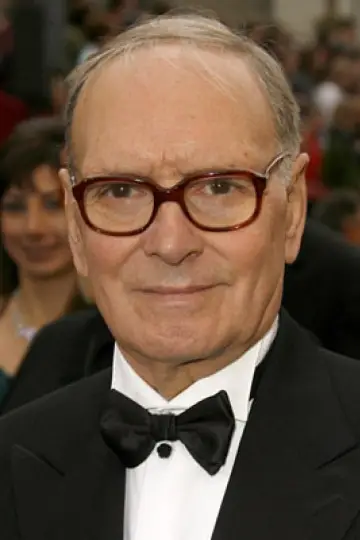
Photo Ennio Morricone #67343

Ennio Morricone

Ennio Morricone
Original Music Composer
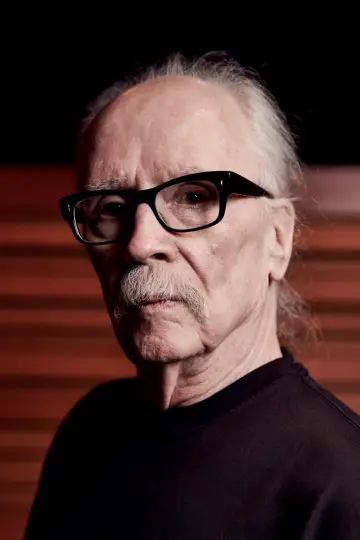
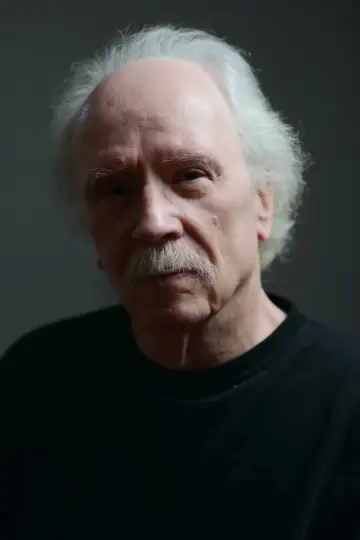
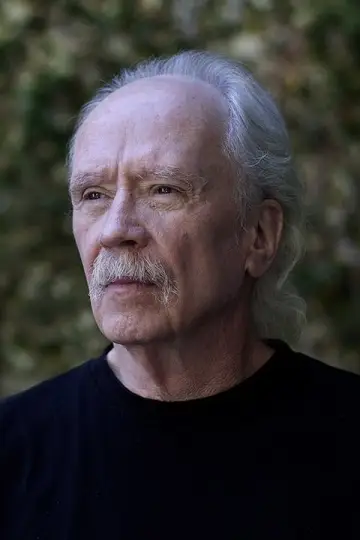
Photo John Carpenter #72262Photo John Carpenter #72263Photo John Carpenter #72264Photo John Carpenter #72265

John Carpenter

John Carpenter
Original Music Composer
Photo Alan Howarth #71767
Alan Howarth
Original Music Composer

Unit Production Manager

Fitch Cady
Unit Production Manager

Co-Producer

Stuart Cohen
Co-Producer

Associate Producer
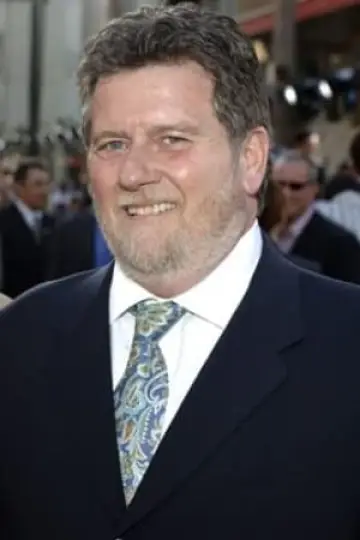
Photo Larry J. Franco #70165
Larry J. Franco
Associate Producer

Second Assistant Director

Jeffrey Chernov
Second Assistant Director
Michael Steele
Second Assistant Director

Director of Photography
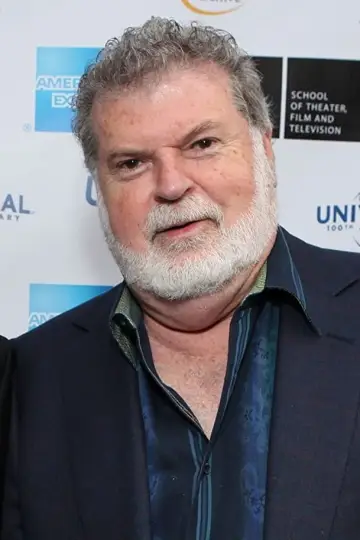
Photo Dean Cundey #14063

Dean Cundey

Dean Cundey
Director of Photography

Pilot

Ken Strain
Pilot
Nate Irwin
Pilot
Lawrence Perry
Pilot

Camera Operator

Raymond Stella
Camera Operator
Cyrus Block
Camera Operator

Costume Supervisor

Trish Keating
Costume Supervisor
Ronald I. Caplan
Costume Supervisor
Gilbert Loe
Costume Supervisor

Sound Effects Editor

Warren Hamilton Jr.
Sound Effects Editor

Property Master

John Zemansky
Property Master

Supervising Sound Editor

Colin C. Mouat
Supervising Sound Editor
David Lewis Yewdall
Supervising Sound Editor

Script Supervisor

Candy Artmont
Script Supervisor
Christine Wilson
Script Supervisor

Still Photographer

Chris Helcermanas-Benge
Still Photographer

First Assistant Director

Photo Larry J. Franco #70165
Larry J. Franco
First Assistant Director

Driver

George Lawson
Driver

Production Manager
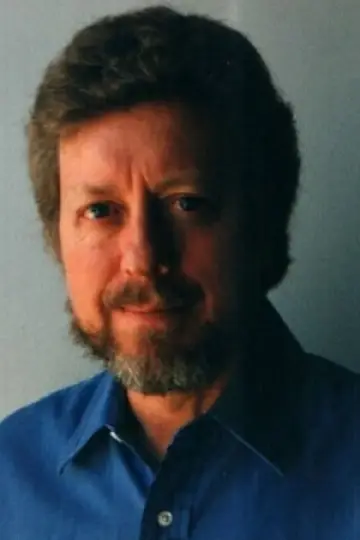
Photo Robert Latham Brown #72180
Robert Latham Brown
Production Manager

Screenplay
Photo Bill Lancaster #72677
Bill Lancaster
Screenplay

Novel

John W. Campbell Jr.
Novel

Best Boy Grip

James L. Hurford
Best Boy Grip

Key Grip

Dillard Brinson
Key Grip
Ronald Woodward
Key Grip

Grip

Ray Kinzer
Grip

Dolly Grip

Dave Gordon
Dolly Grip
Kris Krosskove
Dolly Grip

Assistant Property Master

Michael R. Gannon
Assistant Property Master

Leadman

Barton M. Susman
Leadman

Painter

James Callan
Painter

Special Effects

Roy Arbogast
Special Effects
Lee Routly
Special Effects
Michael A. Clifford
Special Effects

Foley Supervisor

John K. Adams
Foley Supervisor

Gaffer

Thomas Marshall
Gaffer
Mark Walthour
Gaffer
David R. Anderson
Gaffer
Thomas Marshall
Gaffer

Music Editor

Cliff Kohlweck
Music Editor

First Assistant Camera

Clyde E. Bryan
First Assistant Camera
Paul R. Prince
First Assistant Camera

Special Effects Assistant

John K. Stirber
Special Effects Assistant
Hans Metz
Special Effects Assistant

Production Assistant

Ron MacInnes
Production Assistant
Debbie Kennard
Production Assistant

Production Secretary

Debbie Collier
Production Secretary
Karen Kalton
Production Secretary

Visual Effects

Albert Whitlock
Visual Effects
Henry Schoessler
Visual Effects

Best Boy Electric

Charles E. Nippell
Best Boy Electric
Len Wolfe
Best Boy Electric

Generator Operator

Barrett J. Reid
Generator Operator

Second Assistant Camera

David Geddes
Second Assistant Camera
Steve Tate
Second Assistant Camera
Douglas Pruss
Second Assistant Camera

Assistant Sound Editor

Ernesto Mas
Assistant Sound Editor

Transportation Captain

Bob Cornell
Transportation Captain
Dan Anglin
Transportation Captain
Alois Stranan
Transportation Captain

Swing

Richard A. Gonzales
Swing
Joseph R. Savko
Swing
Milton Wilson
Swing

Sound Editor

Kendrick P. Sweet
Sound Editor

Craft Service

Rocky Corsini
Craft Service
Yervant Babasin
Craft Service
Spencer Hyde
Craft Service

Makeup Effects

Ken Diaz
Makeup Effects
Photo Rob Bottin #14547

Rob Bottin

Rob Bottin
Makeup Effects

Art Designer

Drew Struzan
Art Designer

Makeup Effects Designer

Photo Rob Bottin #14547

Rob Bottin

Rob Bottin
Makeup Effects Designer

Production Illustrator

Mentor Huebner
Production Illustrator
Gary Meyer
Production Illustrator
Michael Ploog
Production Illustrator

Technical Advisor

Robin Mounsey
Technical Advisor

What's left behind the scenes

  • In Soviet pirate video parlors, the film was shown under the title "The Creature".
  • Initially, the film was banned from screening in Finnish cinemas.
  • In the original 1951 film, the action took place at the North Pole. In John Carpenter's film, the action takes place at the South Pole.
  • Donald Pleasence was originally supposed to play Blair, but he was unable to participate in the filming due to commitments to other projects.
  • The film has no female characters. Female presence in the film is limited to the voice of the MacReady computer and a video recording of a television program watched by Palmer. According to John Carpenter, there was only one woman on the film crew. Shortly before filming began, she became pregnant and soon left the project. She was replaced by a man.
  • 'The Thing' is the first film in John Carpenter's so-called 'Apocalypse Trilogy.' The other two films are 'Prince of Darkness' (1987) and 'In the Mouth of Madness' (1994).
  • The opening credits exactly replicate the original credits of Howard Hawks' film.
  • This film was the first in John Carpenter's career for which he did not write the music. Jerry Goldsmith was originally supposed to be the composer, but he dropped out of the project. Ennio Morricone replaced him and wrote music similar to Carpenter's work.
  • The female computer voice belongs to Adrienne Barbeau, John Carpenter's wife at the time of filming.
  • According to the director's initial idea, MacReady was supposed to be a former military pilot who served in Vietnam.
  • Most of the special effects work in the scene inside the dog kennel was done by Stan Winston and his team, as Rob Bottin was hospitalized due to exhaustion.
  • The sound of the Antarctic wind was recorded in the desert near Palm Springs.
  • At the time of making 'The Thing', makeup artist Rob Bottin was only 22 years old.
  • Almost all location shooting took place in British Columbia (Canada), where special sets were built.
  • Filming took over nine months; according to Carpenter, it was the most laborious project of his career.
  • Two shocking episodes were filmed for the scene in the Norwegian camp. In the first, a corpse fell out of a closet, and in the second, the heroes stumble upon a body nailed to a door with a harpoon. Both episodes were ultimately cut.
  • Carpenter was a big fan of the original story, which he first read in school, and during filming he tried to adhere to the literary source, rather than the 1951 film, which leaned more towards an alien version of Frankenstein.
  • Despite the fact that television producer Stuart Cohen, who bought the rights to adapt the story, tried to convince the bosses at Universal to hire Carpenter as director, it was initially planned that Tobe Hooper would direct the film, but Cohen disliked his script options. The project languished within Universal from 1975 to 1979 until 'Alien' was released and became a hit. It became clear that audiences were interested in such stories, and 'The Thing' was finally given the 'green light'.
  • While Carpenter was filming 'Escape from New York', screenwriter Bill Lancaster was hard at work on the script for 'The Thing'.
  • According to screenwriter Bill Lancaster, he didn't particularly like the story. He changed a lot in it: the number of characters, the plot's premise, and, of course, the ending, which became much darker compared to the literary source material.
  • When reworking the concept of the alien, Carpenter focused on a creature that didn't resemble a human at all. To solve this problem, the producers invited legendary illustrator Dale Kupers. He created models and sketches of 'The Thing,' but soon became seriously ill, and the filmmakers had to find a replacement for him. Rob Bottin was eventually chosen, and he altered the initial ideas, ultimately creating one of the most unusual and terrifying monsters in world cinema.
  • Some dialogues and individual scenes with the infected dog were cut from the film, but were eventually included in the television version.
  • Many actors caught colds frequently during filming. This was due to the fact that the temperature in the pavilion where the filming took place was deliberately lowered so that real steam would come from the actors' mouths. The problem was that the pavilions were located in Los Angeles, where the temperature outside was at least forty degrees Celsius. As a result, the actors constantly felt the temperature difference.
  • The film's premiere almost coincided with the release of Steven Spielberg's 'E.T. the Extra-Terrestrial.' Audiences preferred to see the alien as a friend, not a deadly enemy, and as a result, 'The Thing's' box office receipts were disappointing.
  • The first draft of the screenplay was completed in the second half of 1980. The script subsequently underwent a number of minor changes: the character Sanchez's name was changed to Simmons, and then to Windows – in the final version. The characters' ages were also changed: MacReady from 32 to 35, and Palmer from 27 to 35. Ultimately, the final version of the script, dated July 28, 1981, was approved for production.
  • Work on the film's special effects began in April 1981, lasted 57 weeks, and was completed at the end of May 1982.
  • All episodes involving actors interacting with 'the thing' were filmed on the studio lot. When the main unit finished filming in October 1981, work on the special effects continued for another six weeks in a specialized department at Universal-Hartland Studios. During this period, Bottin led a team of 40 designers, artists, sculptors, and camera operators who 'brought the thing to life'.
  • Although the envisioned special effects for the 'thing' creatures were very ambitious for their time, simple technologies were used to create them. Clay sculptures were made for the creature models, molds were made from expanded latex, to which the necessary details were attached and animatronic mechanisms were installed. In his work on the film's special effects, Rob Bottin used all the technologies and materials available to him at the time: animatronics (hydraulics, pneumatics, radio control), reverse playback techniques, and so on. He used materials such as gelatin, urethane, acrylic, rubber, foam latex, and KY Jelly lubricant (which was used to create the alien's saliva in the film of the same name). Bottin also used unconventional materials for special effects: heated and melted chewing gum, strawberry jam, mayonnaise, and food fillers.
  • Initially, $750,000 was allocated for special effects from the film's total budget, but the amount ultimately had to be increased to $1.5 million.
  • The first part of the scene with the dog-“thing” was done by Rob Bottin himself. In this scene, he used reverse motion technique, which was used to create the tentacles wrapping around the dead dog – the tentacles retracted inwards, releasing the dog’s carcass. The second part of the scene was created with the support of Stan Winston’s team. The puppet had radio-controlled eyes, and cables allowed control of the legs and nose movements, creating the appearance of a snarling dog. Winston refused to have his name mentioned in the film’s credits, noting that all credit for the special effects belonged to Rob Bottin. However, Winston was still thanked, being mentioned in the final credits of the film.
  • The design of the title inscription in the opening credits was borrowed from the original film. The letters of the title were drawn on transparent film used in animation. Behind it was an aquarium filled with smoke. A frame with stretched black plastic bags was placed between the inscription and the aquarium. Behind the entire structure was a lamp – a source of light rays passing through the letters. The plastic bag was set on fire, and using this method, the “burning out” letters of the film title were filmed: “The Thing”.
  • The film is based on the novella by John W. Campbell Jr. “Who Goes There?”. John Carpenter’s version is a much more faithful adaptation of the original work than “The Thing” (1951). For example, the 1951 version featured female characters that are not present in the book or Carpenter’s film. Also, the use of a hot needle to test the blood of the characters was taken from the original novella, which was not present in the 1951 film.
  • At the beginning of the film, a Norwegian with a rifle says: “Se til helvete og kom dere vekk. Det er ikke en bikkje, det er en slags ting! Det imiterer en bikkje, det er ikke virkelig! KOM DERE VEKK IDIOTER!!” which translates to: “Get the hell out of here. It’s not a dog, it’s some kind of thing! It’s just imitating a dog! Get out of here, you idiots!!”.
  • The Norwegian camp’s set decorations were provided by the American camp’s set decorations: it was much cheaper to rework the burnt and destroyed decorations from the end of the film than to build new ones.
  • The flower made of flesh that attacks Childs has 12 petals shaped like dog tongues, complemented by rows of dog teeth. Special effects creator Rob Bottin nicknamed it the "rabid cabbage".
  • In the scene where Norris’s (Charles Hallahan) head is separated from his body, Rob Bottin used flammable materials to construct the head and neck model. During filming, at the director’s insistence, more fire was added, which caused the entire room to catch fire. No one was injured, however, the complex model that Rob had spent several months building was completely destroyed.
  • According to John Carpenter and Kurt Russell, they still don't know which characters and when were replaced by the alien.
  • Kurt Russell nearly got seriously hurt in the scene where his character throws a hatchet with dynamite. He didn't know how powerful the explosion would be, so his reaction to the blast is genuine.
  • In the scene where the film’s heroes fly to the Norwegian camp by helicopter, you can notice that at one point the helicopter begins to sway from side to side. At that moment, the pilot handed control to Kurt Russell.
  • The film had three alternative endings shot. The first was the ending shown in the theatrical release – Childs and MacReady await the outcome near the burning base. The second ending was filmed in case the ending from the release version was negatively received during test screenings – MacReady successfully passes a blood test showing he was not infected, however, this ending did not reveal whether Childs was infected (this version was never shown in any supplemental materials). The third ending was an addition to the release version ending – the viewer is shown the morning after: an obviously infected Alaskan Malamute runs through the snow away from the burned base (the base itself is not shown, only three thick plumes of smoke above the horizon). The dog stops momentarily, turns around, then continues running (this version hinted that Childs and MacReady were not infected and most likely perished).
  • For the scene involving the biting off of hands, Bottin’s team created a hydraulic rig with a copy of the actor’s body on top. In this scene, only the actor’s head, neck, and shoulders were real. A setup was located where the chest and abdomen would have been, which was designed to open, tearing the silicone skin, and “bite” off the other character’s hands. For this scene, a double was found to play Dr. Copper, who had lost both hands below the elbow in a work accident. A silicone mask of Richard A. Dysart, who played the doctor, was placed on the double’s face. The hands that the “thing’s” chest bit off were made of KY Jelly lubricant, the bones were made of paraffin wax, and the veins and arteries were made of silicone and rubber. The following scene in this episode was filmed after principal photography had wrapped: the “thing’s” neck began to slowly extend, separating the head from the body. Under the table were two assistants who controlled the head’s movements and pumped fluid into the rupturing vessels. Bottin encountered difficulties preparing for this scene – he didn’t have a material that could stretch so strongly. Therefore, his team had to experiment. They ultimately settled on a mixture of melted plastic with chewing gum. The next scene in the episode used reverse footage, where tentacles growing from the head’s mouth would latch onto the furniture. In reality, the moment of detaching and retracting the tentacles into the mouth was filmed, and then the footage was played in reverse during editing. Having grown spider legs (at this point, puppeteers were operating a puppet head under a false floor), the head gradually moved towards the exit. Bottin used a radio-controlled model here.
  • The film's script did not include the appearance of Blair in human form. However, John Carpenter decided to show viewers that the monster was indeed Blair, so a short scene with him and Garry was included in the film. It was created using reverse footage: Blair’s fingers were extracted from a special prosthetic in the form of silicone skin on Donald Moffat’s face. To film the scene with the flying wooden flooring, a guiding trough was constructed under the floor of the soundstage, into which a heavy ball attached to a high-speed winch was placed. As the ball was pulled along the trough, it would kick up the floorboards. This scene was shot simultaneously with multiple cameras to show the action from different angles. A model of the “thing” was also created for the final scenes, which was later filmed using stop-motion animation. The necessary footage was shot, but it did not make it into the final version of the film because it was very noticeable that what was happening on screen was stop-motion animation. John Carpenter only left a short portion of this footage in the film.
  • For the film, Albert Whitlock, a renowned matte painter who worked with Alfred Hitchcock, created several painted images to create the illusion of the environment in the shot. These were images of a flying saucer in an icy crater, which were then placed in the foreground or background. Actors for these scenes were filmed against a blue screen.
  • Due to the obvious shortcomings of the stop-motion animation in terms of realism, a scene of the murder of Knowles by one of the forms of the “thing,” dubbed the “monster from the box” by the creators, was removed from the film. The appearance of the monster could have resembled a giant imp from a snuffbox, so it was decided to abandon filming such a scene. In the film, Knowles simply disappears as he walks down the hallway.
  • When the characters in the film discuss what an alien spaceship might look like, one of them explains it with the words "Chariots of the Gods." This is a reference to the 1968 book by Swiss-German author Erich von Däniken, titled "Chariots of the Gods?", which proposed the hypothesis that many of the world's great historical monuments, such as the Egyptian pyramids, were built using technology obtained from extraterrestrial beings who were regarded as gods by ancient peoples.
  • In Soviet pirate video salons, the film was shown under the title "Creature."
  • “The Thing” is the first film in John Carpenter’s so-called “Apocalypse Trilogy.” The other two films are “Prince of Darkness” (1987) and “In the Mouth of Madness” (1994).
  • When “The Thing” was being made, makeup artist Rob Bottin was only 22 years old.
  • Although television producer Stuart Cohen, who bought the rights to adapt the story, tried to convince the bosses at Universal to hire Carpenter as director, Tobe Hooper was originally planned to helm the film. However, Cohen disliked his script options. The project languished within Universal from 1975 to 1979 until “Alien” was released and became a hit. It became clear that audiences were interested in similar stories, and “The Thing” finally received the “green light.”
  • While Carpenter was filming “Escape from New York,” screenwriter Bill Lancaster was hard at work on the script for “The Thing.”
  • When reworking the concept of the alien, Carpenter opted for a creature that resembled nothing human. To solve this problem, the producers hired legendary illustrator Dale Kupers. He created models and sketches of “The Thing,” but soon became seriously ill, forcing the filmmakers to find a replacement. Rob Bottin was eventually chosen, and he altered the initial concepts, ultimately creating one of the most unusual and terrifying monsters in cinema history.
  • The film's premiere almost coincided with the release of Steven Spielberg's "E.T. the Extra-Terrestrial." Audiences preferred to see the alien as a friend rather than a deadly enemy, and as a result, "The Thing's" box office receipts were disappointing.
  • All episodes involving the actors' interactions with "the thing" were filmed on the studio soundstages. When the main unit finished filming in October 1981, work on the special effects continued for another six weeks in a specialized division of Universal-Hartland Studios. During this period, Rob Bottin led a team of 40 designers, artists, sculptors, and camera operators who "brought the thing to life."
  • Although the planned special effects for "the thing" were quite ambitious for their time, the simplest technologies were used to create them. Clay sculptures were made for the creature models, molds were created from expanded latex, necessary details were attached, and animatronic mechanisms were installed. In his work on the film's special effects, Rob Bottin used all the technologies and materials available to him at the time: animatronics (hydraulics, pneumatics, radio control), reverse footage techniques, and more. He used materials such as gelatin, urethane, acrylic, rubber, foam latex, and KY Jelly lubricant (which was used to create the alien's saliva in the film of the same name). Bottin also used unconventional materials for special effects: heated and melted chewing gum, strawberry jam, mayonnaise, and food fillers.
  • The first part of the scene with the dog-“thing” was made by Rob Bottin himself. In this scene, he used reverse photography, which was used to create the tentacles wrapping around the dead dog – the tentacles were retracted inward, releasing the dog dummy. The second part of the scene was created with the support of Stan Winston's team. The puppet had radio-controlled eyes, and cables allowed control of the movements of the legs and nose, creating the appearance of a snarling dog. Winston refused to have his name mentioned in the film's credits, noting that all the credit for creating the special effects belonged to Rob Bottin. However, Winston was still thanked, with a mention in the final credits of the film.
Did you like the film?

© ACMODASI, 2010-2026

All rights reserved.
The materials (trademarks, videos, images and text) contained on this site are the property of their respective owners. It is forbidden to use any materials from this site without prior agreement with their owner.
When copying text and graphic materials (videos, images, text, screenshots of pages) from this site, an active link to the site www.acmodasi.in must necessarily accompany such material.
We are not responsible for any information posted on this site by third parties.