Gilda



![Watch film Gilda — Gilda (1946) ORIGINAL TRAILER [HD 1080p]](https://www.acmodasi.in/amdb/images/posters/d/g/gilda-1946-Exv6V.jpg)
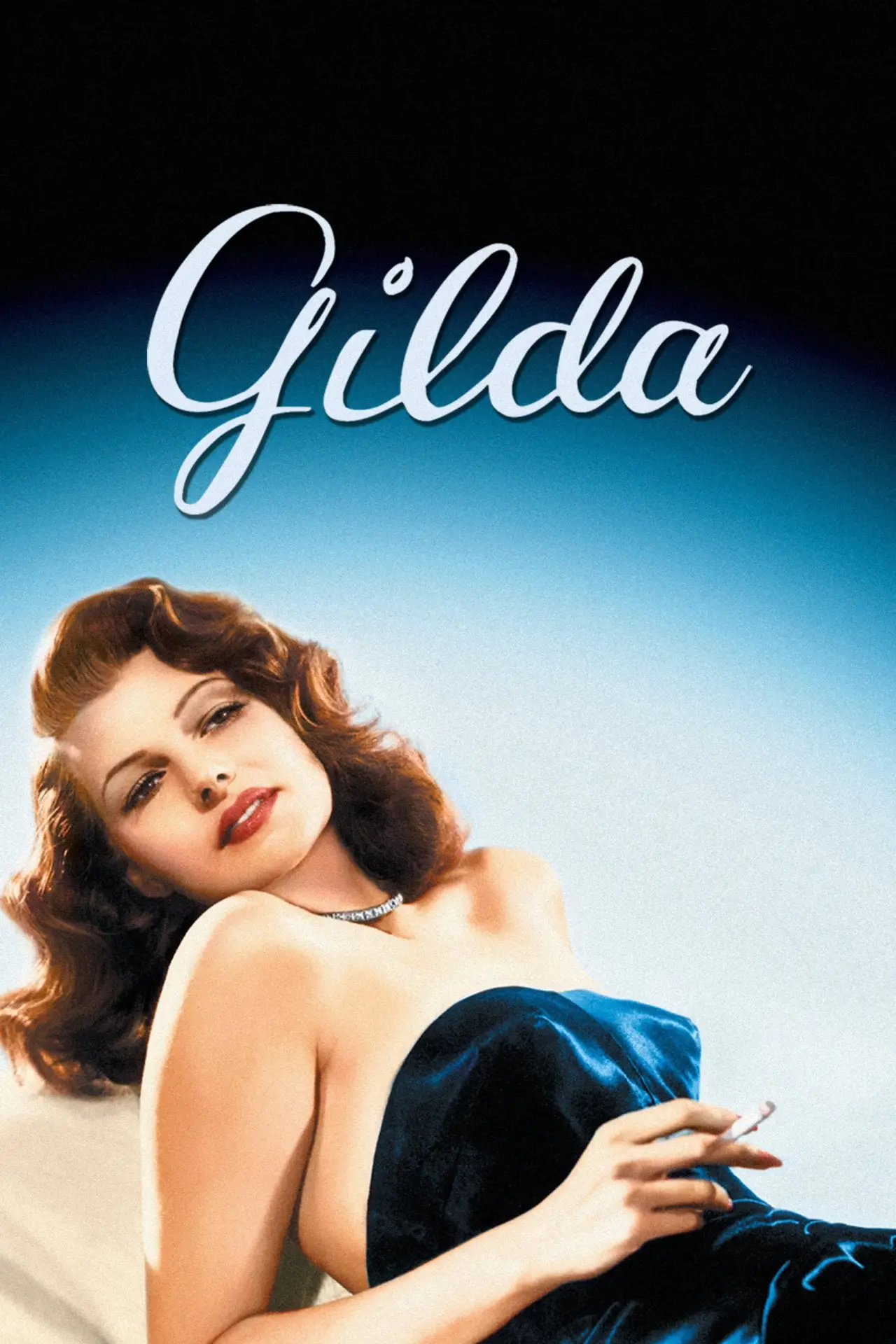
All team (39)
Short description
Johnny Farrell, an American who makes his living through small-time gambling tricks, arrives in Buenos Aires and is rescued from trouble by Ballin Mundson, the owner of an illegal casino. Farrell goes to work for him and quickly becomes his trusted right-hand man. When Mundson returns from a trip with a new wife, Gilda, Farrell recognizes her as a woman from his own past. Mundson, unaware of their history, assigns Farrell to keep an eye on her, and the tension between the two former lovers drives much of what follows.
Charles Vidor directed the film, which came after Cover Girl (1944) in his filmography, from a screenplay by Marion Parsonnet and produced by Virginia Van Upp. Rita Hayworth plays Gilda, with Glenn Ford as Johnny Farrell and George Macready as Ballin Mundson; Joseph Calleia, Steven Geray and Joe Sawyer appear in supporting roles, and the credited cast runs to 89 names. Columbia Pictures backed the production with a budget of two million dollars, and it returned six million worldwide.
On IMDb the film holds 7.6 out of 10 from around 38,000 votes, while on TMDB it sits at 7.5 from 677 votes. A critics' rating of 8 out of 10 from 71 reviews places it somewhat above those audience scores. It runs 110 minutes.
What's left behind the scenes
- During the casino scene, when the news of Germany’s surrender breaks, the restaurant patrons raise their champagne glasses and sing Marcha de San Lorenzo in enthusiastic celebration – instead of the national anthem, as would naturally be expected. Marcha de San Lorenzo is directly related to a famous battle in Argentine history, and it is usually performed during celebrations in honor of the Argentine hero José de San Martín.
- The image of Gilda in the film is that of an independent, extroverted, uninhibited, free-spirited woman—a true goddess of eros. This image completely overlapped with the actress herself and was usually identified with her. However, in reality, Rita Hayworth was a rather reserved and not overly emotional woman who disdained the fame that accompanied her; in her private life, she preferred to remain in the shadows and loved family life.
- Stephen King used the image and charisma of Rita Hayworth's screen heroine, Gilda, in his novella "Rita Hayworth and the Shawshank Redemption." Later, the film adaptation of the novella includes several shots from the film itself.
- A scene from the film "Gilda," where Hayworth's character removes her glove, was deemed indecent by the censorship under Spanish dictator Franco, and the film, which premiered in Spain in 1946, was banned. This fact sparked even greater interest in the film—so much so that a myth arose that Gilda was actually "stripping completely, but the censorship cut it out."
- During the performance of the number "Put the Blame on Mame", Rita Hayworth had to wear a corset, as she had been pregnant very recently; her first daughter, Rebecca, was born just a couple of months before filming began.
- In 2013, the film was included in the National Film Registry of the United States of America.
Similar movies


 Auditions in India
 Casting calls in USA
 Castingi w Polsce
 Кастинги в Україні
