Harry Potter and the Philosopher's Stone - videos, teasers and stills from filming

All videos, teasers and footage from the filming of the film "Harry Potter and the Philosopher's Stone"
Harry Potter and the Philosopher's Stone (2001)
Timing: 2:32 (152 min)
Harry Potter and the Philosopher
7.899/10
29673
Harry Potter and the Philosopher
8.299/10
1101838
Harry Potter and the Philosopher
7.7/10
945000
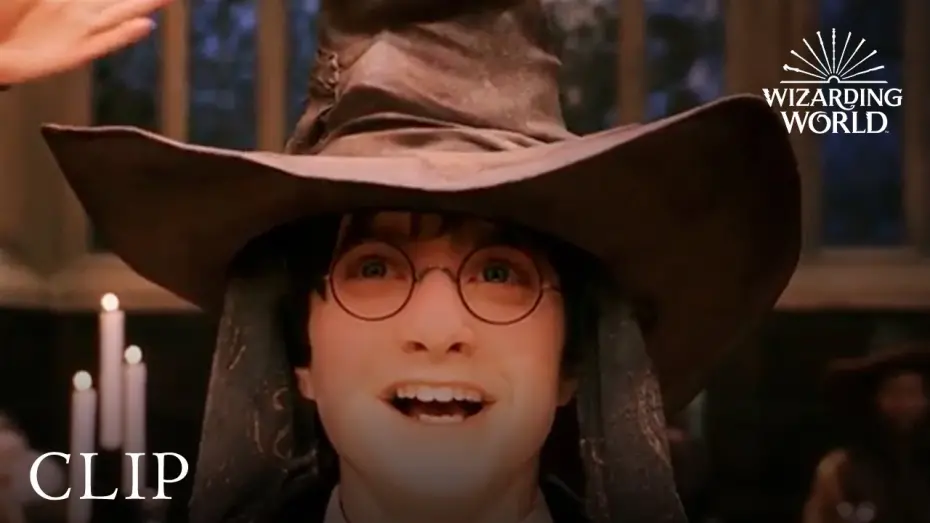
Watch film Harry Potter and the Philosopher's Stone | The Sorting Ceremony
The Sorting Ceremony
English
3:32
Watch film Harry Potter and the Philosopher's Stone | A First Encounter
A First Encounter
English
3:43
Watch film Harry Potter and the Philosopher's Stone | "Yer a wizard, Harry"
"Yer a wizard, Harry"
English
14:23
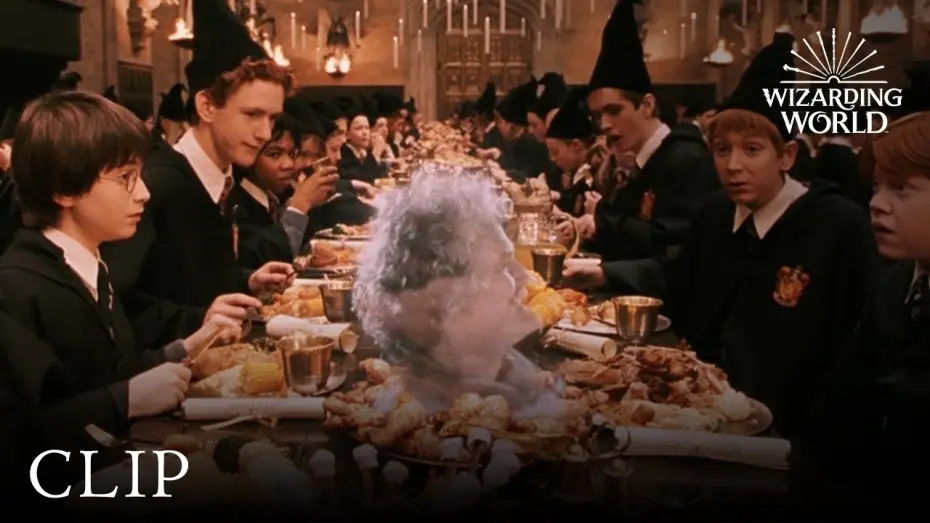
Watch film Harry Potter and the Philosopher's Stone | Nearly Headless Nick
Nearly Headless Nick
English
2:10
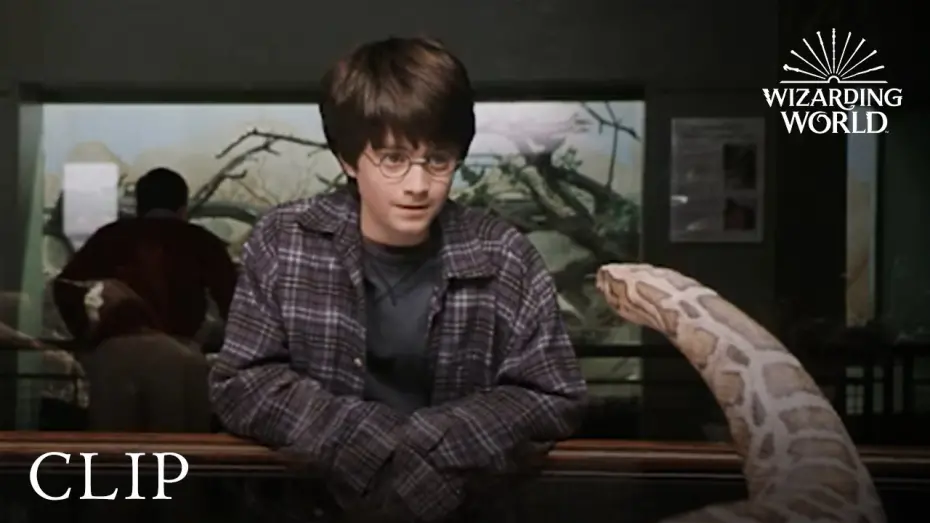
Watch film Harry Potter and the Philosopher's Stone | Harry and the Snake
Harry and the Snake
English
2:30
Watch film Harry Potter and the Philosopher's Stone | Platform 9¾
Platform 9¾
English
3:22
Watch film Harry Potter and the Philosopher's Stone | Official Trailer
Official Trailer
English
2:28
Watch film Harry Potter and the Philosopher's Stone | Trailer
Trailer
English
2:22
Watch film Harry Potter and the Philosopher's Stone | Harry's Jinxed Broom
Harry's Jinxed Broom
English
1:48
Watch film Harry Potter and the Philosopher's Stone | Teaser
Teaser
English
1:56
Watch film Harry Potter and the Philosopher's Stone | Trailer 2
Trailer 2
English
2:28
Watch film Harry Potter and the Philosopher's Stone | Trailer 3
Trailer 3
English
2:22
Watch film Harry Potter and the Philosopher's Stone | Full Movie Preview
Full Movie Preview
English
9:56
Watch film Harry Potter and the Philosopher's Stone | Trailer #2
Trailer #2
Deutsch
2:22
Watch film Harry Potter and the Philosopher's Stone | Trailer #1
Trailer #1
Deutsch
2:90

What's left behind the scenes

  • The film is based on J.K. Rowling's novel "Harry Potter and the Philosopher's Stone" (1997).
  • J.K. Rowling sold the rights to create films based on the first four books of the Harry Potter adventures in 1999 for a modest sum of one million pounds sterling (at that time, a little over $1.5 million). More importantly, it was stipulated that the author would receive a certain percentage of the box office receipts for each film and would have significant control over all stages of production.
  • J.K. Rowling made it an absolute condition that all actors in future films must be British. Only in the fourth film of the franchise, where it was necessary according to the content of the book, did actors from other countries appear.
  • Initially, Steven Spielberg was the main contender for the director's position. Negotiations with him lasted for several months, and in February 2000, they ended with his refusal. Steven Spielberg initially considered creating an animated film where Haley Joel Osment would voice the main character. This option did not appeal to either the film studio or the author of the books. Subsequently, the famous director continued to insist on an American actor in the main role. He also cited a lack of creative interest in the project as another reason for his refusal. According to Steven Spielberg, the film was doomed to colossal commercial success, regardless of how successful his work would be.
  • After Spielberg's refusal, negotiations began immediately with several directors. Chris Columbus, Terry Gilliam, Jonathan Demme, Mike Newell, Alan Parker, Wolfgang Petersen, Rob Reiner, Tim Robbins, Brad Silberling, and Peter Weir were considered as the main candidates.
  • In March 2000, Wolfgang Petersen and Rob Reiner dropped out of the running for various reasons, reducing the number of candidates to four: Chris Columbus, Terry Gilliam, Alan Parker, and Brad Silberling. J.K. Rowling preferred Gilliam. Despite this, on March 28, 2000, it was announced that Chris Columbus had been given the director's chair. Subsequently, Terry Gilliam openly expressed his dissatisfaction and disappointment, saying he was the ideal candidate for the role and calling Columbus's film simply terrible, boring, and banal. The studio's decisive factor was the director's extensive experience working with young actors and the success of his previous family-oriented films, "Home Alone" (1990) and "Mrs. Doubtfire" (1993). On the other hand, one of the main reasons for Chris Columbus's agreement was the tireless requests of his daughter, a big fan of J.K. Rowling's books.
  • Steven Kloves was given the honor of writing the screenplay; he had previously negotiated and met with Steven Spielberg when he was being considered as the main director. According to the screenwriter, he was sent a series of short book synopses for adaptation, from which he immediately singled out Harry Potter. He went outside, bought the book, and instantly became a fan of Rowling's work. He also took on the commitment to write the screenplays for subsequent films in the franchise.
  • Screenwriter Michael Goldenberg also wrote his own version of the screenplay, but Kloves's version was preferred. However, his work impressed producer David Heyman, and he was remembered when Steven Kloves, for personal reasons, declined to work on the screenplay for the fifth Potter film, "Harry Potter and the Order of the Phoenix" (2007).
  • Initially, Warner Bros. studio planned to release the film on Independence Day, July 4, 2001. Time constraints ultimately forced the premiere to be moved to November 16, 2001.
  • Susie Figgis was appointed head of casting. Working with Columbus and Rowling, she held numerous auditions for the three main roles. Thousands of potential candidates were viewed, but none received approval from the director and producers. Simultaneously, a search began in America, which caused discontent among Susie Figgis, who left the project on July 11, 2000, stating that many of the children she had seen were worthy of the role, but were rejected by the director and producers.
  • At the end of May 2000, the official website of the upcoming film posted a notice about an open casting call for the three main roles. Only British children between the ages of 9 and 11 were considered as candidates. At the auditions, the children were first asked to read aloud a page from the book, then to improvise a scene of students arriving at Hogwarts, and in the third stage, to read aloud several pages from the script.
  • In July 2000, numerous reports emerged that American young actor Liam Aiken, who had previously worked with this director on the film "Stepmom" (1998), had become the leading candidate for the role at Chris Columbus’s insistence. He flew to the UK and even received an official offer to play the role of Harry Potter, which, however, was withdrawn the next day at Rowling’s insistence, who firmly maintained that the role should go to a British actor.
  • Finally, on August 8, 2000, it was announced that the three main roles went to virtually unknown Britons at the time: Daniel Radcliffe, Rupert Grint, and Emma Watson.
  • Robbie Coltrane, who received the role of Hagrid, was the first of the adult actors to have a contract signed for participation in the project. The second was Maggie Smith (Minerva McGonagall).
  • Tim Roth, a British actor but a resident of America since 1990, was long considered the main contender for the role of Severus Snape. Tim Roth declined the offer, opting for Tim Burton's 'Planet of the Apes', after which the role went to Alan Rickman, whose invitation was personally approved by J.K. Rowling.
  • Despite Rowling's requirements, the role of Mrs. Weasley could have gone to American actress Rosie O'Donnell, who was in negotiations with Chris Columbus. The role went to Julie Walters, who had previously been considered the leading candidate for the much less significant role of Madam Hooch, the flying instructor.
  • The role of Professor Quirrell could have gone to David Thewlis, who later played Professor Lupin in the third film of the young wizard's adventures, 'Harry Potter and the Prisoner of Azkaban' (2004).
  • Rick Mayall provided the voice for the annoying poltergeist Peeves, although all scenes with his participation were cut and did not make it into the final version of the film.
  • Warwick Davis, who played Professor Flitwick, also voiced the second of the goblins in Gringotts bank, a role performed by Verne Troyer.
  • Richard Harris initially declined the role of Professor Albus Dumbledore. He was persuaded to reconsider and accept it by his eleven-year-old granddaughter, who threatened to never speak to him again if he refused.
  • Director Chris Columbus was determined to have John Seale as the film's cinematographer and requested the studio to involve him in the project, but he was already contractually obligated to film 'The Time Machine' (2003) at the time. Fortunately, numerous delays in its production allowed John Seale to be free by the time filming of 'Harry Potter' began, and he accepted Columbus's invitation.
  • One scenario for the film included a cameo for Drew Barrymore, who declared herself a big fan of the Harry Potter books.
  • J.K. Rowling's requirement that all significant roles in the film be given to British actors was fully met, nevertheless, the film features several non-British actors. Richard Harris was Irish, and Zoë Wanamaker, although she made a name for herself as a British actress, was a US citizen at the time of filming. The role of the goblin in Gringotts bank, accompanying Harry and Hagrid to the vault, went to American Verne Troyer, and one of Hogwarts students, Susan Bones, was played by Eleanor Columbus, the daughter of director Chris Columbus.
  • Filming began on October 2, 2000, in the Leavesden Studios pavilions, located approximately 50 kilometers from London, and in the city itself. Most of the scenes taking place at Hogwarts and near the school were filmed in the cathedrals of Gloucester and Durham. Scenes in the hospital and school library were filmed in two historic buildings at Oxford University: Oxford Divinity School and the Duke Humfrey Library.
  • The decision to film in Gloucester Cathedral sparked widespread protests from local residents. Numerous indignant letters were published in the local press, accusing the filmmakers of sacrilege and threatening to prevent the film crew from entering the cathedral. However, on the day filming was scheduled to begin, only one protesting local resident appeared.
  • The Australian High Commission in London was used as the location for Gringotts Wizarding Bank. In accordance with the book, filming also took place at London Zoo and King's Cross Station. Filming wrapped up in July 2001.
  • Director Chris Columbus deemed it necessary to use both specially designed moving mechanical models (animatronics) and computer graphics in creating the magical creatures for the film. Computer special effects were primarily used in creating the cave troll and the dragon Norbert.
  • Everywhere in the world except the US, the film was released under the title “Harry Potter and the Philosopher’s Stone.” In North American distribution, the title was changed to “Harry Potter and the Sorcerer’s Stone.” For this reason, all scenes mentioning the Philosopher’s Stone were filmed twice: in one case, the actors say Philosopher’s Stone, and in the other, Sorcerer’s Stone.
  • In one scene in the film, when Harry, Ron and Hermione approach Hagrid’s hut, he plays a homemade flute. At that moment, he plays the Hedwig’s Theme from the film’s soundtrack.
  • The GWR 4900 Class 5972 Olton Hall steam locomotive, formerly owned by the British Great Western Railway and built in 1937, was used as the Hogwarts Express in this and subsequent films. Since 2004, the private tour operator Beyond Boundaries Travel has been organizing tours around Britain on it exclusively for Harry Potter fans.
  • On the Quidditch Cup, in addition to Harry's father's name, the names of M. McGonagall and R.J.H. King are also engraved. The latter character was named in honor of John King, who was responsible for the production and use of props in the project.
  • In the Trophy Room, to the right of the Quidditch Cup, one can see an award 'for special services to the school'. A portion of the name Tom M. Riddle engraved on it is also visible.
  • Among the portraits on the vanishing staircase, one can notice a painting depicting Anne Boleyn, the English queen, second wife of King Henry VIII and mother of Elizabeth I. Many contemporaries of Anne Boleyn believed she was a witch.
  • The striped cat used during filming went missing and was found only after two days of intensive searching.
  • One of Robbie Coltrane's stunt doubles was former English national rugby team player Martin Bayfield.
  • Three owls – Ook, Gizmo, and Sprout – were used to play Hedwig, Harry Potter's owl.
  • Nicolas Flamel, mentioned as the creator of the Philosopher's Stone, was in reality a famous alchemist who, according to some of his contemporaries, actually created the Philosopher's Stone, and whose death was shrouded in mysterious circumstances. A legend exists that he is still alive, and if so, would be approximately as old as he is in the film and book.
  • In the book, students travel to Hogwarts from Platform 9 ¾ at King's Cross Station, a platform usually invisible to the naked eye and accessible through a barrier between Platforms 9 and 10. However, it turned out that at King's Cross Station, Platforms 9 and 10 are not in the main building, but in a separate structure, and are separated not by a barrier, but by two railway tracks. In one interview, J.K. Rowling admitted her mistake and said she had confused King's Cross and Euston stations, although at the latter station as well, Platforms 9 and 10 are separated by tracks, not a barrier. Platforms 4 and 5, located in the main part of King's Cross Station, were used for filming and were temporarily renamed 9 and 10. Subsequently, a cast iron sign reading 'Platform 9 ¾' was placed on the wall of the building where the real Platforms 9 and 10 are located, with a quarter of a luggage trolley embedded beneath it, the remaining part appearing to have disappeared into the wall.
  • The actor who played the station attendant at King's Cross Station, to whom Harry turns for help, actually works as a railway employee in a different capacity: he is a train conductor.
  • The Dumbledore surname translates from Old English as bumblebee.
  • The motto of Hogwarts School of Witchcraft and Wizardry, “Draco dormiens nunquam titillandus,” translates from Latin as “Never tickle a sleeping dragon.”
  • During filming, Daniel Radcliffe decided to prank Robbie Coltrane and changed the interface of his mobile phone to Turkish. The actor struggled with it for a long time and was forced to ask for help from Eytan Fenell, the father of the makeup artist, who was of Turkish origin.
  • Before the film's release, a computer game of the same name was released, created by Electronic Arts and becoming a major hit. American toy manufacturer Mattel Inc. won the competition for the right to produce toys based on the upcoming film. Shortly thereafter, another industrial giant in the industry, Hasbro, also gained this right.
  • Composer John Williams wrote a musical piece specifically for the film's trailer. It later appeared on the film's soundtrack under the title “Prologue,” which is quite rare.
  • The film set a new record for opening weekend box office takings in the American and British markets. In America, the weekend gross was $90,294,621, and in Britain, £16,335,627.
  • The film became the highest-grossing film of the year in the US, earning $317,575,550 during its entire run, and achieved the same success internationally, earning $658.9 million. According to worldwide box office results, the film came in second place in history with a total of $976.5 million, second only to James Cameron's 'Titanic' at that time.
  • Anna Popplewell auditioned for the role of Hermione Granger.
  • The wizard chess set that Harry and Ron play was based on the Lewis Chessmen, the most famous chess pieces in the world, found in the sand on the beach of the Isle of Lewis, Hebrides, and dating back to the 12th century.
  • Actor Anton Yelchin auditioned for the role of Harry Potter.
  • The scene depicting the murder of Harry's parents by Voldemort was written personally by J.K. Rowling, as she alone knew precisely what happened then.
  • In the scene with the troll in the girls' bathroom, Daniel Radcliffe was not actually suspended by the troll's neck, as the troll's abrupt movements could easily have broken his neck. The image of the actor was added using computer graphics.
  • The inscription on the Mirror of Erised reads: “Erised stra ehru oyt ube cafru oyt on wohsi.” If read backwards, it says: “I show not your face but your heart's desire,” which translates to “I show not your face but your deepest desire.”
  • The film is based on the novel by J.K. Rowling, “Harry Potter and the Philosopher's Stone” (1997).
  • In March 2000, Wolfgang Petersen and Rob Reiner withdrew from consideration for the vacancy for various reasons, reducing the number of candidates to four: Chris Columbus, Terry Gilliam, Alan Parker, and Brad Silberling, with J.K. Rowling favoring Gilliam. Despite this, on March 28, 2000, it was announced that Chris Columbus had been given the director's chair. Subsequently, Terry Gilliam openly expressed his dissatisfaction and disappointment, saying he was the ideal candidate for the role and calling Columbus's film simply terrible, boring, and banal. The studio's decisive factor was the director's extensive experience working with young actors and the success of his previous family-oriented films, “Home Alone” (1990) and “Mrs. Doubtfire” (1993). On the other hand, one of the main reasons for Chris Columbus's agreement was the relentless requests of his daughter, a great fan of J.K. Rowling's books.
  • Screenwriter Michael Goldenberg also wrote his own version of the script, but Cloves' version was preferred. However, his work impressed producer David Heyman and he was remembered when Steven Kloves, due to personal reasons, declined to work on the screenplay for the fifth Potter film, “Harry Potter and the Order of the Phoenix” (2007).
  • In July 2000, numerous reports emerged that young American actor Liam Aiken, who had previously worked with the director on “The Stepford Wives” (1998), was the leading candidate for the role at Chris Columbus's insistence. He flew to the UK and even received an official offer to play the role of Harry Potter, which, however, was withdrawn the next day at Rowling’s insistence, who firmly believed that the role should go to a British actor.
  • Tim Roth, of British origin but living in America since 1990, was the main contender for the role of Severus Snape for a long time. Tim Roth declined the offer, preferring Tim Burton’s “Planet of the Apes,” after which the role went to Alan Rickman, whose invitation was personally approved by J.K. Rowling.
  • Despite Rowling's requirements, the role of Mrs. Weasley could have gone to American actress Rosie O’Donnell, who was in negotiations with Chris Columbus. The role went to Julie Walters, who had previously been considered the main contender for the much less important role of Madam Hooch, the flying instructor.
  • The role of Professor Quirrell could have gone to David Thewlis, who later played Professor Lupin in the third film of the young wizard's adventures, "Harry Potter and the Prisoner of Azkaban" (2004).
  • Director Chris Columbus insisted that John Seale be the film's cinematographer and asked the studio to involve him in the project, but he was already under contract to shoot "Timeline" (2003) at the time. Fortunately, numerous delays in its production allowed John Seale to be free by the time filming of "Harry Potter" began and to accept Columbus' invitation.
  • Worldwide, except in the US, the film was released under the title "Harry Potter and the Philosopher's Stone." In North American distribution, the title was changed to "Harry Potter and the Sorcerer's Stone." For this reason, all scenes mentioning the Philosopher's Stone were shot twice: in one case, the actors say Philosopher's Stone, and in the other, Sorcerer's Stone.
  • In one scene of the film, when Harry, Ron, and Hermione approach Hagrid's hut, he plays a homemade flute. At that moment, he plays the Hedwig's Theme from the film's soundtrack.
  • At the 4-minute mark of the film, when Albus Dumbledore places the letter next to the sleeping Harry Potter, there is no scar on Harry's forehead. In the next shot, the scar appears.
  • At the 5-minute mark of the film, when Harry wakes up in his cupboard, a brush can be seen hanging on the door to the left. In the next scene, when Harry tries to leave the cupboard but is pushed aside by Dudley running past, the brush is no longer on the door.
  • At the 6-minute mark of the film, when Aunt Petunia wakes Dudley and shows him his presents, a microphone cable can be seen slipping out from under her blouse.
  • At the 8-minute mark of the film, when Dudley falls into the artificial pond in the terrarium, a snake that was previously lying on a branch disappears. In the next shot, the snake reappears.
  • At the 9-minute mark of the film, when Harry picks up a stack of letters, it can be noticed that the wax seal on the letter from Hogwarts is circular. When Uncle Vernon examines the letter in a subsequent scene, the seal has an irregular shape, and one of its edges overlaps the school crest.
  • At the 10-minute mark of the film, when Uncle Vernon picks up several letters from Hogwarts from the floor and begins to tear them up, it can be noticed that the envelopes were pre-cut to make it easier for the actor to rip them.
  • At the 18-minute mark of the film, Hagrid decides to punish Dudley by magically giving him a pig's tail. When the boy and his parents begin to panic, it can be noticed that Hagrid is played not by Robbie Coltrane, but by his stunt double, Martin Bayfield.
  • At the 21st minute of the film, as Harry and Hagrid walk through Diagon Alley, they pass a shop with a scissor-shaped sign and women standing nearby with flowers three times.
  • At the 126th minute of the film, when the elephant knight pierces the horse Ron is riding, it can be noticed that Rupert Grint is replaced by a stunt double in this scene.
  • At the 23rd minute of the film, Hagrid shows a crumpled letter to the goblin. When the goblin takes the envelope in the next shot, the letter is perfectly flat.
  • At the 47th minute of the film, when the hat sorts Harry into Gryffindor, he sits next to Ron on the right side of the table. When the feast begins in the next scene, Harry is already sitting next to Hermione on the left side of the table.
  • At the 53rd minute of the film, while Harry is taking notes on Snape's speech, he writes the sentences in a column in the middle of the page. When Hermione nudges Harry with her elbow in one of the following scenes and he stops writing, it can be noticed that the sentences are written across the full width of the page.
  • At the 54th minute of the film, when the owls drop gifts for the children, one of the students in the background fails to catch her package. The gift bounces off her shoulder and falls to the floor, and the girl immediately prepares to catch a second gift.
  • At the 58th minute of the film, Neville's robe gets caught on the edge of a torch and he falls to the ground, disappearing from view behind the gathered students. When the crowd disperses, it can be noticed that Neville is lying to the left of where he should have originally fallen.
  • At the 58th minute of the film, when Draco mounts his broom and begins to take off, it can be noticed that some students are looking in a completely different direction from where he flew.
  • At the 59th minute of the film, when Harry tries to catch Neville's flying ball, there is a horizontal divider at the window of Professor McGonagall's office. In the following shots, when Harry manages to catch the ball and McGonagall notices Potter, the divider on the window disappears.
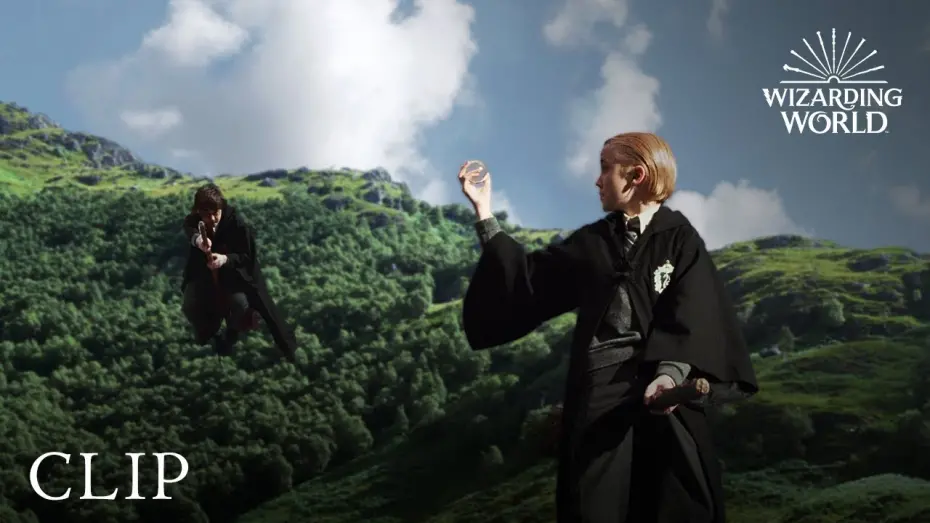
  • At the 59th minute of the film, when Malfoy throws Neville's ball, there are only hills in front of him without a single building. In the following shots, as Harry flies after the ball, the towers of Hogwarts suddenly appear in his trajectory.
  • At the 62nd minute of the film, as Harry, Ron, and Hermione run down the corridor, the extinguished torches along the wall begin to light up. In this scene, it can be noticed that one of the torches on the right side of the frame is already lit and only flares up more brightly as the students approach.
  • At the 65th minute, while Oliver is explaining the rules of Quidditch to Harry, a mechanism that tosses the chest upward can be seen under it in some shots.
  • At the 70th minute of the film, as Professor McGonagall leaves her seat, it can be noticed that the floating candles are held up by thin wires.
  • At the 72nd minute of the film, a club falls on the troll's head, making a dull thud, but there is no subsequent sound of the club hitting the floor.
  • At the 86th minute of the film, when Hagrid first appears on screen dragging a fir tree across the ground, there is almost no snow on his head. In the next shot, Hagrid's hair is covered in a layer of snow.
  • At the 90th minute of the film, Harry takes off the invisibility cloak and places it on the table, setting a lantern next to it. When he hears Filch in the next scene and drops the lantern in fear, the lantern is already standing on top of the cloak.
  • At the 91st minute of the film, Harry hides from Filch under the invisibility cloak. During the shots from under the cloak that simulate Harry's field of vision, it seems that the boy is the same height as Filch. In the next scene, as the boy passes by Quirrell and Snape, the camera is once again at an adult's eye level.
  • At the 117th minute of the film, a drop of Fluffy's drool falls onto Ron's shirt. When the children jump into the hatch to escape the dog and land on the Devil's Snare, the drool on the shirt disappears.
Did you like the film?

© ACMODASI, 2010-2026

All rights reserved.
The materials (trademarks, videos, images and text) contained on this site are the property of their respective owners. It is forbidden to use any materials from this site without prior agreement with their owner.
When copying text and graphic materials (videos, images, text, screenshots of pages) from this site, an active link to the site www.acmodasi.in must necessarily accompany such material.
We are not responsible for any information posted on this site by third parties.