Who is who on the film set
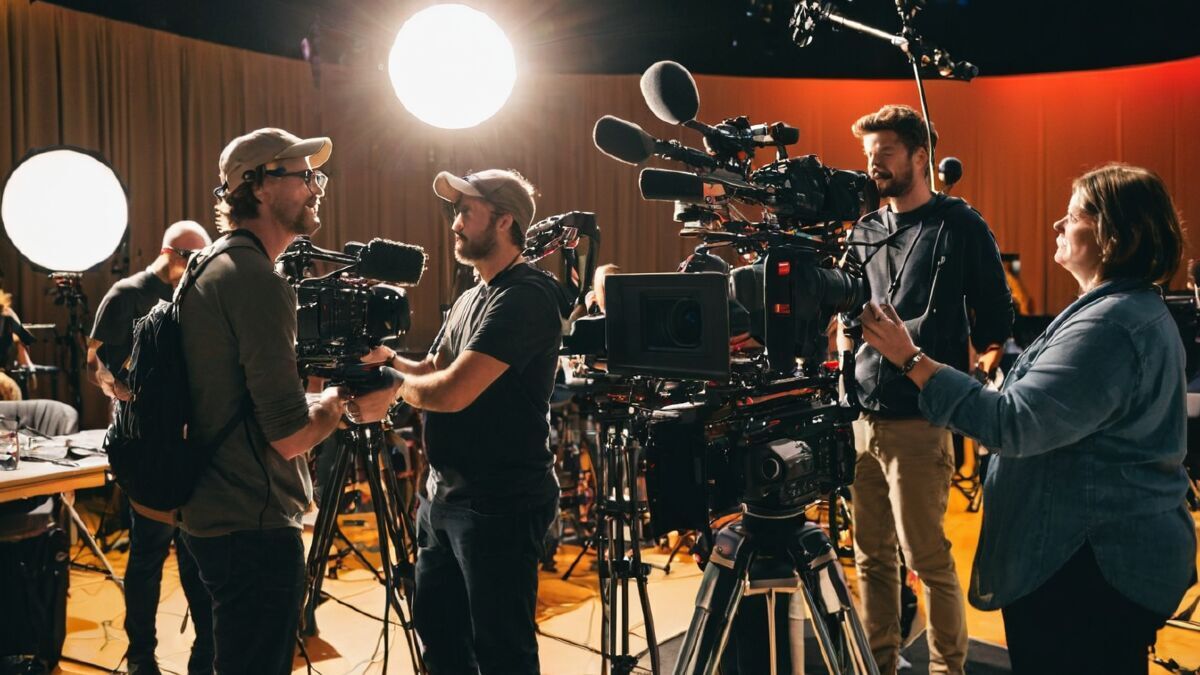
Behind the Scenes: Cinema: Who is who on the film setA film set in hubs like Mumbai, Hyderabad, Chennai, or Kochi can host anywhere from twenty to two hundred people. For a newcomer, it may seem like everyone is busy and no one is specifically looking after you. In reality, the structure is rigid, and every question you have has a specific designated recipient. Knowing who to approach saves your time and saves the crew's nerves.
The Golden Rule: The Chain of Command
An actor does not go directly to the Director, Cinematographer, or Producer with logistical or personal questions. All such queries must go through the First Assistant Director (1st AD) or their assistants. This isn't just about hierarchy; it's about efficiency. While you are discussing where to find water with the Director, the entire crew—and the budget—is standing still.
There is one exception: questions regarding your character and the scene are for the Director, but only at the appropriate moment, not while the lights are being rigged.
The Directorial Team
Director. Responsible for the creative vision. They work with you on the scene, provide direction, and give notes. They are almost always occupied, discussing frames with the DP between takes. You can and should approach them about your role, but keep it brief and professional.
First Assistant Director (1st AD). Your primary point of contact. They manage the shooting schedule, call sheets, the order of scenes, and on-set discipline. They are the ones who tell you when you are "on," when you are free, and when you are wrapped for the day. All logistical and organizational questions go to them.
Artist Liaison / Talent Coordinator. On larger productions, this is a dedicated person who greets you, escorts you to makeup, and ensures you are ready by the required time. If this role exists, communicate through them.
Script Supervisor. The guardian of continuity. They track which hand held the glass, if the collar is buttoned, or which foot you stepped with. If you are unsure how a movement looked in the previous take, ask them; it is their job and they will not be annoyed.
The Camera Department
Director of Photography (DP / Cinematographer). Responsible for the visual look: lighting, composition, and camera movement. They usually interact with the actor via the Director, though they may speak to you directly regarding framing or focus.
First Assistant Camera (1st AC / Focus Puller). Their job is to keep you in sharp focus. They are the ones who place marks on the floor and will insist you don't miss them. A mark is not a suggestion: stepping a few inches aside can blur your face, rendering the take useless.
Gaffers and Grips. They handle the lighting and rigging. If you are standing in a way that blocks a light or casts an unwanted shadow, they will be the first to notice.
Art and Wardrobe
Production Designer. Responsible for the overall visual world of the project.
Costume Designer and Wardrobe Stylist. They handle costumes, fittings, and the condition of the clothes. Go to the wardrobe assistant for anything clothing-related: if it's too tight, torn, or stained. Never adjust or change your clothes yourself, as this breaks continuity.
Makeup Artist / Hair Stylist. Responsible for your look and maintaining it throughout the shift. Approach them if your makeup runs or if you've sweated through your look. They will usually approach you between takes.
Props Master. Responsible for everything you hold in your hands. Props must never be moved, misplaced, or taken without permission; every item has a specific place and a specific state of "wear" for the scene.
Sound Department
Sound Mixer. Responsible for the clean audio recording. Their work determines whether you will have to spend hours in a dubbing studio later.
Boom Operator. Holds the microphone boom just above the frame. If they ask you to speak slightly louder or not to turn your head too far, follow the instruction literally.
Lavalier mics (lapels) are clipped under clothing. The rule is: do not touch them, do not rustle your clothes, and always remember to remove them before going to the restroom. A forgotten, active lapel mic in a bathroom is a classic set horror story.
Production and Management
Producer. Rarely seen on set. They are responsible for the overall budget and deadlines.
Line Producer / Production Manager. They handle the day-to-day organization, payments, transport, and locations. Questions regarding professional fees, TDS (Tax Deducted at Source), GST registration, or contracts are handled by the production office, usually coordinated through the 1st AD.
Who Commands the Set During a Take
The sequence of commands is generally standard:
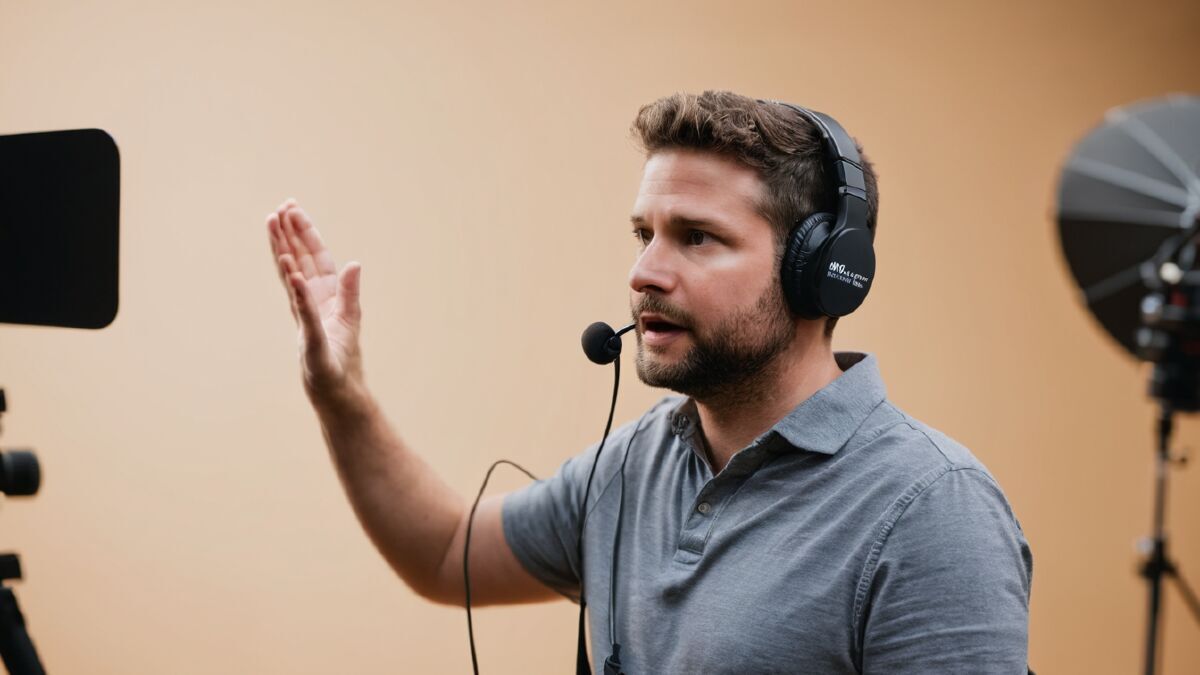
- "Quiet on set" — everyone stops talking, including those not in the frame.
- "Roll camera" / "Motor" — the camera starts recording.
- "Camera rolling" — confirmation that the image is being captured.
- "Sound speed" — confirmation from the sound mixer.
- "Marker" — the clapboard snaps for synchronization.
- "Action" — you begin performing.
- "Cut" — the take stops. Do not break character or leave the scene until this command is given, even if you make a mistake.
Only the Director has the authority to call "Cut." An actor may stop only in the event of an immediate safety hazard.
Quick Reference: Who to Ask
- When will I be shot / when can I leave? — 1st AD.
- What did I do in the last take? — Script Supervisor.
- Costume is too tight or torn — Wardrobe Stylist.
- Makeup is smudging — Makeup Artist.
- Where do I stand / where is my mark? — 1st AC.
- How should I play this scene? — Director.
- I feel unwell — 1st AD, immediately.
- Payment, TDS, or contracts — Production Manager (via 1st AD).
- Where is the catering or restroom? — Production Assistants.
The "Never" List
- Do not approach the Director while they are setting up a shot.
- Do not move props or furniture.
- Do not step on cables or walk in front of the camera.
- Do not leave the set without notifying the 1st AD.
- Do not take photos or videos of the process on your phone — this is usually strictly forbidden by your contract.
- Do not comment on or critique another professional's work.
Summary
- All organizational and logistical questions go through the 1st AD.
- Character questions go to the Director; continuity questions go to the Script Supervisor.
- Wardrobe, makeup, and props are handled by specialists; never adjust them yourself.
- Stick to your floor marks precisely.
- Stay in scene until the "Cut" command.
Find projects currently casting actors in our castings section.
Share


Author: Alexander Shaida, Editor-in-chief
Publication date: 09 August 2026
Views: 121
About us and our editorial policy
Comments
Other materials in this section

Learn when the clock starts ticking, what constitutes a full shift, and how to handle overtime, standby, and travel to ensure you are paid fairly.

Francis Lawrence adapts Suzanne Collins’s Sunrise on the Reaping with Joseph Zada, Ralph Fiennes and Elle Fanning. It opens on 20 November.

The film co-starring Scarlett Johansson competed at Cannes and opens in US cinemas on 13 November.

The biopic of the coach and broadcaster behind the famous video game series arrives on Prime Video on 18 November, with Christian Bale as Raiders owner Al Davis.

Horror director Ti West adapts Dickens with Rupert Grint, Daisy Ridley and Ian McKellen. Ebenezer opens on 13 November.

Nicholas Hoult, Zoë Kravitz and Pete Davidson star in How to Rob a Bank, from the director of Bullet Train. It opens on 13 November.
 Auditions in India
 Casting calls in USA
 Castingi w Polsce
 Кастинги в Україні
