Why the on-screen role differs from the actual performance
Behind the Scenes: Cinema: Why the on-screen role differs from the actual performanceFor an actor, the first screening of a finished project is almost always a surprise: a scene that took an entire day to shoot lasts forty seconds; your best take was left on the cutting room floor; or a moment that felt insignificant becomes a pivotal point in the story. Understanding the logic of editing removes much of this frustration and explains how to perform in a way that ensures you make it into the final cut.
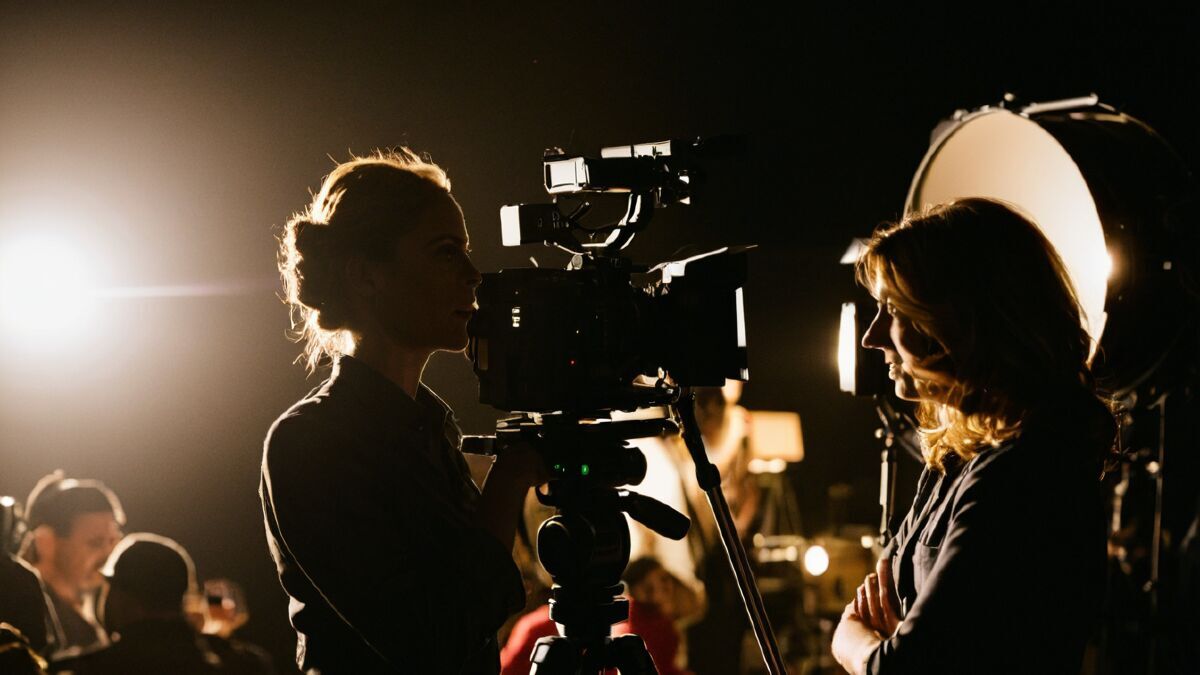
What Happens to the Footage After Filming
- Selection of Takes. The editor and director review everything shot in hubs like Mumbai, Hyderabad, or Chennai and select the best segments. A single scene can have anywhere from three to twenty takes across multiple camera angles.
- Rough Cut. Scenes are assembled according to the script. At this stage, the film is always longer than the final version, sometimes by double.
- Director's Cut. The material is tightened, and the rhythm of the story is established.
- Producer and Studio Notes. Further cuts are made, and sometimes scenes are rearranged to better suit the narrative or commercial requirements.
- Final Cut. This includes sound design, music, color grading, and titles. In Indian productions, this is also where the final multilingual dubbing and ADR (Automated Dialogue Replacement) are synchronized.
The time between filming and the premiere can range from a few months to a couple of years.
Why Scenes Are Cut
There are five main reasons, and none of them are related to the quality of your acting:
- Runtime. Every film or episode has a target duration. Anything that does not drive the plot forward is the first to be cut.
- Pacing. A scene might be beautifully acted but could slow down the movie's momentum at that specific point.
- Redundant Information. If the audience already understood a point from a previous scene, repeating it is unnecessary.
- Structural Changes. Scenes are often rearranged during editing, making some of them redundant.
- Technical Flaws. Issues with sound, focus, a stray object in the frame, or continuity errors.
Why the Editor Might Not Choose Your Favorite Take
An actor remembers the take where they felt most organic. An editor chooses based on different criteria:
- Match-Cutting. A take must align with the neighboring shot in terms of movement, eye-line, and hand positioning.
- Continuity. If a prop (like a cigarette or a glass of water) was a different size in one take versus another, the choice is limited.
- The Partner. In a scene with two people, your best take might not align with your partner's best take, forcing the editor to choose a compromise.
- Technical Parameters. Focus, lighting, or background noise interference.
- Scene Rhythm. Sometimes a faster version is needed for the edit, even if the slower version was stronger in terms of acting.
The practical takeaway: perform consistently across all takes rather than putting everything into just one. The take you poured your soul into might be technically unusable, and the seventh take might be the one that makes the film.
How This Affects Your Acting
Understanding the edit changes your technique:
- Consistency Over Inspiration. Identical movements, the same tempo, and the same positioning of objects are crucial.
- Act the Start and End of the Shot. The editor needs clean "in" and "out" points. Do not start before the command and do not drop the character before the "cut" or "stop."
- Maintain Your Reaction. Reactions are edited into the pauses between lines. An actor who "switches off" while their partner is speaking deprives the editor of essential material.
- Avoid Overacting in Close-Ups. Close-ups are used for the most critical moments, and every micro-expression is visible.
- Maintain Eye-Line. If you looked to the right in the wide shot, you must look to the right in the close-up.
When a Role Is Significantly Reduced
This is a standard professional risk and is not a reflection of your work. Realistic expectations include:
- A one-scene cameo may disappear entirely.
- A supporting role may be cut in half.
- Your lines may be removed, leaving you in the frame in silence.
- You may be dubbed by another voice artist—rare, but it happens.
Contracts generally do not provide guarantees regarding screen time, and demanding them is usually futile. What you can realistically do is discuss in advance whether your name will remain in the credits if the role is reduced.
Handling Material for Your Showreel
If a scene is cut, it effectively doesn't exist for your portfolio. Therefore:
- Do not promise anyone a clip until you have seen the final version.
- Ask the production if you can obtain "deleted scenes"—sometimes they provide them after the project has been released.
- Take screenshots and clips from the finished material, not from the set.
- Adhere to the publication terms of your contract: usually, nothing can be shared before the premiere.
The Right Mindset
Be practical. Your job ends on set, and what happens afterward is no longer in your control. An actor who argues with the edit does not change the film; they only damage their relationship with the production house.
It is far more useful to view the final version as a learning tool. Comparing what you performed with what remained in the edit is the best professional analysis of your work that you can possibly receive.
Summary
- Cuts are made for runtime, pacing, and structure, not because of poor acting.
- Takes are chosen based on match-cutting and continuity, not on your personal feeling of the take.
- Perform consistently in every take and maintain your reaction while your partner speaks.
- Clean entry and exit points give the editor the freedom they need.
- The disappearance of a scene is a standard risk; contracts do not guarantee screen time.
- View the final version as a case study of your own performance.
Projects currently in production can be found in the castings section.
Share


Author: Vikram Nair, film production writer
Publication date: 09 September 2026
Views: 29
Comments
Other materials in this section
Learn how fittings work, who is responsible for the wardrobe, and why continuity is more important than your comfort on set.

From table reads to on-set blocking, learn what is expected of you at every stage, how to prepare, and why rehearsals are more critical than beginners often realize.
Lighting, sound, pace, and physical conditions differ wildly between a studio set and an on-location shoot. Here is how to prepare for each and how it affects your performance.
A short method for taking a scene apart the night before an audition: what happens, what the character wants and what stands in the way.
A detailed guide to decoding call sheet fields, the difference between call time and shoot time, and how to plan your day on a professional set.
How background work differs from an episodic role, when a line appears, and why the path from crowd work upward does not open for everyone.
 Auditions in India
 Casting calls in USA
 Castingi w Polsce
 Кастинги в Україні
