How a second unit director shapes your production day
Behind the Scenes: Cinema: How a second unit director shapes your production dayIf you ask an actor who the most important person on set is, most will say "the Director." Formally, that is correct, but the actual flow of an actor's day is determined by another person — the First Assistant Director (1st AD). They decide when you arrive, how long you wait, when you are filmed, and when you are wrapped. Understanding their role fundamentally changes how your shifts go.

Who They Are and What They Do
The 1st AD is the manager of the filming process. They are not responsible for the artistic vision; their domain is time, people, and order. Their primary tasks include:
- Creating Call Sheets. Determining who arrives at what time and who is needed for which scenes.
- Planning the Shooting Day. Deciding the order of shots and how much time is allocated to each scene.
- Managing the Set During Filming. Calling "silence," "rolling," and maintaining overall discipline on set.
- Working with Actors and Background Artistes. Positioning extras and explaining tasks to the background talent.
- Inter-departmental Coordination. Checking if makeup is ready, if props have arrived, or if the location is cleared.
- Schedule Control. Any deviation from the plan is their primary headache.
On large-scale productions in hubs like Mumbai or Hyderabad, they have a team of assistants, sometimes including a dedicated talent coordinator who focuses solely on the actors. On smaller indie projects, the 1st AD handles everything themselves.
Why All Questions Go Through Them
This isn't a hierarchical ritual; it's a way to keep the production moving. During a take, the Director is focused on the frame, the Cinematographer on the lighting, and the Producer might not even be on set. The 1st AD is the only person who holds the entire day's map in their head and can provide answers without interrupting the creative process.
The practical consequence: when you take a logistical question directly to the Director, you are taking time away from the entire crew. When you go to the 1st AD, the issue is usually resolved in thirty seconds.
What to Discuss with the 1st AD
- When you will be filmed and when you can wrap.
- Whether you can step away and for how long.
- Location of catering, restrooms, and vanity vans.
- Feeling unwell, being too cold, or physical discomfort.
- The need to leave early for a legitimate reason.
- Questions regarding payment, TDS (Tax Deducted at Source) on professional fees, GST registration, or overtime.
- Missing call sheets for the next day.
- Conflicts or discomfort on set.
- Running late or inability to make it to set.
What not to bring to them: how to play a scene, the character's motivation, or why the script is written a certain way. Those are conversations for the Director.
How to Communicate with Them
The 1st AD works under constant time pressure: they are managing the schedule, answering five questions at once, and monitoring the set. This dictates the format of communication.

- Short and Specific. "Roughly when is my scene?" is much better than a long story about how long you've been waiting.
- One Question at a Time.
- Not During a Take. Wait for the pause between takes or during a setup change.
- Follow the Chain of Command. If there is a talent coordinator or a 2nd AD assigned to actors, go to them first.
- Accept the Answer. "I don't know, the schedule is shifting" is an honest answer, not an excuse.
- Warn Them in Advance. About everything: stepping away, health issues, or if you have a hard stop at a certain time.
Why They Decide if You'll Be Hired Again
This isn't always obvious to newcomers, especially those coming from institutes like NSD, FTII, or SRFTI. The 1st AD sees your work in a production sense, not an artistic one: did you arrive on time, were you ready in makeup, did they have to hunt for you, or did you disrupt the schedule?
They move from project to project and maintain relationships with the same casting directors and producers. Their opinion of an actor isn't a formal review, but a casual comment: "this one is professional" or "this one was a headache." Such remarks often influence future invitations more than the quality of a single performed scene.
What they remember:
- Tardiness and its frequency.
- Readiness at the moment of the call.
- Leaving the set without notification.
- Outbursts, complaints, or excessive demands.
- The ability to wait an extra hour without complaining.
- The ability to jump into a scene quickly after a long break.
What to Do if the Schedule Shifts Significantly
A common situation: you were called for 7:00 AM, it is now 4:00 PM, and your scene hasn't started yet.
Correct actions:
- Calmly ask the 1st AD for a forecast.
- Clarify if you should stay in makeup or if you can step out of "ready" status.
- If you have a hard time constraint, mention it now, not thirty minutes before your deadline.
- Do not leave the base/set without permission.
Incorrect actions: sighing demonstratively, complaining to colleagues within earshot, posting on social media, or demanding explanations. Schedules slip due to technical issues, not malice, and the 1st AD is usually more stressed than you are in that moment.
When You Must Insist
There are situations where being overly accommodating is harmful, and you must be firm — but still communicate through the 1st AD:
- Safety. A stunt without proper preparation, a slippery surface, or working with fire/water without a safety briefing.
- Health. If you feel genuinely ill, have an injury, or are suffering from extreme weather conditions.
- Boundaries. If a scene exceeds the agreed-upon limits (e.g., requiring more nudity or physical intimacy than stated in the contract).
- Extreme Overtime. When the shift has exceeded all reasonable limits and you are physically unable to perform.
State your case with facts, not emotions: "I am not comfortable performing this element without a stunt coordinator" is a professional phrase that is respected.
The Talent Coordinator / Actor's Assistant
On large productions, especially in multilingual films involving dubbing and complex casting, a separate person often sits between you and the 1st AD. They greet you, lead you to makeup, ensure you are on standby, and handle basic needs.
If this person exists, work through them. It is not a demotion of your status, but a standard production structure: the 1st AD is currently managing two hundred people and a ticking clock.
The Little Things That Are Valued
- Arriving ten minutes before your call time.
- Notifying the team that you have arrived rather than waiting to be found.
- Staying within sight rather than hiding in a far corner.
- Responding to calls and messages promptly during the shift.
- Letting someone know when you are stepping away to the restroom.
- Not asking the same question to three different people.
- Saying thank you at the end of the shift.
None of these things relate to your acting skill, yet together they determine if you will be on the "shortlist" for the next project.
In Short
- The 1st AD is responsible for time, people, and order, not the artistic direction.
- All organizational and logistical questions go through them or their assistant.
- Artistic questions go to the Director, and only at the appropriate time.
- Keep communication brief, one question at a time, and never during a take.
- Warn them in advance about absences, health, or time constraints.
- Be firm regarding safety and contractual boundaries.
- Their professional opinion of you follows you to future projects.
Check out current productions in the castings section.
Share


Author: Alexander Shaida, Editor-in-chief
Publication date: 10 November 2026
Views: 80
About us and our editorial policy
Comments
Other materials in this section

In The Man with the Bag, Santa teams up with a small-time thief played by Alan Ritchson to rob the elf who stole the presents. It premieres on Prime Video on 2 December.
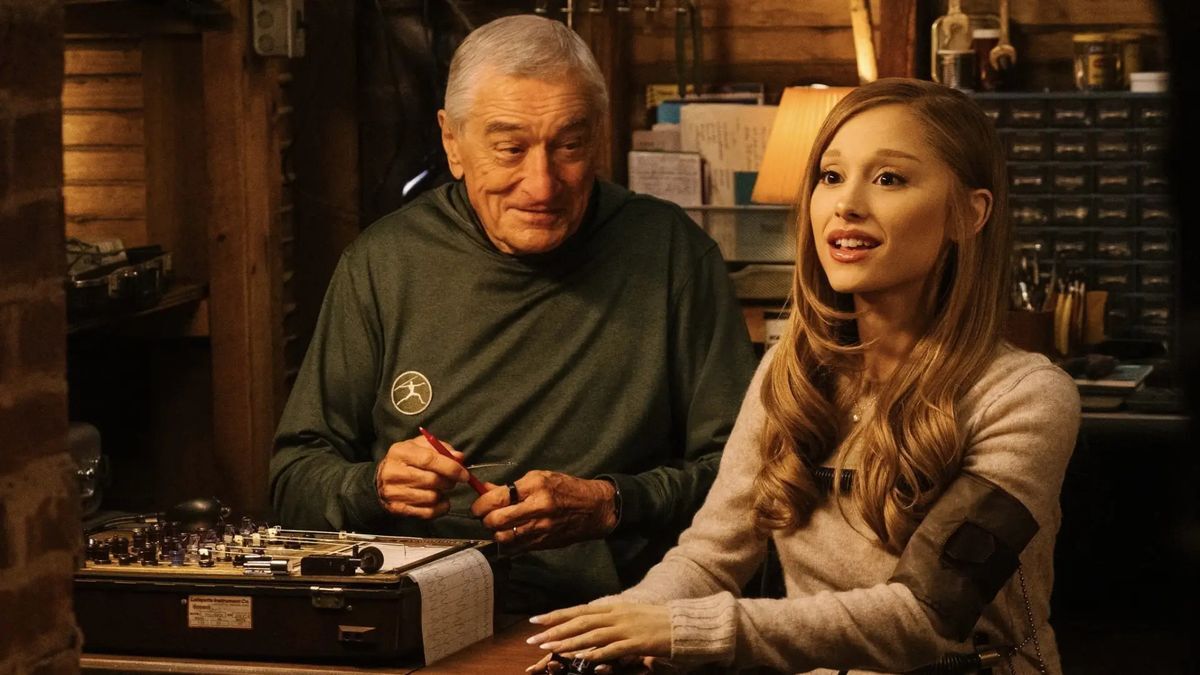
Sixteen years after the third film, Robert De Niro, Ben Stiller and Owen Wilson return to the comedy series, with Ariana Grande as the Fockers’ prospective daughter-in-law.

Brad Pitt returns as stuntman Cliff Booth in a $200 million Netflix film that plays only in IMAX from 25 November before streaming on 23 December.

Walt Disney Animation Studios’ original fairy tale about a girl who discovers her magic opens on 25 November, with Jodie Foster as the queen of the witches.

Learn when the clock starts ticking, what constitutes a full shift, and how to handle overtime, standby, and travel to ensure you are paid fairly.

Francis Lawrence adapts Suzanne Collins’s Sunrise on the Reaping with Joseph Zada, Ralph Fiennes and Elle Fanning. It opens on 20 November.
 Auditions in India
 Casting calls in USA
 Castingi w Polsce
 Кастинги в Україні

