Hoop Dreams





Short description
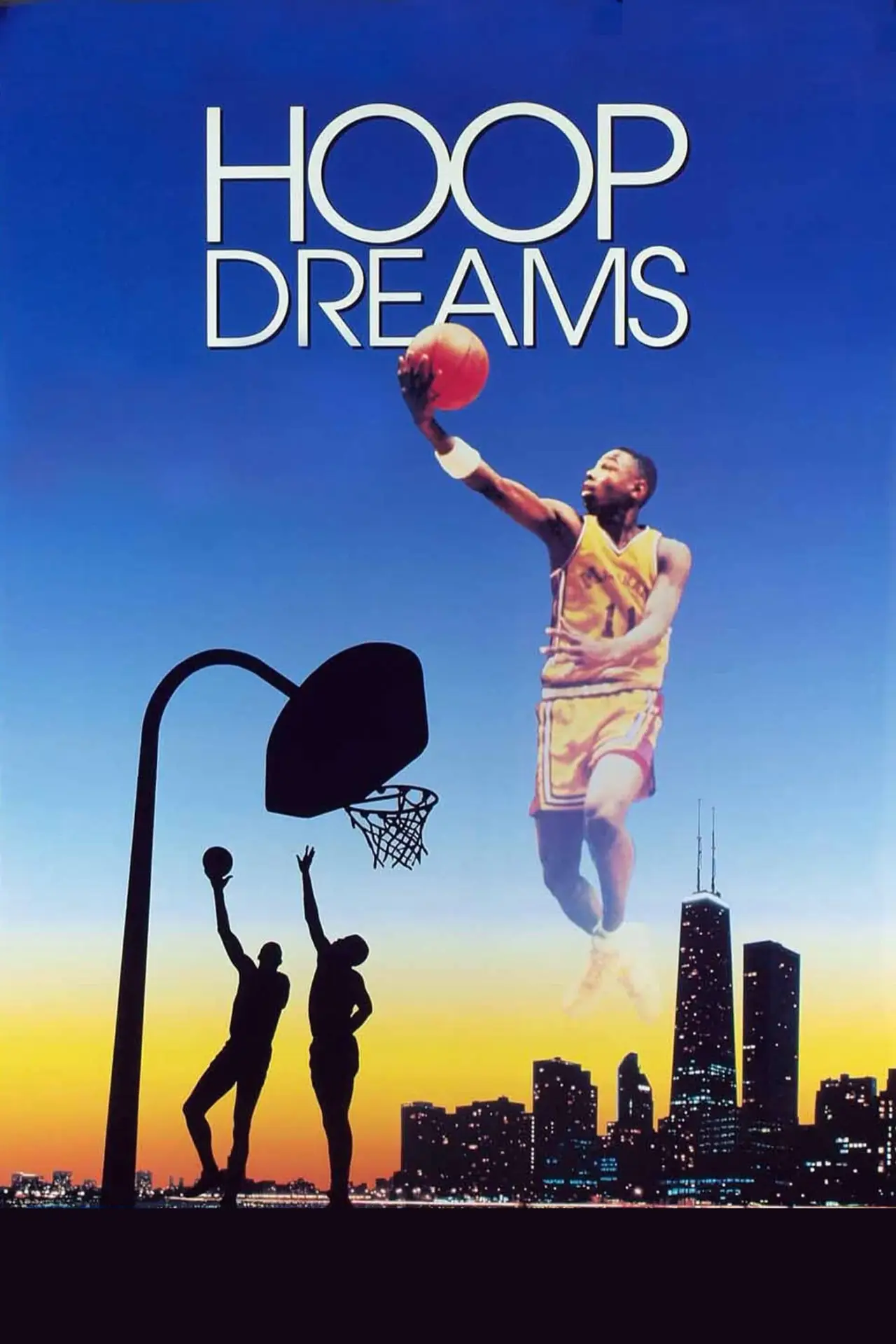
Hoop Dreams follows two African American teenagers from inner-city Chicago, William Gates and Arthur Agee, who commute roughly ninety minutes each way to St. Joseph High School, a mostly white suburban school in Westchester, Illinois, known for its basketball program. Both boys aim for careers in professional basketball, and their families back them as they work to meet the school's academic and athletic demands while facing social and financial pressures rooted in their neighborhoods. The film tracks them over several years, from recruitment through high school, as their paths through the sport diverge.
Steve James directed and wrote the screenplay with Frederick Marx. It was the first film he directed, followed chronologically by Prefontaine, Head Games and Life Self. James also produced with Peter Gilbert and Marx, and narrates the film. The cast consists of the real people involved, including Gates, Agee, coach Gene Pingatore and basketball figures such as Dick Vitale and Bobby Knight.
Released in September 1994, the documentary runs 174 minutes and was distributed by Fine Line Features with Kartemquin Films. It earned about 8 million dollars worldwide, a strong result for a documentary of its length. On TMDB it holds 7.6 out of 10 from over 340 votes, while critics' reviews average 8.8 out of 10 across 61 reviews, a higher rating than that given by audiences.
What's left behind the scenes
- Initially, the director planned to shoot a 30-minute documentary film commissioned by the Public Broadcasting Service (a non-commercial television broadcasting service in the USA). However, over 5 years of filming, 250 hours of footage was collected. This resulted in a film with a runtime of 170 minutes.
- St. Joseph School in Illinois filed a lawsuit seeking to ban the film's distribution, but after negotiations, the parties signed a settlement agreement.
- Many of the locations where filming took place have since changed beyond recognition. The Cabrini-Green public housing complex, where one of the film's subjects lived, was "revitalized" shortly after the film was completed. Where a baseball field once stood, expensive apartments and a shopping center were built. The last building in Cabrini-Green was demolished in May 2011.
- According to film critic and television host Roger Ebert (1942-2013), when this film was not nominated for an Academy Award in the Best Documentary Feature category, he and his close friend Gene Siskel (1956-1999) decided to find out how documentaries were nominated for an Oscar. It turns out that when watching documentary films, members of the relevant committee have flashlights with them, and when a film is clearly disliked, they must shine the light on the screen. The film screening is stopped if a majority of committee members signal their disapproval in this way. This particular film had to be stopped just 15 minutes after the beginning of the screening.







 Auditions in India
 Casting calls in USA
 Castingi w Polsce
 Кастинги в Україні

