Back to the Future Part III








Short description
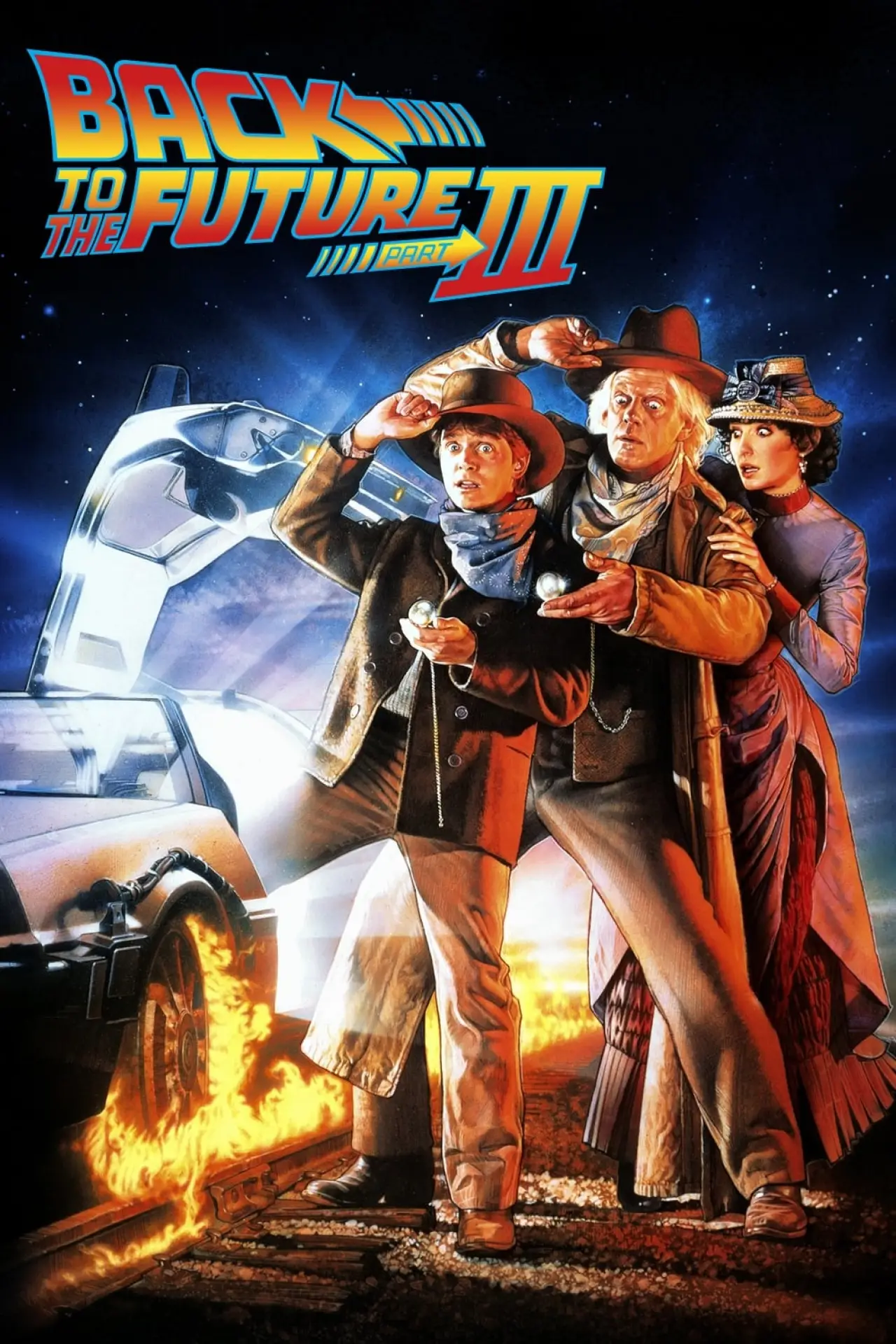
Marty McFly is stranded in 1955 when he learns that his friend Doc Brown has been sent back to 1885 by a lightning strike during an earlier time-travel attempt. Doc writes that he is content to remain in the Old West, but Marty discovers evidence that Doc was killed there shortly after arriving. Marty travels to the frontier town of Hill Valley to save him, only to find the DeLorean damaged and the pair unable to return home easily. Their efforts are complicated by Doc's growing attachment to schoolteacher Clara Clayton and by Marty's clashes with the outlaw Buford "Mad Dog" Tannen.
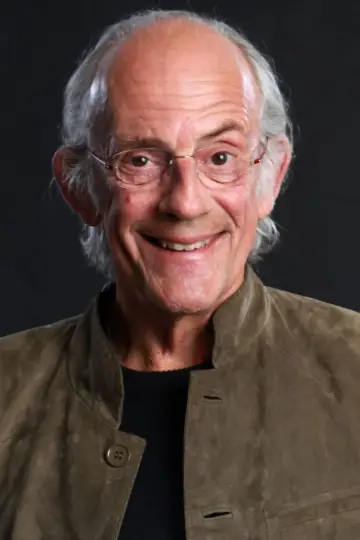
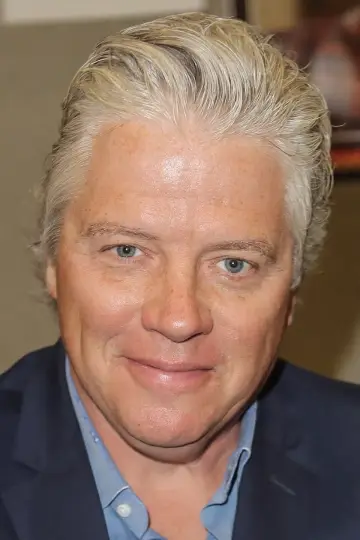
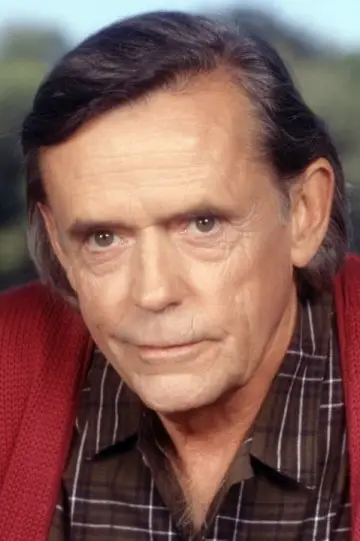
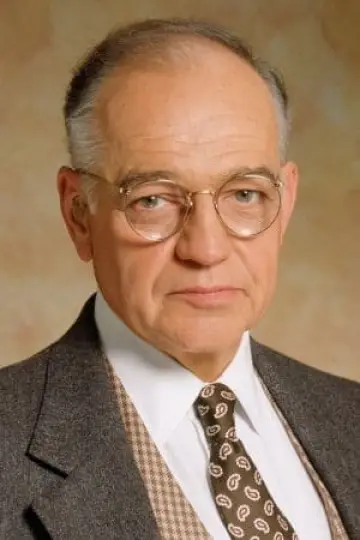
Robert Zemeckis directed the film, his seventh feature in chronological order and the third entry in the series, following Back to the Future Part II and preceding Death Becomes Her. Bob Gale wrote the screenplay and produced with Neil Canton for Universal Pictures and Amblin Entertainment. Michael J. Fox returns as Marty and also plays his ancestor Seamus McFly, with Christopher Lloyd as Doc, Mary Steenburgen as Clara, Thomas F. Wilson as Buford and his descendant Biff, Lea Thompson as Maggie and Lorraine McFly, and Elisabeth Shue as Jennifer. The film runs 119 minutes.
Made for about 40 million dollars, it earned roughly 245 million dollars worldwide, a solid return by the standards of the period. Audience response was favorable: on IMDb it holds 7.5/10 from about 517,000 votes, and on TMDB 7.5/10 from nearly 12,000 votes. The critics' rating of 6.9/10 from 48 reviews is somewhat lower than those audience scores, indicating professional notices that were positive but less enthusiastic than the response from viewers.
What's left behind the scenes
- When Marty and Doc are in the drive-in theater and preparing the "DeLorean" for the time jump, Marty mentions Clint Eastwood, but Doc does not understand who he is talking about. During this dialogue, posters for the films "Revenge of the Creature" (1955) and "Tarantula" (1955), in which Clint Eastwood played a role, can be seen on the walls of the theater.
- Throughout the trilogy, the viewer can see fourteen time travels, not counting those that happened off-screen, or those only mentioned in conversations between characters: 1) Doc's dog, Einstein, was sent one minute forward into the future to test the time machine. 2) Marty travels to 1955 from 1985. 3) Marty returns to 1985 from 1955. 4) Doc travels to 2015 from 1985. 5) Doc returns to 1985 from 2015. 6) Doc, Marty, and Jennifer travel to 2015 from 1985. 7) Biff travels to 1955 from 2015 to give his younger self a sports almanac, thereby creating an alternate timeline. 8) Biff returns to 2015 from 1955. 9) Doc, Marty, and Jennifer return to the alternate 1985 from 2015. 10) Marty and Doc travel to 1955 from the alternate 1985 to steal the sports almanac. 11) Due to a lightning strike, Doc accidentally travels to 1885 from 1955. 12) Marty travels to 1885 from 1955 to save Doc. 13) Marty returns to 1985 from 1885. 14) Doc and his family travel to 1985 to introduce their children to Marty and Jennifer, and also to give Marty a photograph of Marty and Doc in front of the courthouse clock tower.
- Originally, Buford Tannen was supposed to shoot Marshal Strickland. His son witnessed the murder. However, during final editing, this scene was considered too dark and was cut from the film. That's why Strickland's deputy, not the marshal himself, arrests Buford at the end of the film. The unedited scene can be viewed in the “Deleted Scenes” section on the DVD.
- The railway tracks used in the third film were active lines. Twice a day, when scheduled trains passed, the DeLorean had to be removed from the rails.
- When Marty stands in front of the mirror and practices drawing a gun, he asks his reflection, "Did *you* tell me that?" This is a direct reference to the film "Taxi Driver" (1976).
- Marty uses a flying saucer to knock the gun out of Mad Dog's hand. In 1871, the “Frisbie Pie Company” was established in Connecticut.
- The scenes where the locomotive pushed the DeLorean were particularly dangerous: there was no guarantee that the DeLorean would not derail or that the train would not run over it. Therefore, all the profile shots showing Michael J. Fox in the car were filmed in reverse: the locomotive simply pulled the DeLorean backwards.
- The remains of the "Mr. Fusion" generator now sit on the desk of screenwriter Bob Gale.
- "Back to the Future Part III" was the first film to begin with the 75th-anniversary logo of Universal Studios. This intro lasted until 1997.
- In the second part, Doc wears a colorful shirt with small locomotives. In the third part, he uses it, already quite worn, as a mask when he and Marty hijack a locomotive.
- A drive-in theater was specially built for the film. When filming was completed, the theater was dismantled without ever showing a single movie on its screen.
- The filmmakers asked Clint Eastwood for permission to use his name in the film. Clint agreed and was flattered by the reference to the numerous Western heroes he had played.
- The second and third parts of the trilogy were filmed simultaneously. The shooting period lasted 11 months, including a three-week break.
- During the scene preparing the "Wake-Up Call" cocktail, you can notice a bottle of spicy pepper seasoning whose appearance perfectly matched the time period.
- At the 32nd minute, an operator with a video camera appears in the left part of the frame.
- When Marty enters the town from the railway station side, the camera slowly rises above the station and shows Marty in the distance walking through the town. This scene is a frame-by-frame reproduction of a scene in the film "Once Upon a Time in the West" (1968), in which Jill arrives at the station.
- On November 12, 1955, between the time Biff arrives (around 6:00) and 6:38 PM, there are 4 DeLoreans in Hill Valley: (1) the one Marty used to travel to 1955 in the first film; (2) the one Biff uses to return to 1955 to give his past self the sports almanac; (3) the one Marty and Doc use to return to 1955 to retrieve the almanac; (4) the one Doc hid in the abandoned mine.
- Due to the death of Michael J. Fox's father, filming was delayed for two weeks.
- For approximately three weeks, Robert Zemeckis flew to Los Angeles after finishing the day's shooting on "Back to the Future 3" to approve the sound editing for "Back to the Future 2" (1989). The next day, Zemeckis would wake up at 4:30 a.m. and fly back to Northern California to continue filming.
- In the scene where Buford 'Mad Dog' Tannen tries to deal with Marty, due to an oversight, Michael J. Fox was genuinely hanged on the rope for a short time, causing him to lose consciousness for a brief period.
- Bob Gale and Robert Zemeckis decided that in the first two films they had told everything possible about Marty. Therefore, in the third film, they decided to focus the audience's attention on Doc.
- By paying attention to the sign at the railroad crossing in 1985, you can find out the name of the area – Eastwood Canyon.
- Mad Dog is the name of the main villain in the video game "Wild Gunman," which Marty plays in the film "Back to the Future Part II" (1989).
- The kiss between Doc and Clara was Christopher Lloyd's first on-screen kiss in his entire career.
- Mary Steenburgen's children convinced her to star in the film.
- In the film 'Back to the Future' (1985), Doc tells Marty that the idea for the flux capacitor came to him after he hit his head on the sink in the bathroom while trying to hang a clock above the toilet. In this scene, when Doc notices Marty in his house and runs to the bathroom, we can see a clock hanging above the toilet.
- The band ZZ Top made a small cameo appearance in the film and also wrote some of the music. During their screen time, they perform the song "Doubleback", which was included on the film's soundtrack.
- The name of the manure transport company in 1885 was “A. Jones.” In the film "Back to the Future" (1985), the name of the manure transport company is “B. Jones.”
- During the filming of the second and third parts of the trilogy, Michael J. Fox's father passed away and his son was born.
- Each of Needles' henchmen also played a character in other gangs mentioned in the trilogy: J.J. Cohen – a skinhead in Biff's gang in 'Back to the Future' (1985) and 'Back to the Future Part II' (1989); Ricky Dean Logan – Data in Griff's gang in 'Back to the Future Part II' (1989); Christopher Wynn – one of the members of Buford's gang in the third film.
- Before sending Marty to 1885, Doc says he specifically chose a drive-in movie theater so that Marty wouldn't hit a tree. In the film 'Back to the Future' (1985), Marty hit one of the pine trees on the Peabody farm in 1955.
- To emphasize Doc's fascination with Jules Verne, his time-traveling train was designed to resemble the 'Nautilus' from the film '20,000 Leagues Under the Sea' (1954).
- Throughout the trilogy, viewers can observe fifteen instances of time travel, not counting those that occur off-screen or are merely mentioned in conversations between characters: 1) Doc's dog, Einstein, was sent one minute into the future to test the time machine. 2) Marty travels to 1955 from 1985. 3) Marty returns to 1985 from 1955. 4) Doc travels to 2015 from 1985. 5) Doc returns to 1985 from 2015. 6) Doc, Marty, and Jennifer travel to 2015 from 1985. 7) Biff travels to 1955 from 2015 to give his younger self a sports almanac, thereby creating an alternative timeline. 8) Biff returns to 2015 from 1955. 9) Doc, Marty, and Jennifer return to an alternate 1985 from 2015. 10) Marty and Doc travel to 1955 from the alternate 1985 to steal the sports almanac. 11) Due to a lightning strike, Doc accidentally travels to 1885 from 1955. 12) Marty travels to 1885 from 1955 to save Doc. 13) Marty returns to 1985 from 1885. 14) Doc and his family travel to 1985 to introduce their children to Marty and Jennifer, and to give Marty a photograph depicting Marty and Doc in front of the clock tower. 15) Doc Brown and his family travel to an unknown year from 1985.
- When the train hits the DeLorean, it explodes into a pile of debris. In reality, the train would simply crush the car and push it off the tracks. For a greater effect, the DeLorean was pre-cut in the intended fracture points and packed with dynamite and wet sand. The dynamite detonated at the moment the train collided with the car. Interestingly, the effect wasn’t achieved with a miniature model – the filmmakers sacrificed a real DeLorean (although several copies were used in the film).
- The name of the Hill Valley newspaper editor in 1885 was M.P. Gale, which is a reference to the screenwriter of the "Back to the Future" trilogy, Bob Gale.
- When Marty finally returns to 1985, he is approximately 14 days, 3 hours, and 27 minutes older than he should be; Jennifer, conversely, is 7 hours and 26 minutes younger.
- Clara can be seen behind Marty and Doc as they look at a map at the train station.
- In the film "Back to the Future Part II" (1989), in the alternative 1985, Biff watches "A Fistful of Dollars" (1964), where Clint Eastwood's character uses a sheet of steel as body armor. Marty uses a stove lid as body armor in 1885.
- Not counting Doc's time travels, which remain off-screen, the 'DeLorean's' lifespan from its first jump to its destruction is approximately 71 years (according to the 'DeLorean' timeline).
- The clock tower began operating at 8:00 PM on September 5, 1885. In the first film, lightning strikes the clock tower at 10:04 PM on November 12, 1955. Thus, the clock tower functioned for 70 years, 2 months, 7 days, 2 hours, and 4 minutes.
- The storyboard for the entire train episode was created by Simon Wells, the great-grandson of H.G. Wells, author of 'The Time Machine'.


 Auditions in India
 Casting calls in USA
 Castingi w Polsce
 Кастинги в Україні

