The 300 Spartans






Short description
Set in 480 BC, The 300 Spartans depicts the Battle of Thermopylae. The Persian king Xerxes invades Greece, seeking revenge for his father's earlier defeat, and a Greek alliance places the Spartan king Leonidas in command of its forces. Because Sparta is observing a religious festival, only Leonidas and his personal guard of 300 men march to hold a narrow mountain pass against the far larger Persian army. A Spartan scout is sent back from the Persian camp to warn the Greek cities of what awaits them. Among the figures around Leonidas are the Athenian leader Themistocles and a young couple whose story runs alongside the fighting.
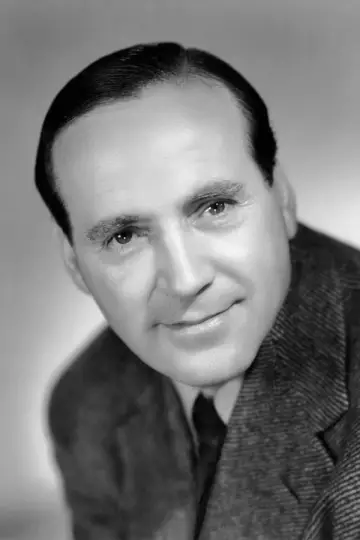
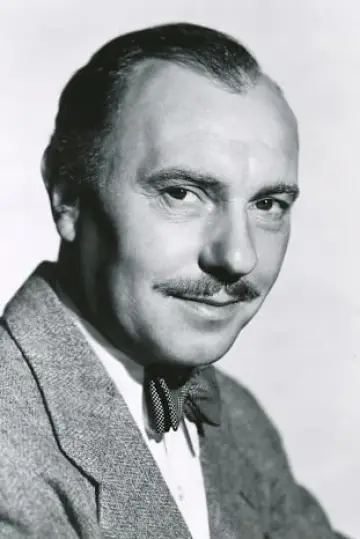
Rudolph Maté directed the film, the seventh in the list of his features, following Three Violent People. Richard Egan plays Leonidas, with Ralph Richardson as Themistocles, David Farrar as Xerxes, Diane Baker, Barry Coe and Anne Wakefield in supporting roles. Remigio Del Grosso and Gian Paolo Callegari wrote the screenplay, and 20th Century Fox produced the film on a budget of about one million dollars. It proved a major commercial success, taking roughly 77 million dollars worldwide, a return far out of proportion to its cost.
Audience response has been warmer than the critical one. On TMDB the film holds a rating of 6.5 out of 10 from 159 votes, while the critics' rating stands at 5.1 out of 10 from 1,111 reviews.
What's left behind the scenes
- Filming took place in Greece, in the area of the settlement of Perachora on the Peloponnese peninsula.
- Approximately 5,000 Greek army personnel participated in the battle scenes.
- Inspired by the film, Frank Miller created a graphic novel about the feat of the 300 Spartans, which was adapted into a film by Zack Snyder in 2007.
- The film states that only Leonidas' bodyguard detachment – 300 men, plus 700 Thespians – participated in the battle (warriors from other city-states are mentioned several times, but do not appear in the film). In reality, the army opposing the Persians numbered around 7,000, of whom approximately 4,000 were lost.
- Several times in the film, Xerxes is referred to as "king of kings." Although this title (Shahanshah) originates from the Achaemenid era, it did not become the official title of Iranian rulers until the Sasanian period, with Ardashir I being the first to be known as Shahanshah.
- Sources (Herodotus) indicate that Spartan warriors wore beards and long hair, which, according to legend, they combed before the battle at Thermopylae. However, in the film, both Leonidas and the other Spartans, with a few minor exceptions, are clean-shaven and have short haircuts.
- The exiled Spartan king Demaratus tells Xerxes at a feast about the Spartans, and in response to the Persian king's question about the rulers of Sparta, replies: “Do not count the one who stole my throne; he does not rule the country, he is merely a usurper.” He is referring to the co-ruler Leonidas, King Leotychidas II (of the Eurypontid family). At the same time, history shows that Demaratus was exiled not by Leotychidas (who belonged to the same family as himself), but by his co-ruler from the Agiad family, Cleomenes the Mad, the elder brother and predecessor of Leonidas on the throne.
- Before the first attack, Xerxes explains his cunning plan to Hydarnes and Mardonius, saying that he ordered the heavy cavalry to be placed behind the infantry and suddenly launched into the attack. However, at that time the Persians could not have had heavy cavalry – the first heavy armored cavalry – cataphracts – appeared among the Iranian peoples with the Sacae and Parthians, three centuries later. During the Achaemenid period, the cavalry in their army was represented exclusively by horse archers, who participate in the attack.
- When Xerxes is brought the body of his brother, he exclaims in grief and anger: “Cyrus!... My brother! How did this happen?” The real Xerxes did not have a brother named Cyrus; his younger brother was Masistes, and there is no information about his participation in the campaign against Greece. Later, he rebelled against the king and was killed along with his family.





 Auditions in India
 Casting calls in USA
 Castingi w Polsce
 Кастинги в Україні

