Admiral Ushakov



Short description
This historical drama focuses on the life of Fyodor Ushakov, a Russian naval commander during the 18th century. The story depicts his leadership in establishing the Black Sea Fleet in 1779 and his military efforts to secure Crimea during the Russo-Turkish War.
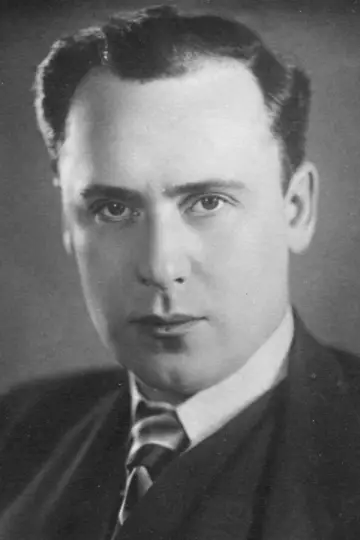
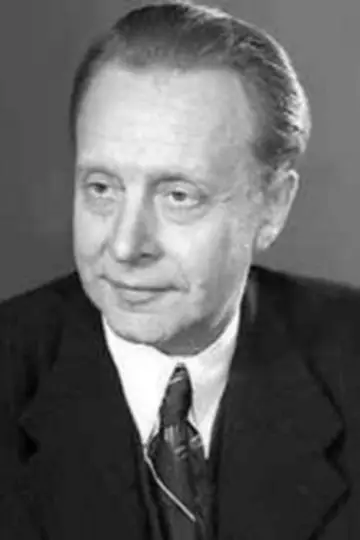
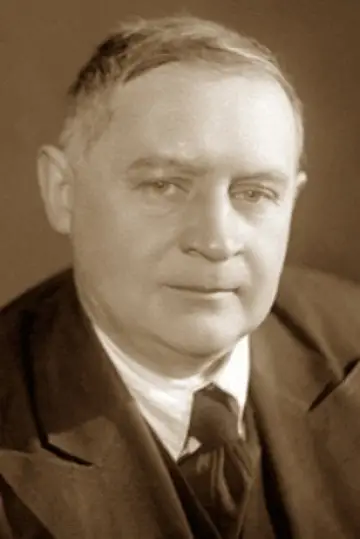
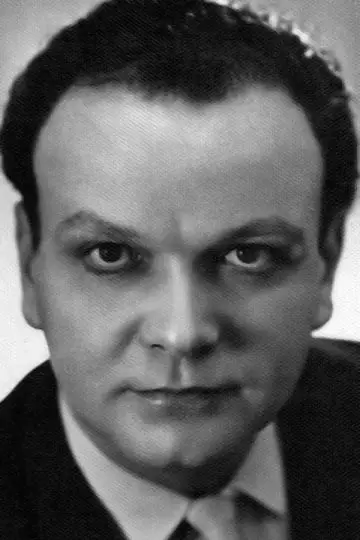
Produced in the Soviet Union by Mosfilm, the film was directed by Mikhail Romm and written by Aleksandr Shtein. The lead role of Admiral Ushakov was played by Ivan Pereverzev, supported by a cast that included Boris Livanov as Prince Potyomkin, Nikolai Svobodin as Count Mordovtsev, Nikolai Chistyakov as Count Voynovich, Gennadi Yudin as Dmitriy Senyavin, and Vladimir Druzhnikov as Vasilyev. In total, 65 actors are credited in the production.
Released on April 22, 1953, the film has a runtime of 108 minutes. On TMDB, it holds a rating of 6.1/10 based on 14 votes.
What's left behind the scenes
- The film was created at the initiative of the Soviet Navy command (Vice Admiral N. G. Kuznetsov) to assert the historical role of Admiral F. F. Ushakov in the history of the Russian Navy, as the establishment of the Order of Ushakov as the primary naval order had raised many questions in the USSR. The leadership of the Soviet Navy and the Ministry of Foreign Affairs of the USSR played a major role in drafting and revising the script (specifically regarding the foreign policy issues of the historical period).
- Filming was conducted at the fortress in Bilhorod-Dnistrovskyi.
- The Battle of Kaliakra is portrayed as a decisive rout of the Turkish fleet, although the Turks did not lose a single ship and were able to escape thanks to the structural superiority of their vessels. However, the Turkish fleet became severely disorganized—most of the ships scattered along the Rumelian coast, having sustained varying degrees of damage. The Turkish flagship sank after reaching Constantinople, which left a profound impression on the inhabitants of the Ottoman Empire's capital.
- The original version of the script was written in 1944 by the renowned Russian historian and novelist Anatoly Vinogradov while he was serving at the front. Although Vinogradov's name does not appear in the film's credits, the script is listed in his official bibliography.
- In the Battle of Fidoni si, Voynovich's ship 'Transfiguration of the Lord' won a fight against two ships of Turkish vice- and counter-admirals and sank a Turkish xebec, whereas in the film, only Ushakov and the vanguard conducted the entire battle, while Voynovich did nothing but pray.
- In the film, the Turkish sultan is the same person at both the beginning and the end of the Russo-Turkish War of 1787–1791, whereas Abdul Hamid I was sultan until 1789, followed by his nephew Selim III.
- The Turkish ship of the line 'Meleki Bahri', captured in the Battle of Tendora, is depicted as a three-decker (meaning it carried at least 90 guns), whereas in reality, it was a two-decker with 66 guns. Furthermore, the 'Meleki Bahri' was captured by the ship of the line 'Maria Magdalena', not by the 'Saint Paul'. The film mentions several ships captured at Tendora and shows ships of the line on screen, but only one such ship was actually captured: the 'Meleki Bahri'.
- The Turkish sultan accuses his advisors of having sworn that the sky would fall to earth and the waters of the Danube would flow backward before his fleet was ever defeated. In reality, this phrase was the response of Aydozle Mehmet Pasha, the governor of the Izmail fortress, to Suvorov's ultimatum before the assault.
- One of the main characters—Count Mordovtsev, who is the president of the Admiralty Board in the film—did not exist during the period described (he is clearly intended to be N. S. Mordvinov). Since 1762, the head of the Admiralty Board was the heir to the throne, Grand Duke Paul Petrovich, meaning neither Mordvinov nor Voynovich could have led it.
- Actors Vladimir Etush and Gottlieb Roninson made their cinematic debuts in this film.
- Marko Voynovich is portrayed as an elderly man, but in reality, he was about 40 years old at the time described; moreover, he was five years younger than Ushakov. Nikolai Svobodin, who played Mordovtsev, was 55 years old, while his prototype, Mordvinov, was only 37 even in 1791, when the film's action concludes.
- In the film, G. A. Potemkin is depicted as missing his left eye, whereas in reality, it was his right eye that was blind.









 Auditions in India
 Casting calls in USA
 Castingi w Polsce
 Кастинги в Україні

