North by Northwest
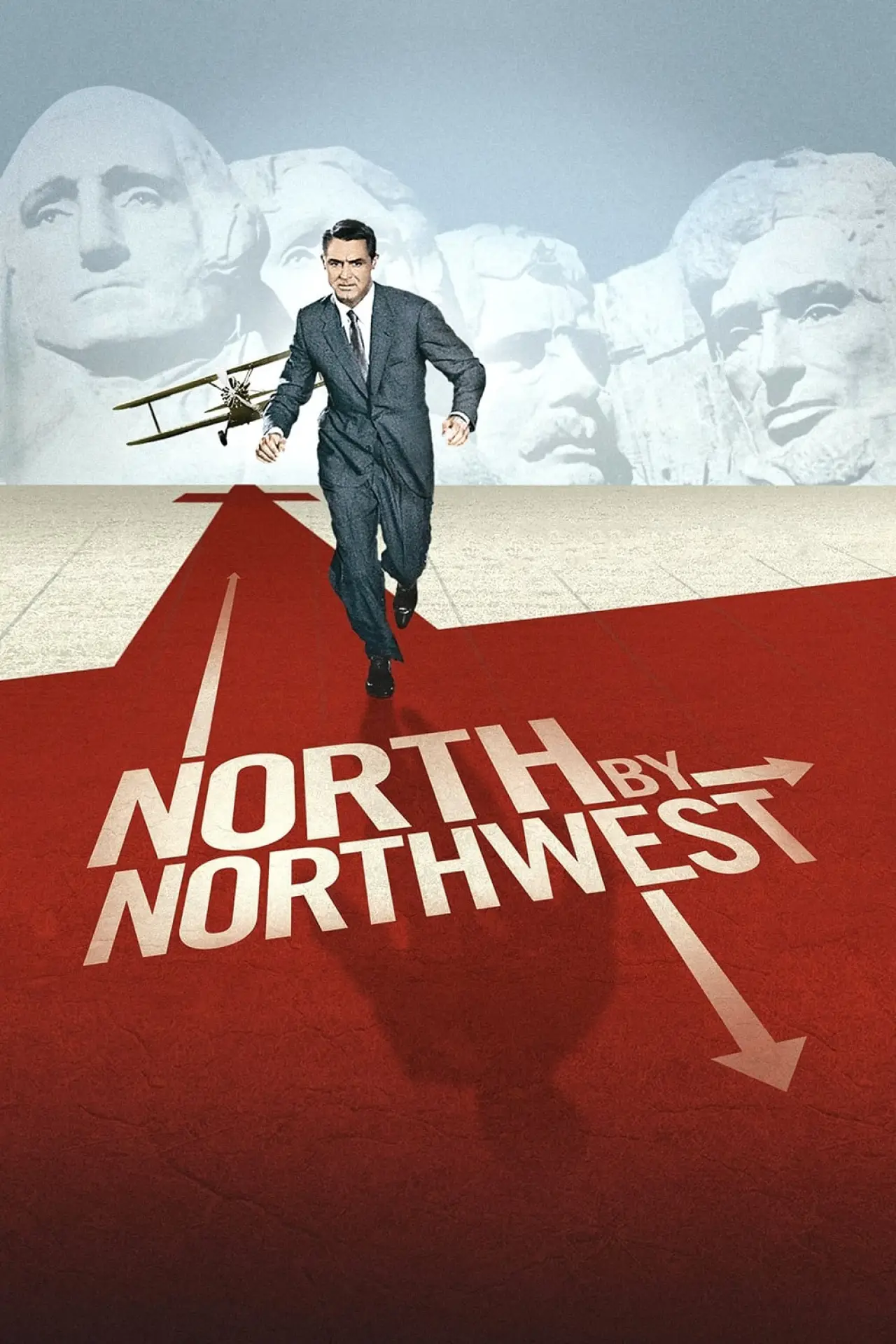
It's a deadly game of "tag" and Cary Grant is "it"!



Country
Production
Budget
$4 000 000
Revenue
$13 278 052
Director
Actors
Scenario
Producer
Operator
Composer
Artist
Robert F. Boyle
Audition
Editing
Short description
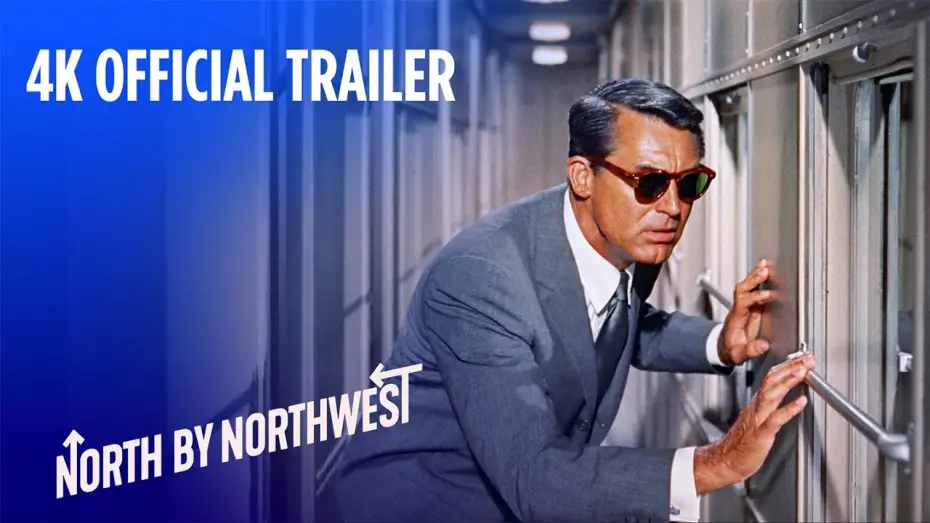
Advertising man Roger Thornhill is mistaken for a spy, triggering a deadly cross-country chase.
What's left behind the scenes
- In DVD extras, Eva Marie Saint recalled that Hitchcock, dissatisfied with the costumes provided for her, personally went to Bergdorf Goodman and chose clothes for the actress.
- The title of the painting most likely refers to Shakespeare's play "Hamlet." In one scene, Hamlet says the phrase "I am only mad north-northwest" to convince people of his sanity (the film's protagonist does the same). Also, at the very end, the characters are preparing to fly west on a "Northwest Airlines" plane.
- Cary Grant initially refused to play Thornhill because he was fifty-five at the time of filming and much older than his character.
- The scenes where Eve Kendall and Roger Thornhill meet in the forest after she shot him in the cafe near Mount Rushmore might not have been in the film. Metro-Goldwyn-Mayer executives demanded that Hitchcock remove this lengthy scene at the end. But Hitchcock took a firm stance, believing the scene was very important – it was Eve and Thornhill’s first date since he learned she was Vandamm’s mistress and a secret agent. The fact that Hitchcock's agents, who had signed a contract with MGM, included a clause granting the director full artistic control over the film without his knowledge helped defend the episode. Hitchcock recalled: 'This gave me grounds to politely, but firmly state: I'm sorry, but this episode must remain.'
- Originally, the film was supposed to include the following episode: Cary Grant's character would slide down Lincoln's nose and hide in his nostril. Suddenly, Lincoln sneezes, giving him away. This scene was not filmed, but it explains one of the film's working titles – "The Man in Lincoln's Nose".
- Many of the cars in the early scenes of the film (New York taxi, patrol car, detectives' car) are 1958 Ford Sedans.
- According to Hitchcock himself, the final scenes of the film – with a train entering a tunnel – carry traditional Freudian symbolism. The piquancy lies in the fact that a romantic scene involving the main characters was supposed to be taking place in one of the carriages at that time... Later, the director stated that it was one of the most daring scenes he had ever filmed.
- Edward Platt, who played Victor Larabee in the film, later appeared in a television production of "The Brain" (1965), where his character had an assistant named Larabee.
- Hitchcock was not allowed to film the final scene at the actual Mount Rushmore to avoid endangering the American cultural landmark. An exact replica of the monument was built on the studio lot.
- In 2007, the American Film Institute ranked the film "North by Northwest" at number 55 on its list of the greatest films of all time.
- While Roger is waiting for his suit in Eve's room, he goes to take a shower and whistles a tune. It is a song from "Singin' in the Rain" (1952), released, like "North by Northwest," by MGM Studios.
- The Vandamm house on Mount Rushmore, shown in the finale, is a scale model of a house designed by Frank Lloyd Wright (an American architect and architectural theorist, the founder of organic architecture, according to the principles of which a building should organically blend into its environment). Part of the house was recreated for the scene where Thornhill circles it.
- Once, Martin Landau, then a budding actor, noticed that Hitchcock constantly gave instructions to Cary Grant, James Mason, and Eva Marie Saint. When he asked Hitchcock why he wasn't helping him, the director replied that when he doesn't say anything to the actors, it means they are doing their job perfectly; if he offers any comments, it means the actors have done something wrong.
- Patrick McGilligan and Yul Brynner were considered for the role of Phillip Vandamm.
- MGM Studios wanted Gregory Peck and Sid Cheriss to play the leading roles, but Hitchcock insisted on Cary Grant and Eva Marie Saint. MGM also offered Hitchcock Sophia Loren for the lead female role; Grant supported the studio in this matter, as he had tender feelings for Loren at the time. Notably, seven years later, Sophia Loren starred in *Arabesque*, which, in terms of plot and structure, strongly resembles *North by Northwest*, where her partner was Gregory Peck (a role originally intended for Grant).
- Rumor has it that William Holden was offered the role of Roger Thornhill.
- Hitchcock makes a cameo as a man trying to jump onto a bus at the very beginning of the film.
- The station scene was filmed at New York's Grand Central Terminal. Among the onlookers watching the filming were future directors George A. Romero and Larry Cohen.
- The film's protagonist is named Roger O. Thornhill. This name was not chosen by chance. Thornhill College was the location of an agent network in the then-popular political thriller 'The Manchurian Candidate'. The letter O. in his name, which 'means nothing', is a reference to producer David O. Selznick, for whom O. also meant nothing.
- Because of an order from UN Secretary-General Hammarskjöld prohibiting the filming of feature films within the UN building, Hitchcock had to resort to a number of tricks. He managed to film one episode, where Thornhill enters the UN building – with a hidden camera concealed in the back of a truck. He then received permission to take several color photographs inside the building and accompanied the photographer as an ordinary visitor, discreetly whispering instructions about where to shoot. Later, these photographs were used to construct the sets in a studio pavilion. The crime scene where 'the real' Townsend is killed was reproduced with precision. The action took place in a delegates' lounge, but to avoid damaging the prestige of the UN and justify the appearance of a man with a knife, it is referred to as a 'public hall' in the film. (The first permission to film inside the UN General Assembly building was secured in 2004 by director Sydney Pollack for his film 'The Interpreter'). The filming was authorized by UN Secretary-General Kofi Annan.
- The plot requires the main characters to be in South Dakota. Hitchcock decided not to spend money on a trip there, and to recreate the wooded terrain of South Dakota, one hundred pine trees were transplanted to a specific section of the studio.
- Alfred Hitchcock was pitched the story of a commercial agent mistakenly taken for a secret agent by journalist Otis L. Guernsey. Guernsey was greatly impressed by a true story that occurred during World War II. The British, for fun, invented a fictional agent and brilliantly led the Germans astray, who wasted considerable resources searching for the 'spy'.
- Cary Grant played the role of Roger Thornhill. James Stewart was initially chosen for the role, but Hitchcock replaced him with Grant after a poor performance in *Vertigo*.
Similar movies
8.2/10
8/10
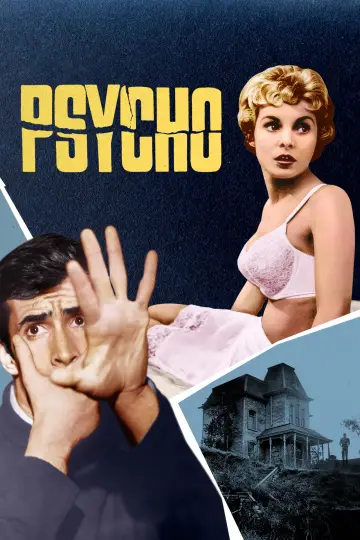
7.9/10
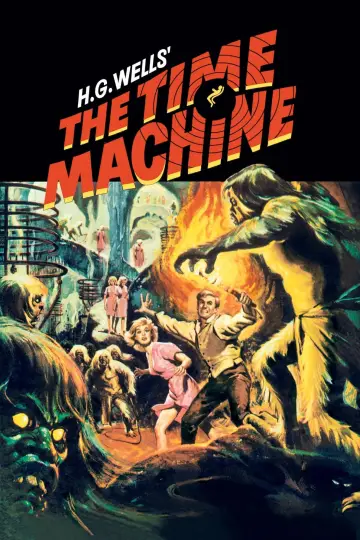
7.5/10
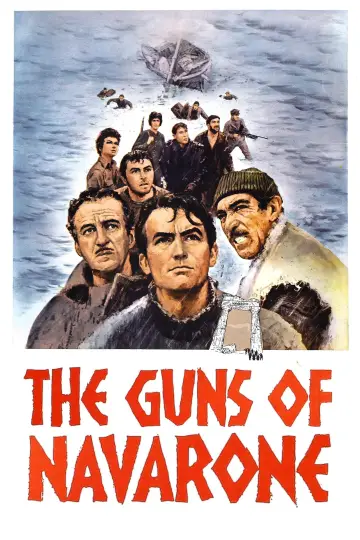
7.5/10
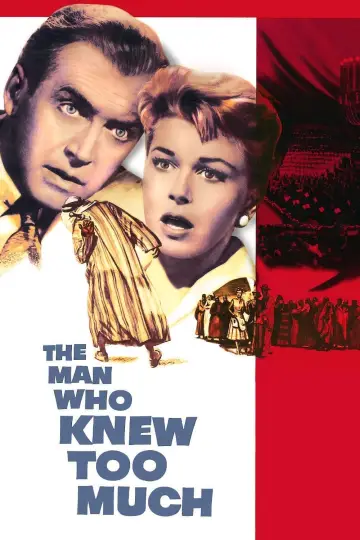
7.4/10
7.4/10
7.4/10
7.4/10
7.3/10


 Auditions in India
 Casting calls in USA
 Castingi w Polsce
 Кастинги в Україні
