The Greatest Story Ever Told



![Watch film The Greatest Story Ever Told — The Greatest Story Ever Told (1965) Original Trailer [HD]](https://www.acmodasi.in/amdb/images/posters/1/v/the-greatest-story-ever-told-1965-LUD9A.webp)
Short description
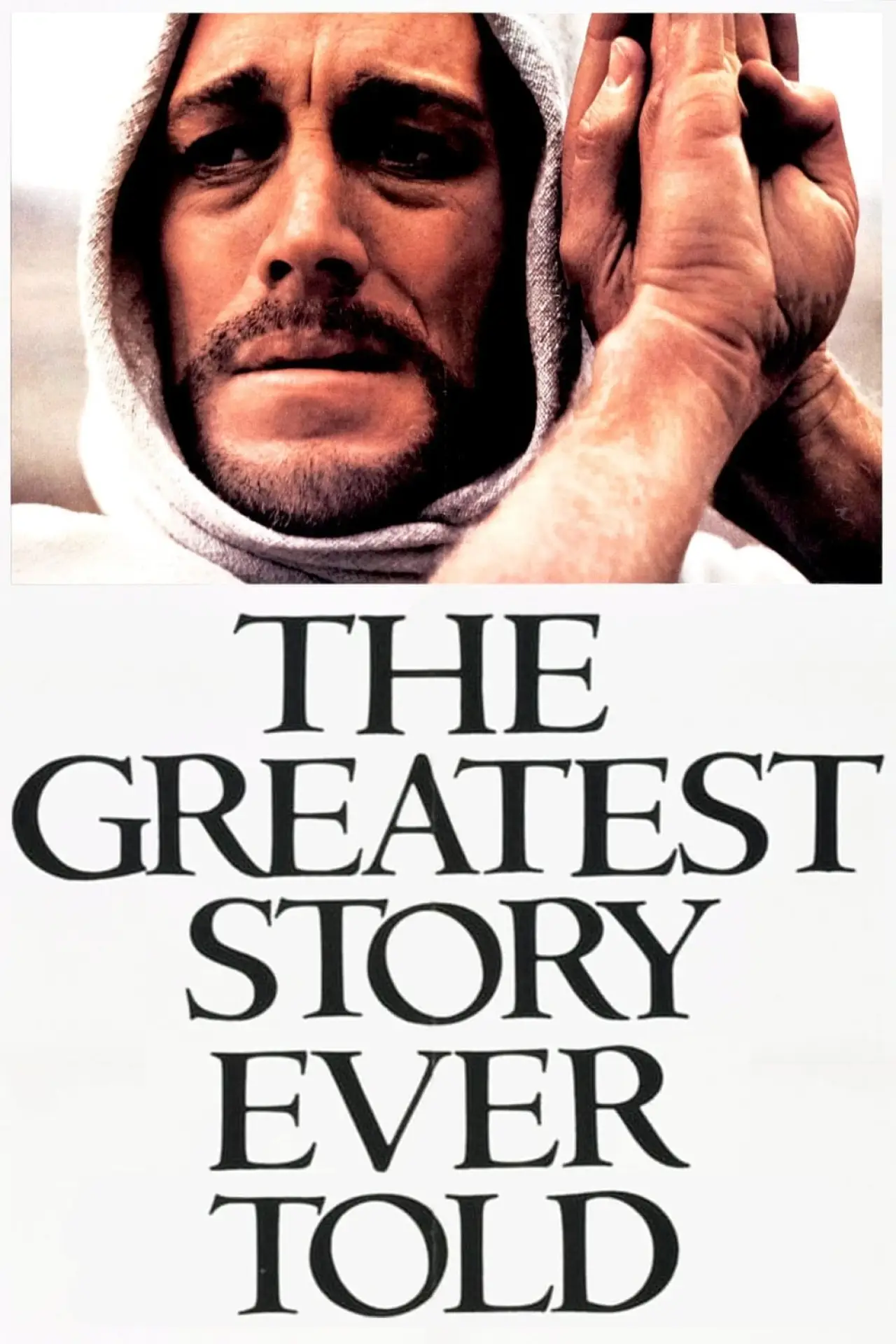
The Greatest Story Ever Told is a large-scale retelling of the life of Jesus Christ, drawn from the Gospels. It follows him from his birth in Bethlehem and the flight of Mary and Joseph into Egypt to escape King Herod's order to kill the newborn boys, through his baptism by John the Baptist, his public teaching and miracles, his entry into Jerusalem, the Last Supper and Judas's betrayal, to his trial, crucifixion and resurrection. Max von Sydow plays Jesus, heading a credited cast of sixty-three that also includes Michael Anderson Jr., Carroll Baker, Ina Balin, Victor Buono and Richard Conte.
George Stevens directed and wrote the screenplay with James Lee Barrett, and produced with George Stevens Jr. It was the twelfth film he directed, arriving after The Diary of Anne Frank and following a run that included A Place in the Sun, Shane and Giant. It was made for about 20 million dollars and returned roughly 16 million worldwide.
On IMDb it holds 6.6 out of 10 from around 13,000 votes, and on TMDB 6.4 from about 222. A critics' rating of 5 out of 10 from 24 reviews places it below both audience scores. At 199 minutes, it is among the longer American studio productions of its era.
What's left behind the scenes
- George Stevens filmed this movie in Arizona, California, Nevada, and Utah, finding the landscapes there much more – in his own words – majestic than anything existing in the Middle East. 47 sets were built for the film – on location and in the pavilions of Hollywood studios.
- Writing the script took three years. For most of this time, the meticulous George Stevens spent time reading historical works and gospel texts, as well as traveling around Israel.
- Producer and director George Stevens usually spent a whole year editing his films. As a rule, he shot dozens of takes of each scene, varying the camera position from take to take in order to later choose the best option. In this case, the film's premiere was originally planned for Christmas 1964, but although filming was completed at the end of the summer of 1963, the premiere had to be postponed because the editing was not finished on time due to the huge amount of footage. The film was released on Easter in 1965, and ran for 3 hours and 45 minutes, making it one of the longest films in history at the time. It was subsequently re-edited several times, and this particular version has not been seen by audiences since the 1960s.
- During filming, the entire set and Jerusalem decorations were covered in snow when Arizona experienced a blizzard for the first time in several decades. Several hundred people – actors and crew members, including producer George Stevens (1904-1975) – came out to clear the snow, armed with shovels, wheelbarrows, bulldozers, and even flamethrowers. As soon as they finished clearing the set, the snow started again – even heavier than before. They had to move to the "Desilu Studios" pavilions in Hollywood.
- George Stevens was in a great hurry to film the scenes with John the Baptist, which were to be shot in the Glen Canyon area. The construction of the dam was nearing completion there, and filming was delaying the project.
- According to Max von Sydow (1929-2020), the hardest part of playing Jesus was that everyone around him subconsciously expected him to stay in character at all times. For example, between takes, the actor couldn't simply have a smoke, have a drink at the end of the shooting day, or show affection toward his wife.
- Max von Sydow's American debut. Prior to this film, he was simply a popular Swedish actor who worked with Ingmar Bergman (1918-2007). Producer and director George Stevens specifically wanted an actor unknown to the general public for the role of Jesus.
- Initially, George Stevens hired 550 members of the Navajo tribe from the local reservation to play Roman legionaries, but they soon left the project due to some event of their own and returned home. They were replaced by cadets from the Reserve Officers' Training Corps. People receiving state health assistance from the state of Arizona played the roles of the sick and those seeking healing.
- Telly Savalas shaved his head for the role of Pontius Pilate, and from then on, he remained bald for the rest of his life.
- The final work of cinematographer William C. Mellor (1903-1963). He passed away from a heart attack right on the filming set.
Similar movies


 Auditions in India
 Casting calls in USA
 Castingi w Polsce
 Кастинги в Україні
