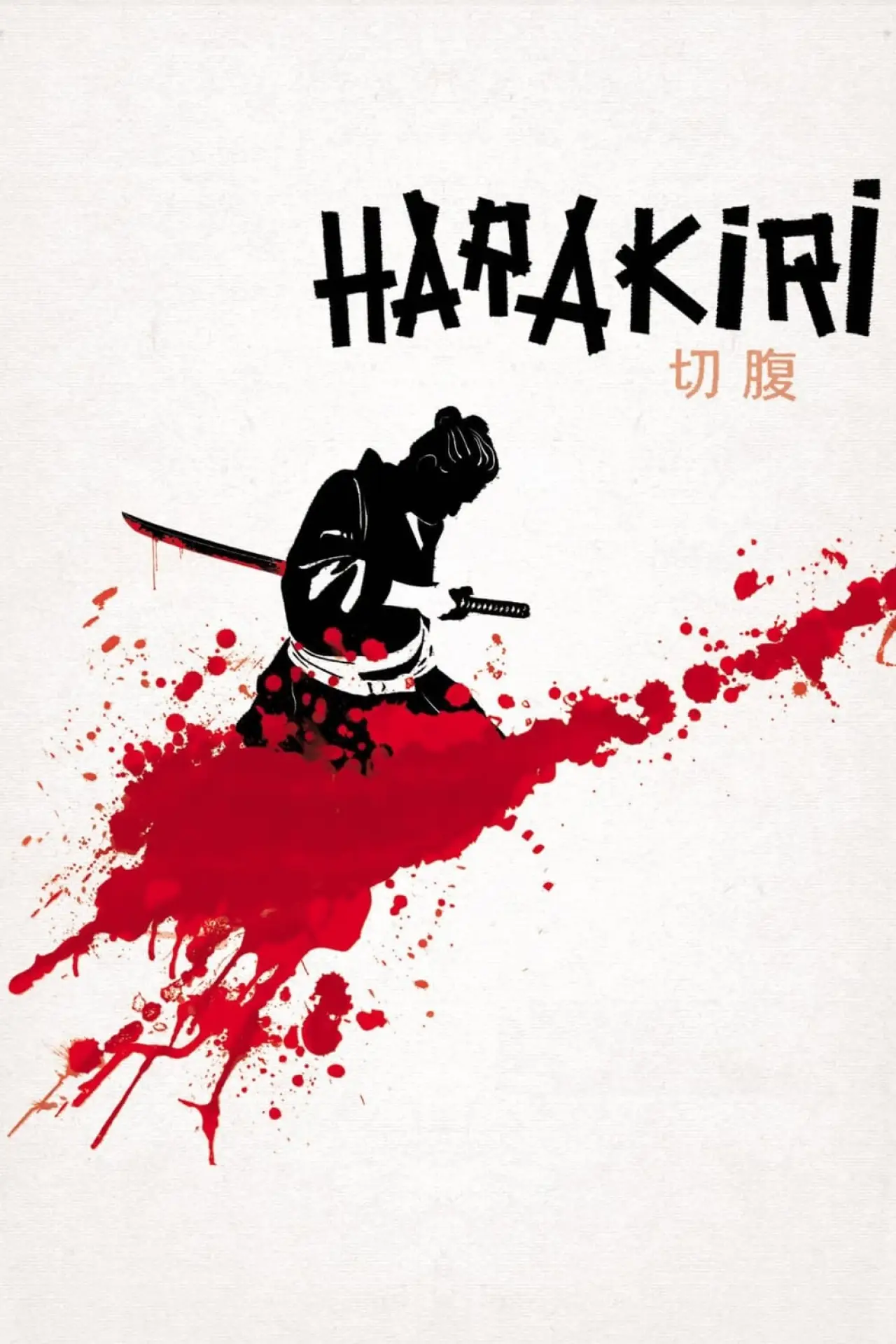
Harakiri
What befalls others today, may be your own fate tomorrow.




Country
Production
Budget
$0
Revenue
$15 222
Director
Actors
Tatsuya Nakadai, Akira Ishihama, Shima Iwashita, Tetsurō Tamba, Masao Mishima, Ichirō Nakatani, Kei Satō, Yoshio Inaba, Hisashi Igawa, Tōru Takeuchi
All actors and roles (10)
All actors and roles (10)
Scenario
Producer
Tatsuo Hosoya, Tatsuyo Hosoya
Operator
Yoshio Miyajima
Composer
Artist
Audition
Editing
Hisashi Sagara
All team (18)
All team (18)
Short description
Down-on-his-luck veteran Tsugumo Hanshirō enters the courtyard of the prosperous House of Iyi. Unemployed, and with no family, he hopes to find a place to commit seppuku—and a worthy second to deliver the coup de grâce in his suicide ritual. The senior counselor for the Iyi clan questions the ronin’s resolve and integrity, suspecting Hanshirō of seeking charity rather than an honorable end. What follows is a pair of interlocking stories which lay bare the difference between honor and respect, and promises to examine the legendary foundations of the Samurai code.
What's left behind the scenes
- During the filming of the action scenes, Tatsuya Nakadai (who played the ronin Hanshiro Tsugumo) was constantly afraid because the swords and spears were real—even though the use of real weapons is prohibited in Japanese cinema. He was not particularly comforted by the fact that all the fights were choreographed and the weapons were in the hands of professionals.
- The ronin in the film claim they served Masanori Fukushima until his exile, after which they were left without a master. Fukushima was exiled for unilaterally beginning repairs on a castle in Hiroshima, which contradicted the law. Fukushima and his son were stripped of all their property and banished to another prefecture.
- Tatsuya Nakadai and his co-star Rentaro Mikuni clashed during filming over their speaking styles. The former delivered his lines loudly and clearly, while the latter spoke considerably softer—both stood their ground, citing their own professional experiences to support their views. It ended with director Masaki Kobayashi halting production and informing the actors that filming would not resume until they finally reached an agreement. The hiatus lasted three days.
- The film is a vivid example of how Masaki Kobayashi opposed the practice of idealizing Japan's former feudal system. The samurai code of honor is repeatedly called into question throughout the movie. This kind of opposition was characteristic of the post-occupation movement in Japan, which was linked to protests against the presence of American military bases in the country.
- After Shima Iwashita's character married, she was depicted on screen exclusively with blackened teeth. In feudal Japan, black teeth were a sign that a lady was married. The tradition of teeth blackening was called 'ohaguro'.
- The bamboo swords shown in the film were called 'takemitsu,' and the film's composer was named Toru Takemitsu. A joke circulated among the crew: 'Harakiri via Takemitsu, music by Takemitsu'.
Similar movies
8.7/10
8.4/10
8.4/10
8.3/10
8.3/10
8.2/10
8.1/10
8/10
7.9/10
7.9/10


 Auditions in India
 Casting calls in USA
 Castingi w Polsce
 Кастинги в Україні
