Doctor Dolittle - crew, film crew

The entire team, the film crew of the film "Doctor Dolittle"
Doctor Dolittle (1998)
Timing: 1:25 (85 min)
Doctor Dolittle - TMDB rating
5.717/10
3226
Doctor Dolittle - Kinopoisk rating
6.583/10
57173
Doctor Dolittle - IMDB rating
5.4/10
107000

Film crew

Director

Producer

David T. Friendly
Producer
Joseph Singer
Producer

Executive Producer
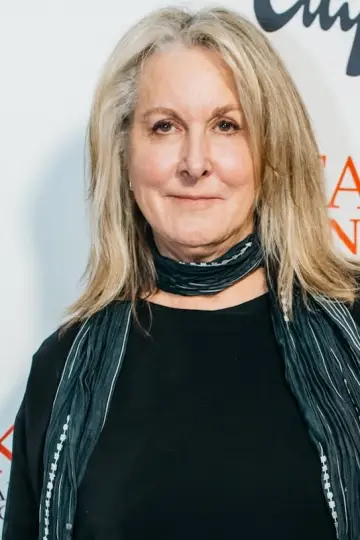
Photo Jenno Topping #16375

Jenno Topping

Jenno Topping
Executive Producer
Sue Baden-Powell
Executive Producer

Casting

Nancy Foy
Casting

Editor

Peter Teschner
Editor

Art Direction

Greg Papalia
Art Direction

Costume Design

Sharen Davis
Costume Design

Production Design

William A. Elliott
Production Design

Stunt Coordinator
Second Unit Director

Jon Farhat
Second Unit Director
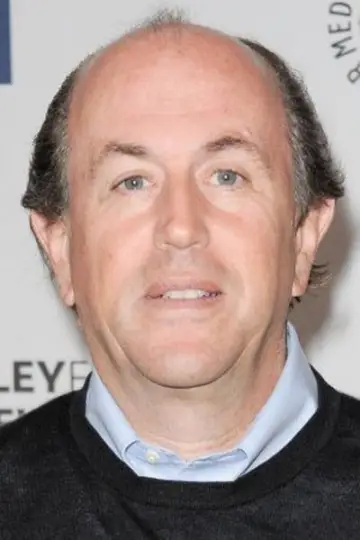
Photo Ernie F. Orsatti #71560

Ernie F. Orsatti

Ernie F. Orsatti
Second Unit Director

Set Decoration

K.C. Fox
Set Decoration

Makeup Artist

Toy Van Lierop
Makeup Artist
Ann Pala
Makeup Artist
Shontai Clark
Makeup Artist

Sound Re-Recording Mixer

Gary Alexander
Sound Re-Recording Mixer
Photo Gary C. Bourgeois #73519
Gary C. Bourgeois
Sound Re-Recording Mixer

Original Music Composer
Photo Richard Gibbs #74379

Richard Gibbs

Richard Gibbs
Original Music Composer

Unit Production Manager

Jeffrey Downer
Unit Production Manager
Sue Baden-Powell
Unit Production Manager

Production Supervisor

Cathy Mickel Gibson
Production Supervisor

Associate Producer

Steph Lady
Associate Producer

Second Assistant Director
Photo Julie Herrin #102462
Julie Herrin
Second Assistant Director

Donald Sparks

Donald Sparks
Second Assistant Director
Susan J. Hellmann
Second Assistant Director
Shery Blanc
Second Assistant Director

Director of Photography
Photo Russell Boyd #74465

Russell Boyd

Russell Boyd
Director of Photography

Costume Supervisor

Riki Lin Sabusawa
Costume Supervisor

Sound Effects Editor
Photo Craig Berkey #26202
Craig Berkey
Sound Effects Editor
Paul Apted
Sound Effects Editor

Visual Effects Supervisor

Jon Farhat
Visual Effects Supervisor
Van Ling
Visual Effects Supervisor

Supervising Sound Editor

John A. Larsen
Supervising Sound Editor
Michael J. Benavente
Supervising Sound Editor

Script Supervisor

Benita Brazier
Script Supervisor
Marvel Wakefield
Script Supervisor
Sarah Auerswald
Script Supervisor

Hairstylist

Fay Kelly
Hairstylist
Erma Kent
Hairstylist

Digital Effects Supervisor

Janek Sirrs
Digital Effects Supervisor

Sound Mixer

David Kirschner
Sound Mixer

Visual Effects Producer

Casey Cannon
Visual Effects Producer
Melissa Brockman
Visual Effects Producer
Anne Putnam Kolbe
Visual Effects Producer
Mark Brown
Visual Effects Producer

First Assistant Director

Richard Graves
First Assistant Director
Kris Krengel
First Assistant Director

Screenplay

Larry Levin
Screenplay

Set Designer

Easton Michael Smith
Set Designer
Gina B. Cranham
Set Designer
James F. Claytor Sr.
Set Designer

Second Second Assistant Director
Photo Tamu Blackwell #98235
Tamu Blackwell
Second Second Assistant Director

Story

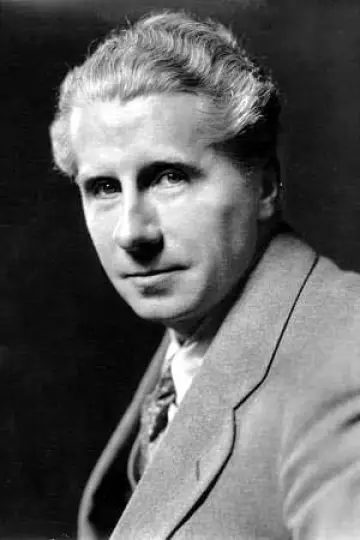
Photo Hugh Lofting #102463
Hugh Lofting
Story

Music Supervisor

Pilar McCurry
Music Supervisor

Special Effects Makeup Artist
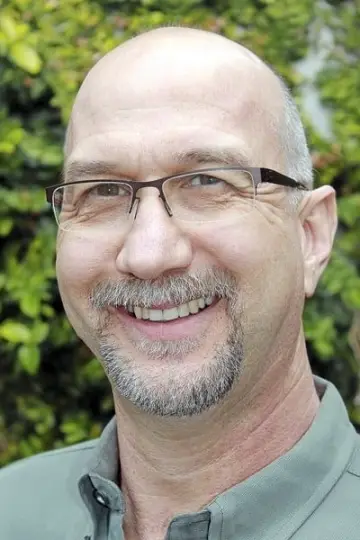
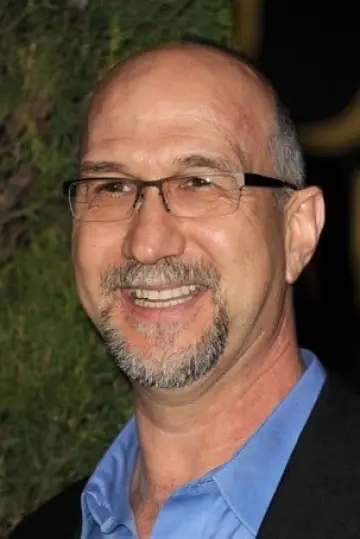
Photo Matthew W. Mungle #11071Photo Matthew W. Mungle #11072
Matthew W. Mungle
Special Effects Makeup Artist

Post Production Supervisor

P. Todd Coe
Post Production Supervisor

Script Coordinator

Mads Hansen
Script Coordinator

Trainee Production Coordinator

Vince Duque
Trainee Production Coordinator

What's left behind the scenes

  • Eddie Murphy is terrified of animals, so he always insisted on using composite shots or digitally adding images of animals to scenes featuring him. When it was impossible to avoid being in the same room with an animal, the filming of such scenes often ended with his desperate screams.
  • At one point, Eddie Murphy's character watches Richard Fleischer's (1916-2006) film 'Doctor Dolittle' (1967) on television.
  • The film features a large number of different animals, which required several months of preparation, careful planning, and training. Trainers studied the behavioral characteristics of animal species and the unique features and temperament of individual animals. They were taught to obey commands given by voice, sounds, and gestures, and received their favorite treats as a reward.
  • To create the illusion that the animals were actually speaking, computer-generated digital images were used from two-dimensional models. First, the natural movement of the animals' muzzles was filmed, and then, during post-production, the images were altered frame by frame so that the teeth, lips, and tongue formed words. The 1995 film "Babe" by Chris Noonan took a different approach, where the muzzles of all the animals were rendered in three dimensions. There, an image of the entire supposedly speaking muzzle was superimposed onto the animals’ images. This method was innovative and quite advanced for its time, but the use of the technique applied in "Doctor Dolittle" (1998) represented a new step in depicting animals on screen.
  • Creating some illusions required unique equipment, such as harnesses and bridles specifically invented and constructed for the film. One such collar was created specifically for the dog being forcibly dragged to the veterinarian. The dog is pulled in a sitting position, so the collar was designed to distribute the dog’s weight evenly between its neck and hindquarters. The dog was trained beforehand to accept this behavior and become accustomed to the collar. Another similar collar was designed for safe riding in the passenger seat of a car.
  • Some scenes required the simultaneous participation of a large number of animals and, consequently, their simultaneous presence on the set. The animals were pre-trained (this took several weeks) to work together. Up to 45 trainers were present on set during the filming of some scenes.
  • Animal doubles were used in many scenes; for example, when Rodney rides in a cage on the roof of a car, or when he nearly gets flushed down the toilet in the ladies' room, an animatronic guinea pig was used. Rodney was well-trained and could perform many stunts himself – biting the bars of the cage, going to the designated spot, and sitting on command; however, he also had doubles trained to perform a specific trick. Animatronic doubles were also used for other animals – for example, Lucky, the two rats, the owl, Jacob, the pigeons, all of whom also had live doubles, allowing for shift-based filming so that the animals could rest.
  • In situations where a potential predator and prey are together, or in scenes where an animal is in a potentially dangerous position, such as a tiger on the edge, a blue screen technique was used. The animals were filmed individually against a blue backdrop, and their images were combined with the necessary background during editing. This method can also be used to film animals or an animal and its animatronic double(s). During post-production, the two halves are combined so that the result appears as if the animals were filmed together.
  • The collision on the highway during the chase was not planned. The script called for the car to use the bus as cover and turn left. However, a collision occurred, and as a result, the trunk opened revealing blue bags inside (they were placed there to facilitate some stunts). The footage with the bags had to be cut. Subsequent scenes had already been filmed by that point and showed a much less damaged car.
Did you like the film?

© ACMODASI, 2010-2026

All rights reserved.
The materials (trademarks, videos, images and text) contained on this site are the property of their respective owners. It is forbidden to use any materials from this site without prior agreement with their owner.
When copying text and graphic materials (videos, images, text, screenshots of pages) from this site, an active link to the site www.acmodasi.in must necessarily accompany such material.
We are not responsible for any information posted on this site by third parties.