The Train





Short description
The Train is a 1964 war thriller set in France in the summer of 1944, as Allied forces close in on Paris. German Colonel von Waldheim is determined to send a trainload of French paintings to Germany before the city falls, treating the artworks as both a fortune and a prize. The museum's director, Mademoiselle Villard, appeals for help, but the Resistance is unwilling to risk lives for canvases. The railway inspector Paul Labiche, himself a Resistance member, is ordered to organize the train's departure and becomes the man best placed to stop it. When von Waldheim forces him to drive the convoy under threat, Labiche and his dwindling group of fighters improvise an elaborate scheme to keep the train and its cargo inside France.
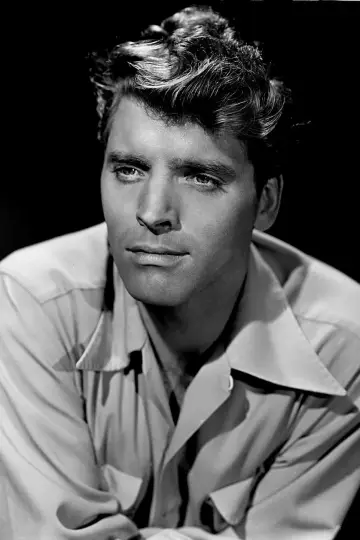
John Frankenheimer directed, working from a screenplay by Walter Bernstein, Franklin Coen and Frank Davis, with Jules Bricken producing. The film was the third of the eighteen he directed, following Birdman of Alcatraz and preceding Seven Days in May. Burt Lancaster plays Labiche, Paul Scofield is von Waldheim, and Jeanne Moreau, Suzanne Flon, Michel Simon and Wolfgang Preiss appear among the credited cast of twenty-four. Shot in black and white and built around its railway sequences, it cost about six million dollars and returned roughly seven million worldwide.
On IMDb it holds 7.8/10 from over eighteen thousand votes, and on TMDB 7.6/10 from 393 votes. A critics' rating of 8.5/10 from nineteen reviews places it above both audience scores, indicating that reviewers rated it more highly than general viewers did.
What's left behind the scenes
- The film is based on the novel 'Front of Art' by Rose Valland.
- The operation of the French railway workers in August 1944, shown in the film, is fictional and serves as a composite image, illustrating the activities of the railway underground throughout the four years of German occupation.
- Arthur Penn was initially approved as the film's director. However, he only shot one day and, at the insistence of Burt Lancaster, was replaced by John Frankenheimer. Lancaster disliked Penn's concept. Penn intended to film a purely dramatic story, focusing on the role of art in people's lives. The film was to answer the question of why they risked their lives to save paintings, without necessarily understanding art themselves. He planned to dedicate minimal screen time to the operation itself. According to Frankenheimer, in Penn's version, the train did not leave the station for the first 90 pages of the script.
- Locomotive No. 757 (type 030S Bourbonnais), heading toward a derailed steam engine from a train carrying paintings, crashed into the latter at a speed of 95 km/h. The episode was filmed in Normandy, in Aquignole, with extreme safety measures and the possibility of only one take. Seven cameras were used for filming. The scene of the first locomotive's crash (type 230B) was filmed with five cameras, three of which were destroyed.
- Burt Lancaster performed all the stunts himself in the film. Similarly, Albert Rémy personally detached a locomotive from the main train while it was in motion.
- The producers hired a train to transport equipment from one filming location to another. This train also appears in the film as a transport for the paintings.
- The filming was so noisy due to the locomotives and other machinery that the commands 'action' and 'cut' were often given using a special code with train whistles.
- The main railway scenes were filmed at the Argentueil sorting station, the Saint-Ouen depot, in Glacé-Gentilly, in Ver-Torsy and Garganville. The aerial attack on the Ver station was filmed in Garganville near Paris (a former sorting station). The team of special effects master Lee Zavitz, consisting of 50 people, spent six weeks installing and connecting pyrotechnic devices, which then blew up the station in one minute of screen time.
- In 2004, The New York Times included 'The Train' in its list of 1000 best films of the world.
- Locomotive No. 757 (Bourbonnais type 030S), sent to the derailed steam engine from the train carrying paintings, crashed into the last one at a speed of 60 miles per hour. The episode was filmed in Normandy, in Acquigny with extreme safety measures and with the possibility of only one take. The filming was done immediately with seven cameras. The scene of the first steam engine crash (type 230V) was filmed with five cameras, three of which were broken because, after derailing, the steam engine moved faster than planned.
- The scene where Paul Lyabiche climbs the hill overlooking the railway was filmed in the valley of the Er River, near Autheuil-Authouy.
- Midway through filming, Burt Lancaster took a day off to play golf. During the game, he fell into a bunker and injured his knee so badly that he could only walk with a limp. To continue filming, John Frankenheimer included in the film an episode of chasing Lyabiche and his leg injury.
- When it became known that Michel Simon would not be able to complete the work in all the scenes planned with him, Frankenheimer introduced into the script a scene of the execution of his character, Pope Bulle.






 Auditions in India
 Casting calls in USA
 Castingi w Polsce
 Кастинги в Україні

