Things to Come
The future is here!



Country
Production
Genre
Budget
$0
Revenue
$0
Director
Actors
Raymond Massey, Edward Chapman, Ralph Richardson, Margaretta Scott, Cedric Hardwicke, Maurice Braddell, Sophie Stewart, Derrick De Marney, Ann Todd, Pearl Argyle
All actors and roles (10)
All actors and roles (10)
Scenario
Producer
Operator
Georges Périnal
Composer
Artist
Frank Wells
Audition
Editing
Short description
The story of a century: a decades-long second World War leaves plague and anarchy, then a rational state rebuilds civilization and attempts space travel.
What's left behind the scenes
- Before work began on the film, a memorandum was created for all those involved in modeling and creating the costumes and sets for the final part of the film, outlining the main requirements for the sets and costumes. This memorandum sharply contrasted the future "Shape of Things to Come" with "Metropolis."
- After filming had already begun, Hungarian abstract artist László Moholy-Nagy was invited to work on the film, and was tasked with creating effects accompanying the scenes of Eucatown’s reconstruction. Moholy-Nagy created the necessary effects in the form of an abstract light show, but only 90 seconds of the material he created made it into the film (as a translucent projection, through which working construction machinery and buildings under construction are visible). However, in the autumn of 1975, researchers discovered four previously unknown scenes from this show that were not included in the final edit.
- This film can be considered Herbert George Wells's authorial project – he wrote the screenplay based on his non-fiction book “The Shape of Things to Come,” participated in the casting of actors, explained the tasks to them on set, oversaw the work of the costume designers, and approved Arthur Bliss as the film's composer.
- On November 17, 1936, the film was shown at the US Embassy in Moscow, where it was watched by Mikhail Bulgakov and his wife. Elena Sergeevna Bulgakova wrote in her diary: “Reception at military attaché Faymonville’s house at the American ambassador’s residence. Two films. The first, based on Wells, is ‘The Future’ – about a future war. The beginning is very strong, the ending is contrived, unconvincing…”
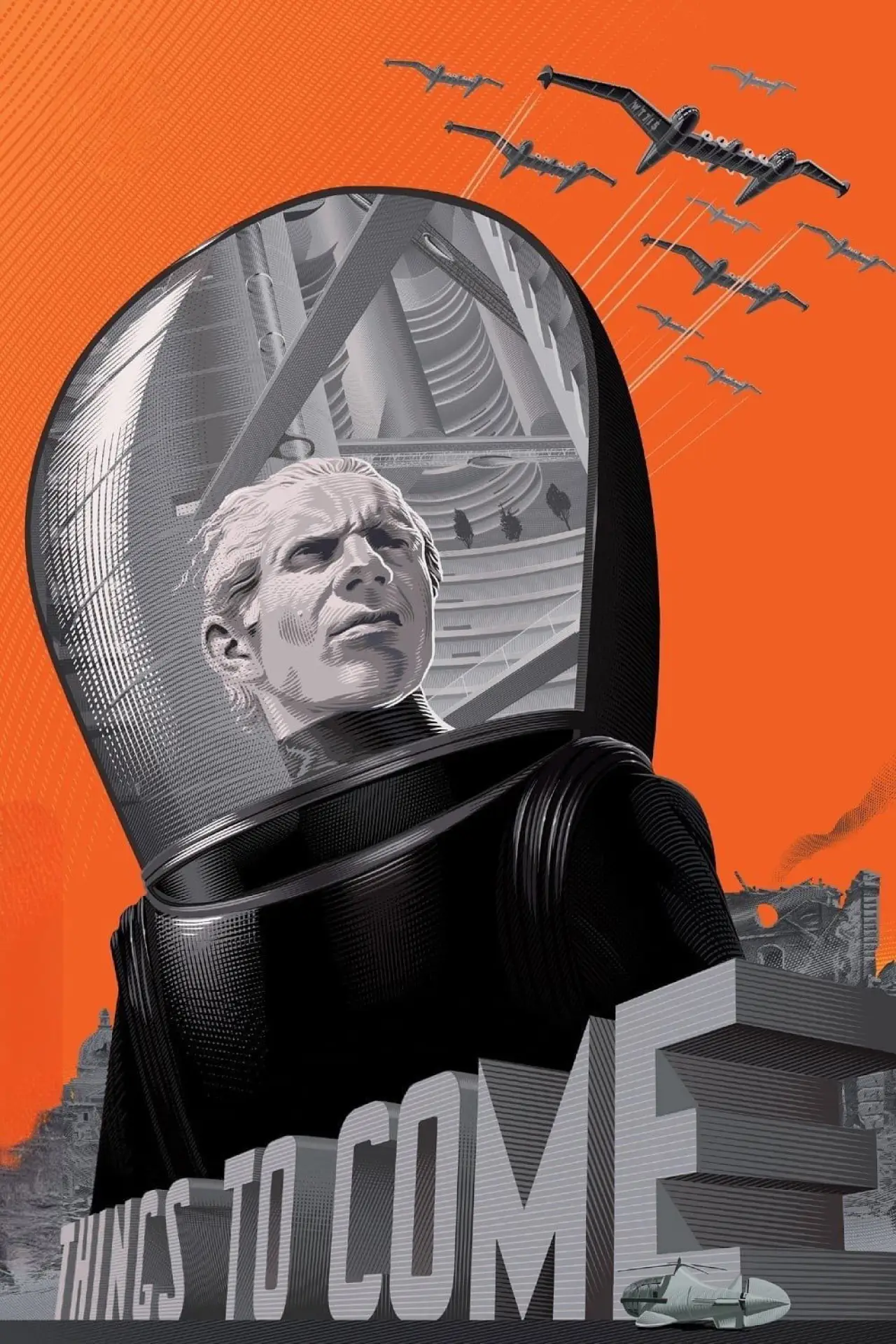
- It is believed that Wells had unprecedented control over the film’s creation for a screenwriter. He personally oversaw almost all aspects of the production. The film’s posters read “H. G. Wells' THINGS TO COME,” with “an Alexander Korda production” written below in smaller letters. However, Wells did not actually gain control over the editing. As a result, a large number of filmed scenes were not included in the film. The initial version of the film was 130 minutes long; the version submitted to the British Board of Film Censors was 117 minutes long; the version released in the UK lasted 108 minutes (later reduced to 98 minutes), and the version for release in the US was 96 minutes long. The currently available version is only 92 minutes long, although in the US, where the film is in the public domain, versions circulate that include scenes that were in the original US release version.
- Initially, Wells wanted the music to be recorded before filming, and the film was to be built “around” the music. However, this approach was deemed too radical, and the soundtrack by composer Arthur Bliss was “laid” onto the film after shooting, in accordance with the traditional method of sound design. The concert suite based on the film’s music has remained popular, and as of 2003, about half a dozen different recordings of the work continued to be released.
- The film is notable for its prediction of World War II. The author of the book, Herbert Wells, correctly guessed the location where the war would begin, but was off by only four months with the starting date in his book “The Shape of Things to Come,” published in September 1933. Wells wrote that World War II would begin with a bloody clash between Germans and Poles in Danzig in January 1940.
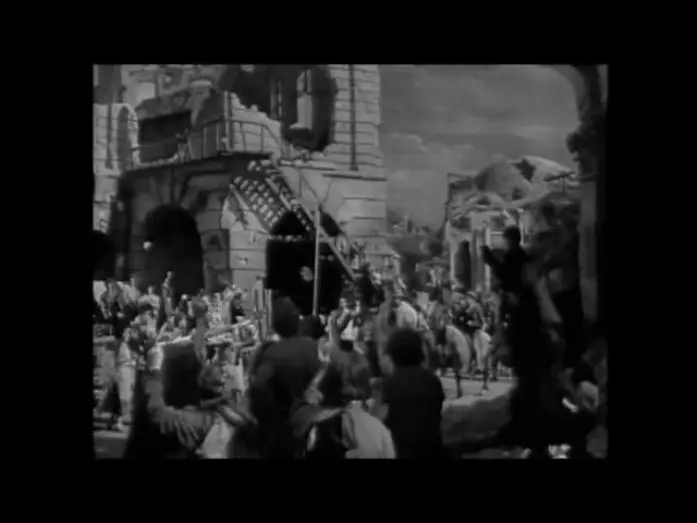
- The strategic bombings depicted in the film, in scenes where Evritown is destroyed by air attacks and society descends to a barbaric level, speak to the danger of bombing. In many ways, these scenes foreshadowed the actual events of World War II. Wells himself was known for his predictions of the combat use of aviation, for example, in 1908 he wrote the novel “The War in the Air,” and in 1913 – “The World Set Free,” which described atomic war.


 Auditions in India
 Casting calls in USA
 Castingi w Polsce
 Кастинги в Україні
