The Lady from Shanghai



Short description
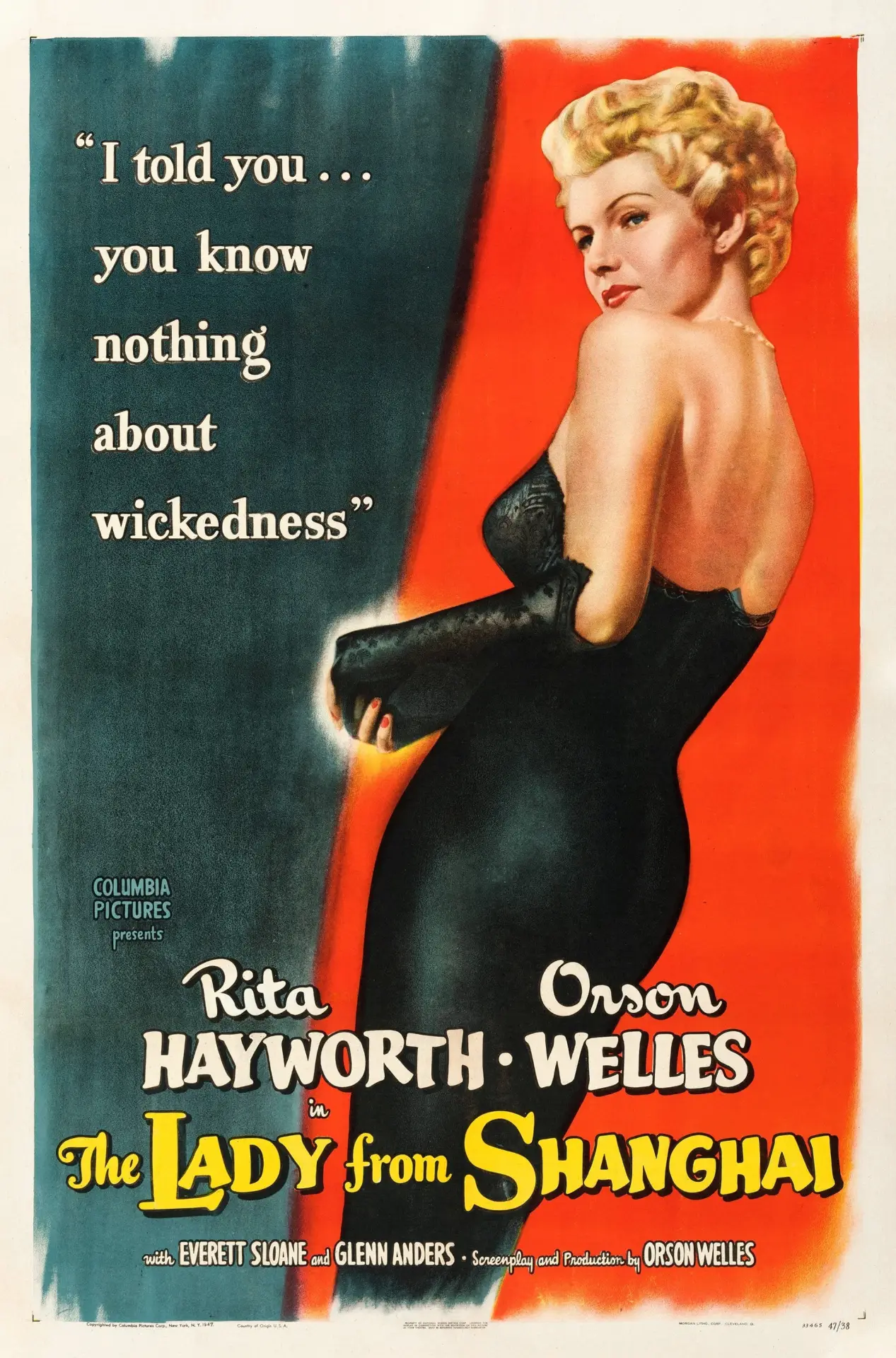
Michael O'Hara, an Irish sailor, rescues Elsa Bannister from an attack one night and is drawn to her. Her husband, the wealthy lawyer Arthur Bannister, hires him as a crew member on his yacht for a voyage that includes a stop in Mexico before continuing to San Francisco. Michael and Elsa begin an affair, and Bannister's business partner George Grisby approaches Michael with a scheme: he wants his own death faked so he can disappear, and promises Michael five thousand dollars for his part in it. Michael agrees, hoping the money will let him and Elsa start over, and finds himself caught in a dangerous web involving the couple and Grisby.
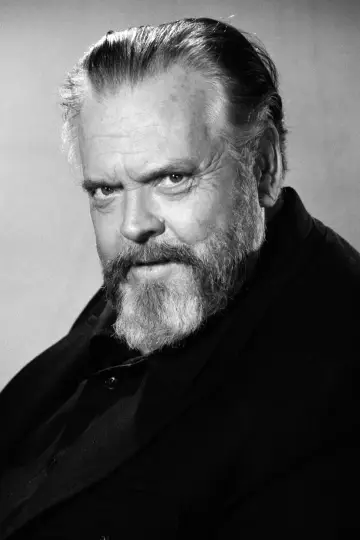
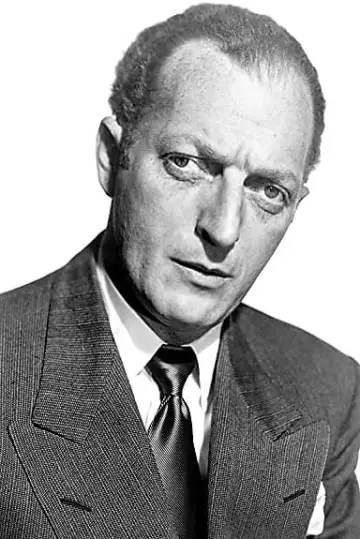
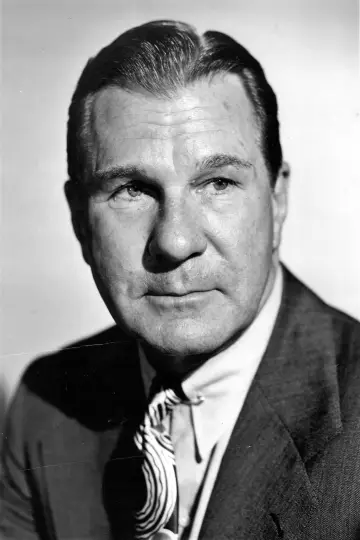
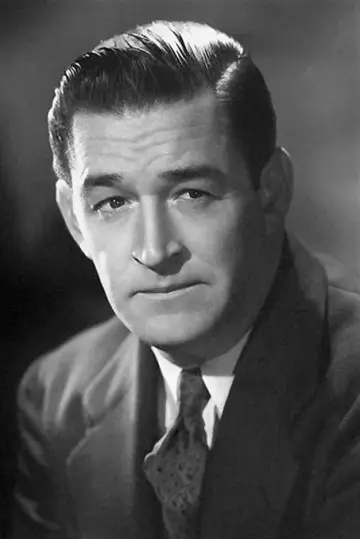
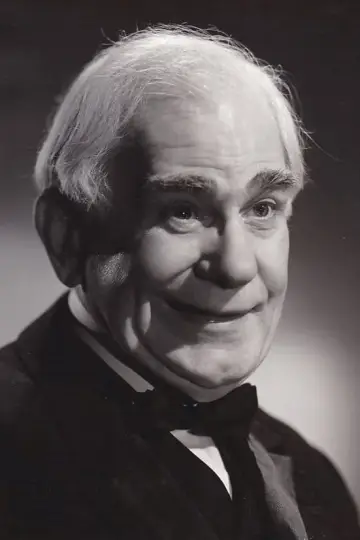
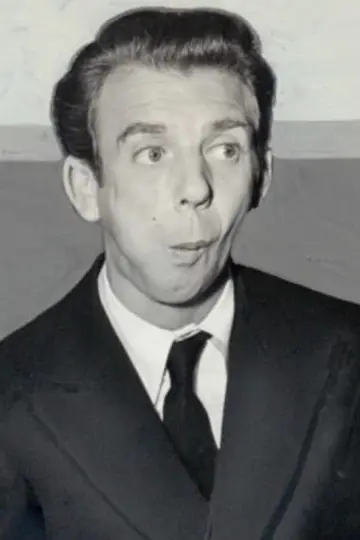
Orson Welles directed and wrote the screenplay, and also stars as Michael. Rita Hayworth plays Elsa, with Everett Sloane as Bannister, Glenn Anders as Grisby, Ted de Corsia and Erskine Sanford in supporting roles. The film was Welles's fourth feature as director, following Citizen Kane, The Magnificent Ambersons and The Stranger, and Columbia Pictures and Mercury Productions made it on a budget of about two million dollars. It earned roughly the same amount worldwide.
On IMDb and TMDB, the film holds a rating of 7.3 out of 10 from 746 votes, while film critics gave it 8.2 out of 10 across 53 reviews, placing critical appraisal noticeably above the general audience score. It runs 87 minutes and blends crime, drama, mystery and thriller elements.
What's left behind the scenes
- The film is based on a novel by Sherwood King.
- The leading roles were played by Welles himself and his wife, Rita Hayworth, who specifically went against her image for the film, allowing herself to be transformed into a short-haired platinum blonde.
- Due to re-editing, the film was released in the American distribution only in June 1948 and was not successful.
- Accounts differ regarding the circumstances that prompted Welles to make the film. Welles himself said that he became the director of this film almost by accident. He urgently needed money to complete work on the musical “Around the World in 80 Days,” and in exchange for the required amount, he agreed to film for Columbia Pictures, for free, any plot they chose. The result did not please the Hollywood moguls, and they insisted on cutting over an hour of screen time from the film. However, even in this form, the picture flopped at the box office.
- After the failure of "The Lady from Shanghai," the director was placed on the "blacklist" of Hollywood. The film's failure also hastened his divorce from Hayworth.
- It took twenty years for the film to be recognized as one of the pinnacles of film noir, and the surreal shootout in a room full of mirrors was called "one of the most spectacular scenes in world cinema."
- Rita Hayworth deliberately went against her image for the film, allowing herself to be transformed into a short-haired platinum blonde.
- Toward the end of filming, director and screenwriter Orson Welles informed the management of Columbia Pictures that he needed all the sets repainted on Saturday for Monday's shoot. Jack Fier, a member of the company's executive staff, notified Welles that this was impossible due to union rules and the high cost of hiring painters to work on the weekend. Welles and his friends broke into a hardware store, grabbed cans of paint, and repainted everything themselves. Upon completing the work, they decorated the set with a banner that read, 'The only thing to fear is Fier himself' (a play on words: Fier is pronounced like 'fear'). When the union painters arrived on set on Monday, they saw that everything had already been repainted; they flew into a rage, refused to work, surrounded the studio building with a picket line, and threatened not to end the protest until they were paid triple for the work someone else had done for them. Ironically, Fier had originally refused to hire these painters specifically because of their financial demands. In the end, Fier was forced to agree to their demands, but he deducted the money from Welles's fee. To top it all off, he asked the painters to make a banner for him with the proverb 'All's well that ends well,' in which he wittily played on Welles's surname.
- For the scene with the aquariums, the aquariums themselves were filmed separately, after which the image was enlarged and inserted into the frame. This was done to make the sea creatures appear more monstrous and menacing than they actually were.
- The yacht where the film's action took place was named the 'Zaca.' It was rented from its owner, movie star Errol Flynn. Between takes, Flynn steered the yacht himself, and he can be seen in the background and in the scene near the bar.
- An assistant cameraman, who had been working in the sun without head covering, suffered a heatstroke and died on the spot. Errol Flynn, who often overindulged in alcohol even during filming, attempted to stuff the body into a canvas bag, but Orson Welles immediately sent someone ashore to report the incident; otherwise, Flynn would have buried the unfortunate man in the depths of the sea in accordance with ancient maritime custom.
- The actors cast in the film often took offense and grew angry with Orson Welles for his habit of constantly rewriting the script right on the eve of filming. Welles didn't mince words or hold back with the actors at all. At times, he would deliberately drive them to a breaking point to make their performance more tense, and at other times, he would push them to a state where they completely forgot their memorized lines, forcing them to improvise. One such spur-of-the-moment line remained in the final cut of the film, delivered by an agitated character played by Erskine Sanford: "This isn't a football match."
- During the reshooting of some scenes, Orson Welles had to use a body double to stand in for the absent Rita Hayworth, who demanded $500 for cutting and bleaching her hair.
- Orson Welles considered Everett Sloane to be an actor who worked primarily in radio and moved unconvincingly on camera; therefore, he wrote crutches into the script for Sloane's character.
- Some scenes had to be filmed near a river inhabited by crocodiles. Poisonous shells had to be scraped off the rock from which Rita Hayworth's character jumps into the sea. While the actress was in the water, a Mexican swimming champion armed with a spear stayed close by, just out of the camera's view, to ward off barracudas.
- Orson Welles wanted the sounds in the film to be indistinct and to grate on the audience's nerves. For example, the dialogue was so quiet that viewers had to strain their hearing to make out exactly what was being said. With the exception of a few scenes (such as the creaky voices of Everett Sloane and Glenn Anderson's characters and the dubbed final dialogue in the Hall of Mirrors), almost all the sounds in the picture were made clear and "polished" by the studio's sound department.
- Errol Flynn's contract prohibited the use of his yacht in the actor's absence, so whenever he unexpectedly vanished for long periods, filming had to be paused.
- When Columbia Pictures president Harry Cohn was given a screening, he didn't understand anything in the film and promised a $1,000 reward to anyone who could explain the plot to him. Shortly thereafter, he decided that the film needed to be made more comprehensible, suggesting that it should start with the courtroom scene and then show everything leading up to that point through flashbacks. This idea was not pursued, as it would have required filming so much new material that the cost of the movie would have nearly doubled.
- The Hall of Mirrors was the result of the work of special effects master Lawrence W. Butler, who also worked for William Cameron Menzies in the sci-fi drama 'Things to Come' (1936) and the 1940 adventure melodrama 'The Thief of Bagdad' (Ludwig Berger, Michael Powell, Tim Whelan, Alexander Korda, Zoltán Korda, William Cameron Menzies). Over 270 square meters of glass were used. Some of the mirrors were two-way, allowing cinematographer Charles Lowton Jr. and his assistants to film through them. Otherwise, they filmed through holes drilled in the glass.
- A carriage specially brought from Mexico was used for the scene in Central Park. For the single necessary tracking shot, powerful arc lamps, a boom microphone, and a camera on a six-meter crane followed the carriage for nearly a mile. Unfortunately, this shot was later cut from the film by the editor appointed by Columbia Pictures, and Orson Welles' entire vision went to waste.
- According to Glenn Anderson, who played George Grisby, he first filmed the scene in which his character's corpse is carried on a stretcher, and only then acted in all the other scenes where his character was still alive. He signed his filming contract while lying on that stretcher.






 Auditions in India
 Casting calls in USA
 Castingi w Polsce
 Кастинги в Україні

