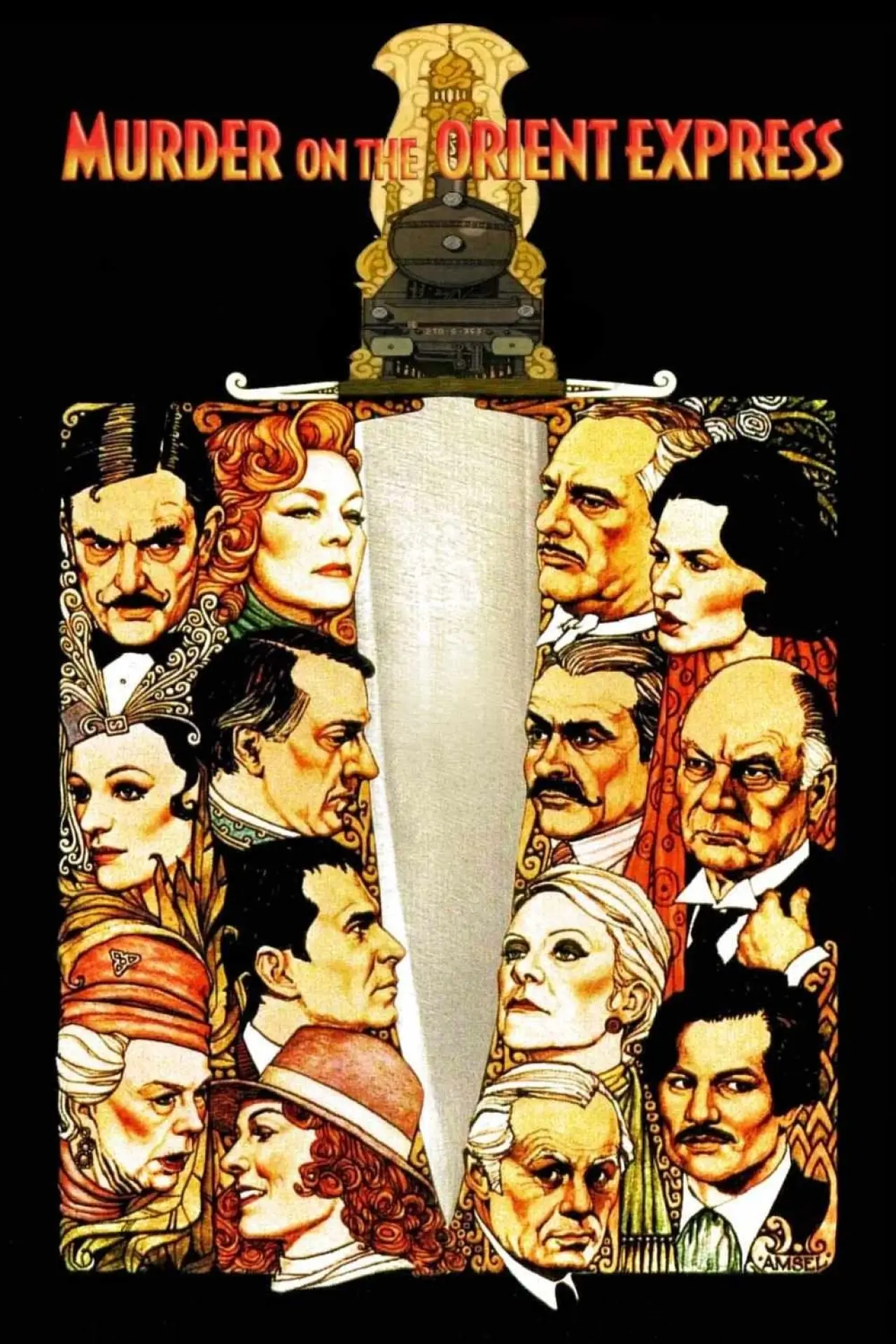
Murder on the Orient Express
The who's who in the whodunnit!



Country
Production
Budget
$1 400 000
Revenue
$27 634 716
Director
Actors
Scenario
Producer
John Brabourne, Richard Goodwin
Operator
Composer
Artist
Tony Walton, Jack Causey
Audition
Editing
Short description
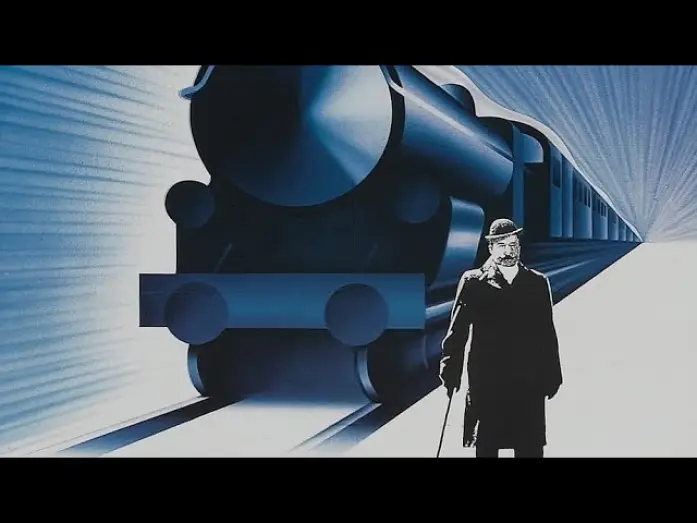
In 1935, when his train is stopped by deep snow, detective Hercule Poirot is called on to solve a murder that occurred in his car the night before.
What's left behind the scenes
- Initially, the filmmakers planned to cast Alec Guinness (1914-2000) as the famous detective, but the actor was unavailable. Paul Scofield (1922-2008) was then offered the role of Poirot – with the same result. Eventually, they had to turn to 37-year-old Albert Finney, who played Poirot, whose age was approaching 60.
- The princess Dragomirova’s maid is reading a poem by Johann Wolfgang von Goethe (1749-1832) which contains the line: “What have they done to you? And how has the unhappy child been wronged?”, which is a reference to the murder of the Armstrong child.
- In 1929, the Orient Express was indeed stuck in the snow for 5 days approximately 130 kilometers from Istanbul. This incident formed the basis for Agatha Christie’s novel and its film adaptation.
- Applying makeup to Albert Finney took a long time, and the actor was also performing on stage. Such a demanding work schedule didn't leave him enough time to sleep, so the following procedure soon developed. An ambulance would drive up to the actor's house. The sleeping Finney would be carefully transferred into the ambulance, still in his pajamas, so as not to wake him, and taken to the set. Makeup artists would begin working on his face while en route from home to the studio. There, the actor would again be carefully carried out of the car, placed on a couch in the makeup room, and his makeup would be finalized. Finney slept through all of this.
- By the time she worked on the film "Murder on the Orient Express", Ingrid Bergman (1915-1982) had already been filming in Hollywood for almost 40 years, and her Swedish accent was almost imperceptible. The filmmakers had to hire a linguist to teach the actress to speak with an accent again.
- The food served on the train at the beginning of the film was stolen from the set just before filming began. Everything had to be urgently found and procured in Paris in the middle of the night to avoid disrupting the shooting day.
- The Orient Express was the first feature film to use radio microphones during its production. The idea to apply them belonged to sound engineer Peter Handford (1919-2007).
- There was a mistake in the opening credits of the original copy – Colin Blakely’s surname was written as “Blanckley”.
- The final scene of the film, in which Poirot explains what happened, required shooting with more cameras simultaneously than the set could accommodate. Many takes were necessary, which was especially difficult for Albert Finney, who had to repeat his eight-page monologue again and again.
- Agatha Christie, who was 84 years old at the time, attended the film's premiere in November 1974. The writer was very pleased. She particularly liked the image of Hercule Poirot, embodied on screen by actor Albert Finney, although his mustache did not impress her much. The appearance at the premiere turned out to be the writer's last public outing. Christie died on January 12, 1976.
- Upon receiving the Academy Award for her role in "Murder on the Orient Express", Ingrid Bergman apologized to actress Valentina Cortese, who had been nominated for an Oscar for her role in François Truffaut's "Day for Night" (1973). Bergman stated that Cortese deserved the award more.
Similar movies
8.1/10
8/10
8/10
8/10
8/10
7.9/10
7.9/10
7.9/10
7.7/10
7.7/10


 Auditions in India
 Casting calls in USA
 Castingi w Polsce
 Кастинги в Україні
