Objective, Burma!



![Watch film Objective, Burma! — Objective, Burma! (1945) Original Trailer [FHD]](https://www.acmodasi.in/amdb/images/posters/c/9/fufo58cZdEld.webp)
All actors and roles (10)
Short description
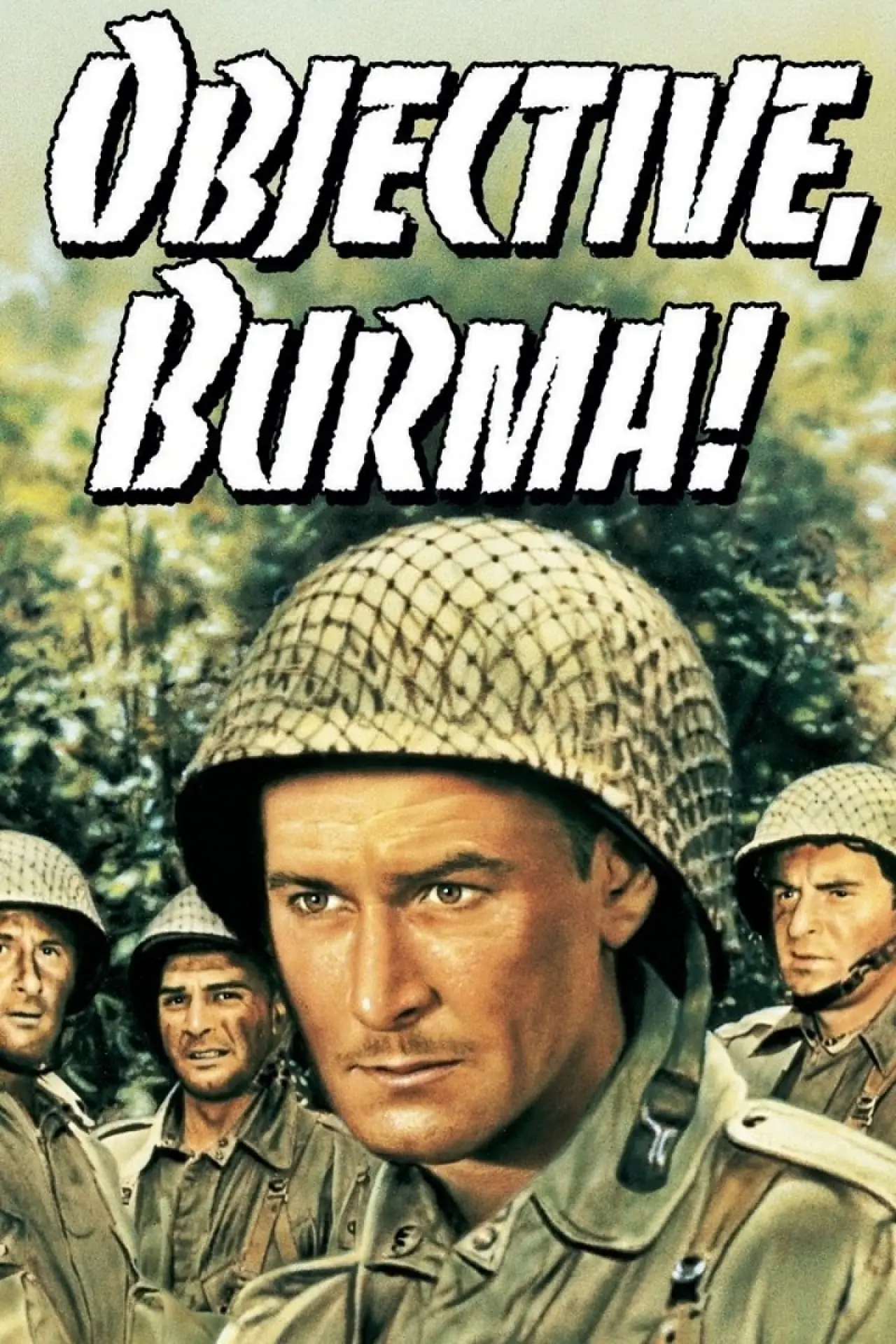
During World War II, a group of American paratroopers is dropped into Japanese-occupied Burma. Their mission is to find and destroy a Japanese radar station, and they carry it out. When they reach the old airstrip where they expect to be picked up and flown back to base, they find Japanese troops waiting for them instead, leaving them to make their way on foot through enemy-held jungle. The group includes a Chinese officer and two Gurkha scouts, and is led by Captain Nelson.
Raoul Walsh directed the film, the eleventh of the twenty-three features he directed in chronological order, following Uncertain Glory in 1944 and preceding The Man I Love in 1946. The screenplay is by Ranald MacDougall and Lester Cole, and Jerry Wald produced for Warner Bros. Pictures. Errol Flynn plays Captain Nelson, with Henry Hull, George Tobias, Anthony Caruso, James Brown and Richard Erdman among the credited cast of twenty-two. The film runs 142 minutes.
Audience response has been steady rather than overwhelming: on IMDb it holds 7.3 out of 10 from around 5,900 votes, while on TMDB it sits at 6.9 out of 10 from a much smaller pool of about 104 votes. A film critics' rating of 7.7 out of 10 from seven reviews places it somewhat above the audience scores.
What's left behind the scenes
- In this film, the character played by Errol Flynn first pulls the pin from a grenade with his teeth.
- The film was pulled from release in the United Kingdom just a week after its premiere. This was due to protests from British army veterans and representatives of the military establishment. The Burma campaign was primarily an Anglo-Australian operation, and the film's emphasis on American participation was perceived as a national insult. The indignation felt by many was fueled by the Americans' confidence that they had won the war almost single-handedly. The film was not shown in the United Kingdom again until 1952-1953.
- All the weaponry, uniforms, and equipment shown in the film are authentic. At the time the film was made, they were still in use by the U.S. Army.
- Members of the Merrill's Marauders special forces group, who were present on set, objected to Nelson's men instantly killing all the Japanese soldiers near the radar installation. This was done (included in the script) most likely deliberately, because all survivors would have had to be executed by the same special forces, which would not have been well-received by the public in 1945.
- In one scene, Nelson's men come to a Burmese village and ask their Gurkha guide to translate from Burmese to English. However, the villagers do not speak Burmese, but Hindi. Many languages are spoken in Burma, but Hindi is not among them. Furthermore, Gurkhas do not speak Hindi either, as Hindi is spoken in India, and Gurkhas are Nepalese.
Similar movies





 Auditions in India
 Casting calls in USA
 Castingi w Polsce
 Кастинги в Україні
