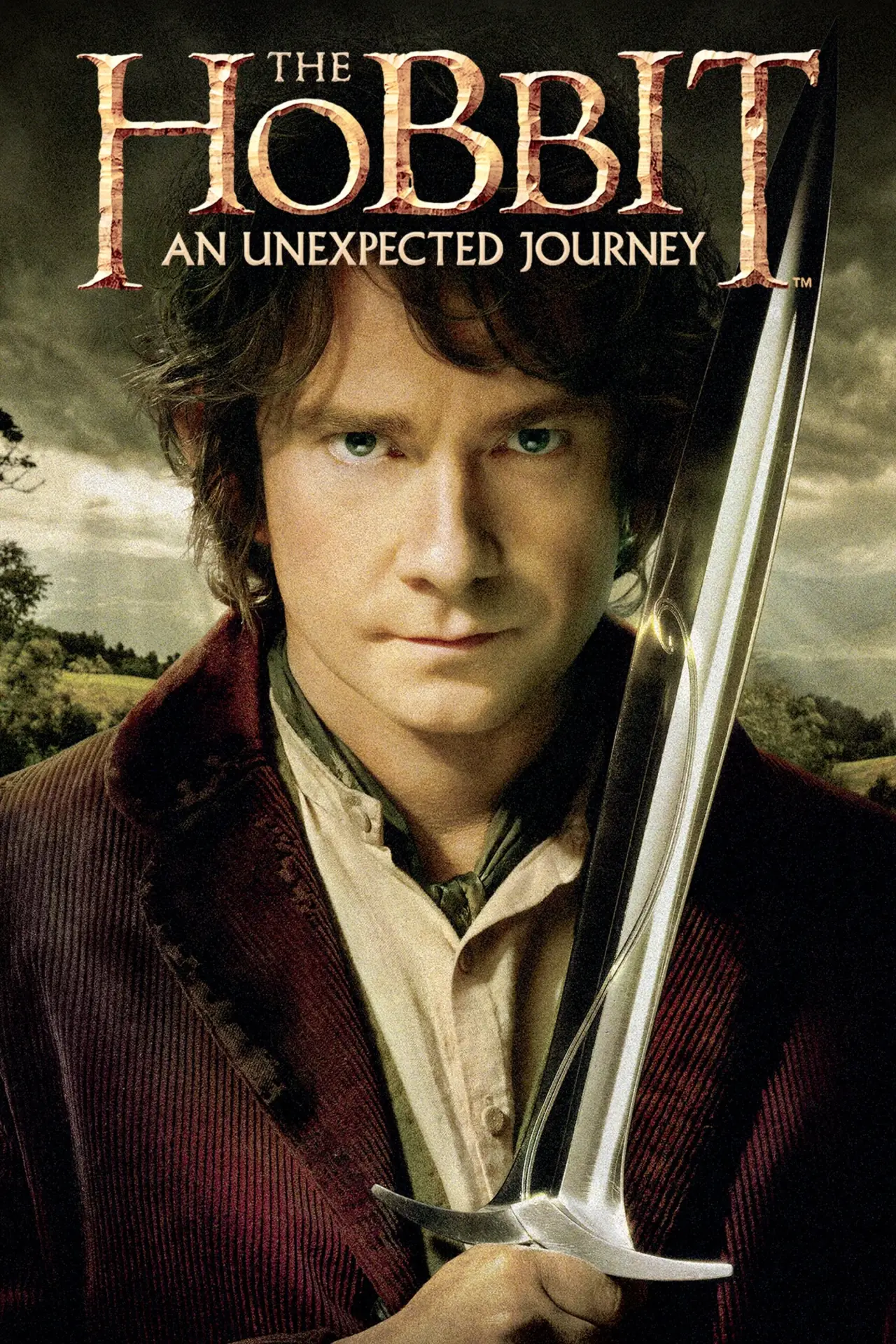
The Hobbit: An Unexpected Journey





Short description
A quiet hobbit named Bilbo Baggins is persuaded by the wizard Gandalf the Grey to leave his home and join a company of thirteen dwarves. Led by Thorin Oakenshield, the group travels across the wilderness toward the Lonely Mountain. Their goal is to reclaim the dwarf kingdom of Erebor and its treasure from the dragon Smaug. Along the way, the travelers face various threats, including orcs, trolls, and spiders, while Bilbo encounters a creature called Gollum and discovers a powerful ring.
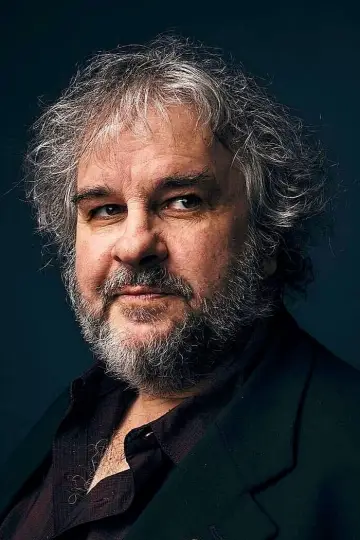
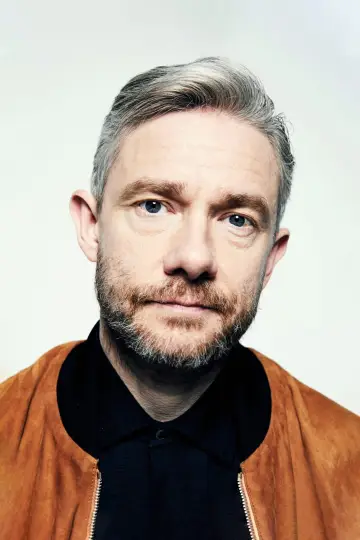
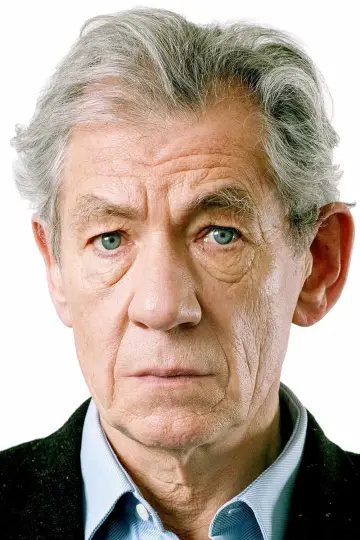
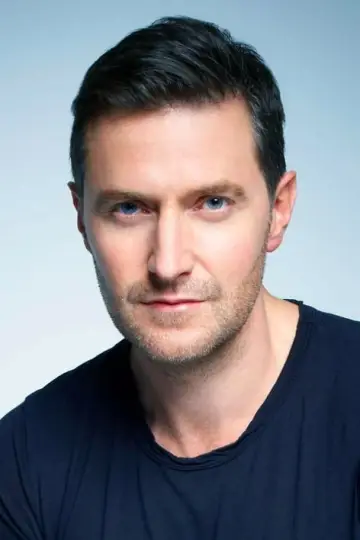
Directed by Peter Jackson, this action adventure fantasy is the 12th of 15 films in his career, following The Lovely Bones and preceding The Hobbit: The Desolation of Smaug. Jackson also served as a producer and co-wrote the screenplay with Fran Walsh and Philippa Boyens. The movie features Martin Freeman, Ian McKellen, and Richard Armitage, with a credited cast of 48 and a crew of 538.
Produced in New Zealand and the United States, the film had a budget of 180 million USD and earned 1.02 billion USD at the worldwide box office. It is well-received by audiences, holding a 7.8 rating on IMDb from 924,000 votes and a 7.4 rating on TMDB from 20,087 votes. In comparison, film critics gave it a lower rating of 6.5 based on 302 reviews.
What's left behind the scenes
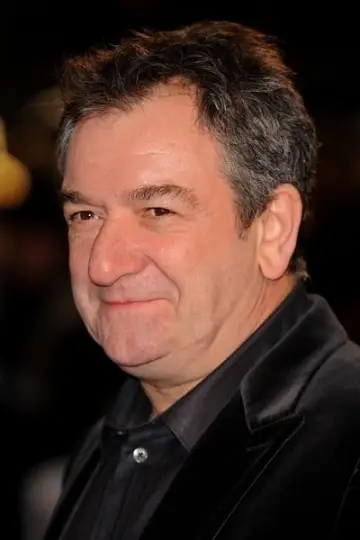
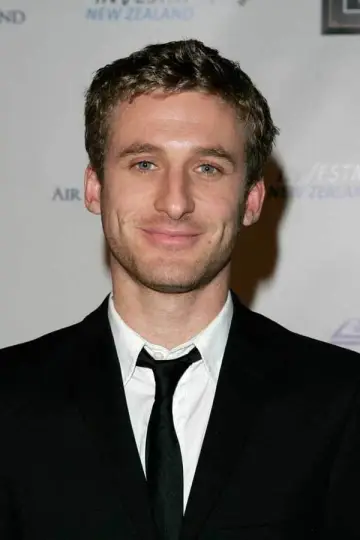
- Robert Kazinsky auditioned for the role of Fili, and several scenes were even filmed with him, but he left the project for personal reasons and returned to England approximately a month after filming began. Dean O’Gorman eventually got the role.
- When Bilbo tries to save the ponies from the trolls, real horses are tied to the posts with reins. When they then show the ponies, which are created using computer graphics, they are not only untied, but also have no reins at all.
- Goblin King: Before creating this character, Peter Jackson asked his team to "make him as disgusting as you can possibly imagine." Actor Barry Humphries, who played this character, participated both in motion capture and in re-recording dialogue using special facial animation capture equipment.
- Richard Armitage said that his first experience acting on stage was playing an elf in a theatrical production of “The Hobbit.”
- Goblins: Initially, live actors in goblin costumes guided the heroes across a rope bridge. Animatronic heads were used, but were eventually replaced with 3D models created using rotoscoping of live actor performances. Goblin movements were recreated using motion capture technology. It's hard to believe that Dwalin was completely replaced with a digital model in this scene, as were all the other characters, because it was easier to replace everyone than to build the entire scene around a single live performer. Motion capture technology was also used during the creation of the scene where Bilbo and a goblin fight with swords. Later, during post-production, the goblin was reduced in size. And Bilbo’s face was replaced with a digital copy, as a stunt double played the role instead of Martin Freeman in this scene. The goblin cave shots were almost entirely animated, but several real sets were also built. They were made specifically to help the actors orient themselves during filming, but all the sets were later replaced with digital ones. The scene with the swinging rope bridge was entirely digital, except for the rope itself. The animators put on motion capture suits themselves to simulate the characters from the film as they jump from the swinging bridge. It took them only a few attempts to shoot this scene.
- Some chapter titles from the book are mentioned in the dialogues, such as 'A Warm Welcome', 'Out of the Frying Pan into the Fire', and 'Roast Mutton'.
- Rivendell: The only problem when filming the scene where Bilbo and the dwarves enter Rivendell over a bridge was that the ceiling was not part of the green screen. As a result, animators turned to another software program called “BarberShop.” Initially, it was used to create “digital” hair for each actor, but it also proved useful for smoothing the transition areas that appeared when combining live-action footage and green screen footage. Miniatures were no longer used in “The Hobbit” due to the tight schedule, and the existing miniatures were actually too low resolution. Almost everything was done with computer graphics: from waterfalls to birds (each of which had its own unique skeleton and body shape). When Jackson wanted to shoot a scene in more detail, the corresponding locations were built manually and then computer graphics were applied to them.
- Bilbo’s sword does not glow blue during the orc attack on the rocks.
- Radagast: The chase scene with Radagast was originally shot manually using a small machine that pulled a sled through a forest set. The only thing that remained from these shots was Radagast himself; everything else was replaced with computer graphics. To create the landscape in this scene, programmers wrote entirely new software and named it “Lumberjack.” It allowed not only to “grow” animated trees from scratch, but also gave animators dynamic control down to each needle. It took about a year to develop this software.
- The use of a high frame rate (48 frames per second) in the film 'The Hobbit: An Unexpected Journey' (2012) attracted all public attention, unfairly overshadowing other achievements in the creation of visual effects. Joe Letteri, serving as both the visual effects supervisor for this film and the current director of Weta Digital, spoke about the incredible work and ingenuity that went into creating the film. Here are the key aspects implemented in the film:
- This is not the first project Peter Jackson has asked Guillermo del Toro to direct. He was also offered to helm the film "Halo", but declined to focus on directing his own project, "Hellboy II: The Golden Army" (2008). Del Toro accepted the offer to direct this film, but after the film remained in development limbo for several years, he stepped away to pursue other projects.
- Shortly after the company meets Radagast, they are driven out of the forest and into the tundra, but when the camera then pans around the dwarves, there is no forest to be seen.
- Adam Brown originally auditioned for the role of Bilbo Baggins.
- The character Azog does not appear in the book. His son, Bolg, is the leader of the orc forces in the Battle of Five Armies. Azog only appears in the appendix to 'The Lord of the Rings', which tells how he killed Thorin, and was subsequently killed by Dáin Ironfoot.
- Azog: Initially, Azog was played by a live actor in a costume. But the result looked like a molting porcupine the size of a man, so they decided to recreate him, making a completely digital version. (And the "molting porcupine" became another character in the film). It took about six weeks to create the new Azog.
- Gandalf's contact lenses are visible in close-ups in the scenes at Bilbo's table.
- Before the eagles rescue Thorin and company, Thorin’s sword lies some distance from him, too far to reach. When the eagle picks him up, the sword is lying on him.
- Work on the project began as early as 2007, but preparation for filming was significantly delayed due to endless legal battles over the rights to the adaptation, distribution rights, and revenue from the sale of related merchandise, which involved several film studios, Tolkien's heirs, and Peter Jackson himself.
- John Collen originally auditioned for the role of Radagast and the voice of Smaug.
- When asked about the number of wizards, Gandalf replies that there are five, naming himself, Saruman, and Radagast, and then says he cannot remember the names of the other two. Their names are Alatar and Pallando. They appear in the book 'Unfinished Tales', but the filmmakers were not permitted to use material from that book.
- This film went through several stages of pre-production, including separate legal disputes between New Line Cinema, Peter Jackson, and the Tolkien estate. MGM then got the project off the ground in 2008, but further complications followed. MGM went bankrupt, and the project was frozen, resulting in director Guillermo del Toro’s departure after three years of pre-production. There were then issues with some organizations in New Zealand, and the start of filming was delayed while Peter Jackson recovered from surgery for a perforated ulcer.
- The 48 frames per second 3D film was sent to some cinemas on a standard SATA hard drive with a security code that protected the content from viewing or copying. The code itself was provided by the distributors 24 hours before the film's release. The 48 frames per second 3D version of the film occupies 639 GB on a hard drive. Cinemas could have downloaded the entire film via a secure satellite channel, but the download would have taken more than a day. Given that a 3D image requires a frame rate of 96 frames per second (48 frames per second for each eye), the data size of one frame for each eye is 0.66 MB.
- Only after Guillermo del Toro stepped down as director and at the personal request of Warner and MGM studios in 2010 did Peter Jackson agree to return to the director's chair, and in October of the same year, filming was given the green light.
- Radagast receives a message from a thrush hovering near him. The only bird physically capable of hovering like that is a hummingbird.
- Gollum: The first scene filmed for the movie was 'Riddles in the Dark' with Andy Serkis and Martin Freeman as Bilbo. Although the actor's head position and gestures matched the virtual Gollum, the proportions of their bodies differed, and additional correction was required after motion capture. In this scene, Gollum is a full 3-D model and was created without filming the actor's performance on a green screen. The use of a high frame rate allowed for the reworking of micro-movements in facial expressions, but this became a headache for the artists, who had to paint and rotoscope twice as many frames as usual. For this film, the character of Gollum was completely redone from scratch. The number of individual details on Gollum's face in 'The Hobbit' is greater than on his entire body in the 'Lord of the Rings' trilogy. Weta Digital has developed the process of creating virtual biological creatures with a full skeleton and musculature to such an extent that it allows them to be made even more realistic than animatronic puppets.
- Trolls: Similar methods, as used in 'bringing Gollum to life', were also used in the scene with the trolls. Frames with virtual characters were overlaid on frames with live actors, and the scene was later perfected during post-production.
- The Wilhelm scream can be heard when the dwarves run through the goblin mountains, and one goblin falls from the path.
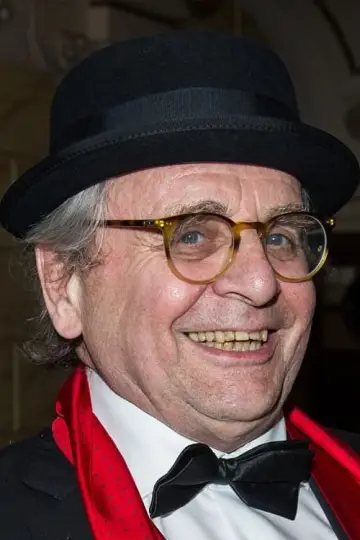
- Sylvester McCoy was previously considered for the role of Bilbo Baggins for the film "The Lord of the Rings: The Fellowship of the Ring" (2001).
- Thranduil, Legolas’s father, first appears in the book about the hobbit as an elven king, without his actual name being mentioned. It is only in “The Lord of the Rings,” when Legolas appears for the first time, that he introduces himself as the son of Thranduil of Mirkwood.
- Bret McKenzie, who plays the elf Lindir, previously played another elf in "The Lord of the Rings: The Fellowship of the Ring" (2001) and "The Lord of the Rings: The Return of the King" (2003). His character from the "Lord of the Rings" trilogy was initially unnamed, but fans unofficially nicknamed him Figwit (the name Figwit originated from the phrase “Frodo is great… Who is THAT?”, uttered by a fan while watching the moment McKenzie appears in “The Fellowship of the Ring”).
- This is the first film shot at 48 frames per second. The goal of this was to make the picture smoother, the movements more realistic, and to reduce the strobing effect. This is particularly effective when watching the film in 3D, as the high frame rate helps to better synchronize the image for each eye.
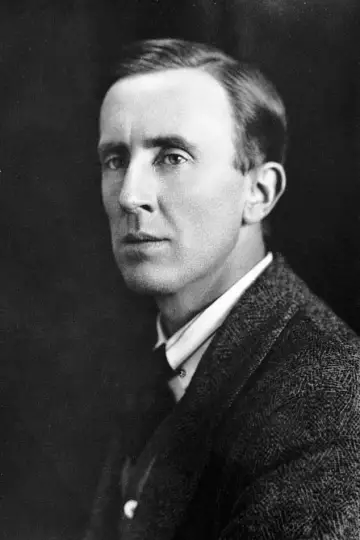
- The film is based on J.R.R. Tolkien's novella "The Hobbit, or There and Back Again" (1937).
- Bill Bailey auditioned for the role of Gloin. In the series "Idiots" (1999–2001), he plays a character named Bilbo, named after the protagonist of this film.
- When Thorin addresses the group at Bilbo Baggins' dining table, the location, color and texture of the items on the plate (cookies or biscuits) change.
- Filming of this film and "The Hobbit: The Desolation of Smaug" (2013) was completed on July 6, 2012, and lasted 266 days.
- All scenes with Ian Holm and Christopher Lee were filmed at Pinewood Studios in London because the actors were unable to travel to New Zealand due to health problems.
- In scenes with Galadriel, it can be noticed that when she turns in place, the bottom of her dress gracefully wraps around her legs. When she bids farewell to Gandalf, she turns and at that moment widens her stance, but in the next frame her legs are already together and again beautifully wrapped in the dress.
- The name Beorn means “bear” in Old English. It is closely related to the Scandinavian name Bjorn, which also means “bear.” Both English and Scandinavian languages, such as Norwegian and Swedish, are part of the same Germanic language family. Old English and Old Norse were even more similar.
- In the second trailer, Gandalf says the phrase, “The house is already behind, and the road lies ahead.” This is a quote from “The Lord of the Rings” and part of a song that Pippin sings to Denethor in the book “The Lord of the Rings: The Return of the King.”
- Gollum appears in only one scene in the film. Andy Serkis finished working on this scene during the first week of production, but remained and continued to work as a second unit director.
- The method of creating the hobbit feet in this film was changed. In the 'Lord of the Rings' trilogy, these were special prosthetics that were worn on the actors' feet and had to be changed after a while. In this film, the prosthetics reached the actors' knees in length.
- This film was shot using 48 Red Epic cameras – the newest model in the series available during the film's production.
- Frodo (Elijah Wood), Saruman (Christopher Lee), Galadriel (Cate Blanchett), and Legolas (Orlando Bloom) are characters taken from “The Lord of the Rings,” although none of them actually appear in the book about the hobbit. As is Radagast (Sylvester McCoy), who is only mentioned in the book about the hobbit, but appears in “The Lord of the Rings.” However, he never appeared in the “The Lord of the Rings” film series.
- Martin Freeman previously starred in "Shaun of the Dead" (2004) with Bill Nighy and Penelope Wilton, who was married to the previous actor to play Bilbo – Ian Holm.
- Daniel Radcliffe, Shia LaBeouf, James McAvoy, Aaron Eckhart, and Tobey Maguire were considered for the role of Bilbo Baggins. However, Peter Jackson stated that he always envisioned Martin Freeman in the role. Freeman was initially unable to accept the role due to scheduling conflicts with the series "Sherlock" (2010), but Jackson reworked the entire shooting schedule for "The Hobbit: An Unexpected Journey" (2012) to allow the actor to play the part.
- Saoirse Ronan was considered for the role of the young elf, but declined due to scheduling conflicts.
- Christopher Lee noted that he would have been interested in voicing the dragon Smaug in this film. However, he instead voiced the dragon Barragon in "Alice in Wonderland" (2010).
- In 2009, rumors circulated online that David Tennant could play the role of Bilbo Baggins (after he and Peter Jackson appeared together at Comic-Con). Both denied these rumors. However, in 2010, Tennant auditioned for the role of Thranduil, but had to turn it down when his girlfriend became pregnant.
- Ron Perlman was ready to star in the film on the condition that Guillermo del Toro would be the director. When the latter left the project, Perlman declined the role.
- Joe Letteri also noted that a film frame at 48 frames per second is no different from a film at 24 frames per second, there are simply twice as many of the former. He said that the 3D effect does not depend on the frame rate, and that the 48 frames per second option was chosen, not 60, because the difference between 24 and 48 is significant, while the difference between 48 and 60 is less noticeable. Furthermore, it was easier for distributors to adapt to the 48 frames per second format. Some scenes of the film were converted from 2D to 3D during post-production. One of these is a close-up of Bilbo at the beginning of the film. This had to be done due to a malfunction with one of the cameras.
- Bag End (the hobbit Bilbo Baggins's home): The dinner party scene in Bag End was made using the same principle as the scene of Gandalf's arrival at Bilbo's in 'The Lord of the Rings', in which Gandalf accidentally hit his head on the chandelier. Instead of using a fixed perspective, Peter Jackson wanted the camera to move around the actors, giving them more freedom of movement. To achieve this effect, two different interiors were built: one sized for Bilbo and the dwarves and one to show Gandalf in a cramped space. The old set, which remained after filming 'The Lord of the Rings', was equipped as a home interior shown in the film, while the new set was completely covered in a green screen. The main camera, moving along a predetermined path, filmed on the first set, and the second camera synchronously repeated its movements on the second set with a green screen. Then, to correlate the correct proportions, the frames from the first camera were cropped by 33 percent. The follow camera had a delay of 4 frames. The entire scene in Bilbo's house was shot in 4 takes. It took 18 months to combine the footage from the two cameras.
Similar movies


 Auditions in India
 Casting calls in USA
 Castingi w Polsce
 Кастинги в Україні
