The Sugarland Express







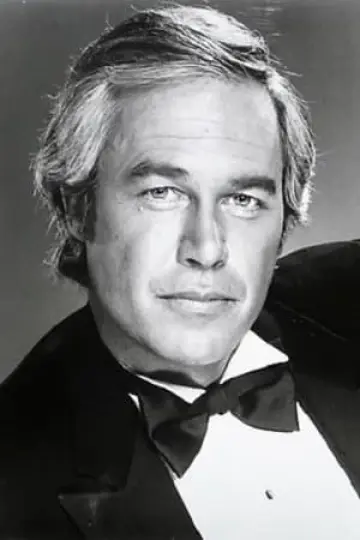

Short description
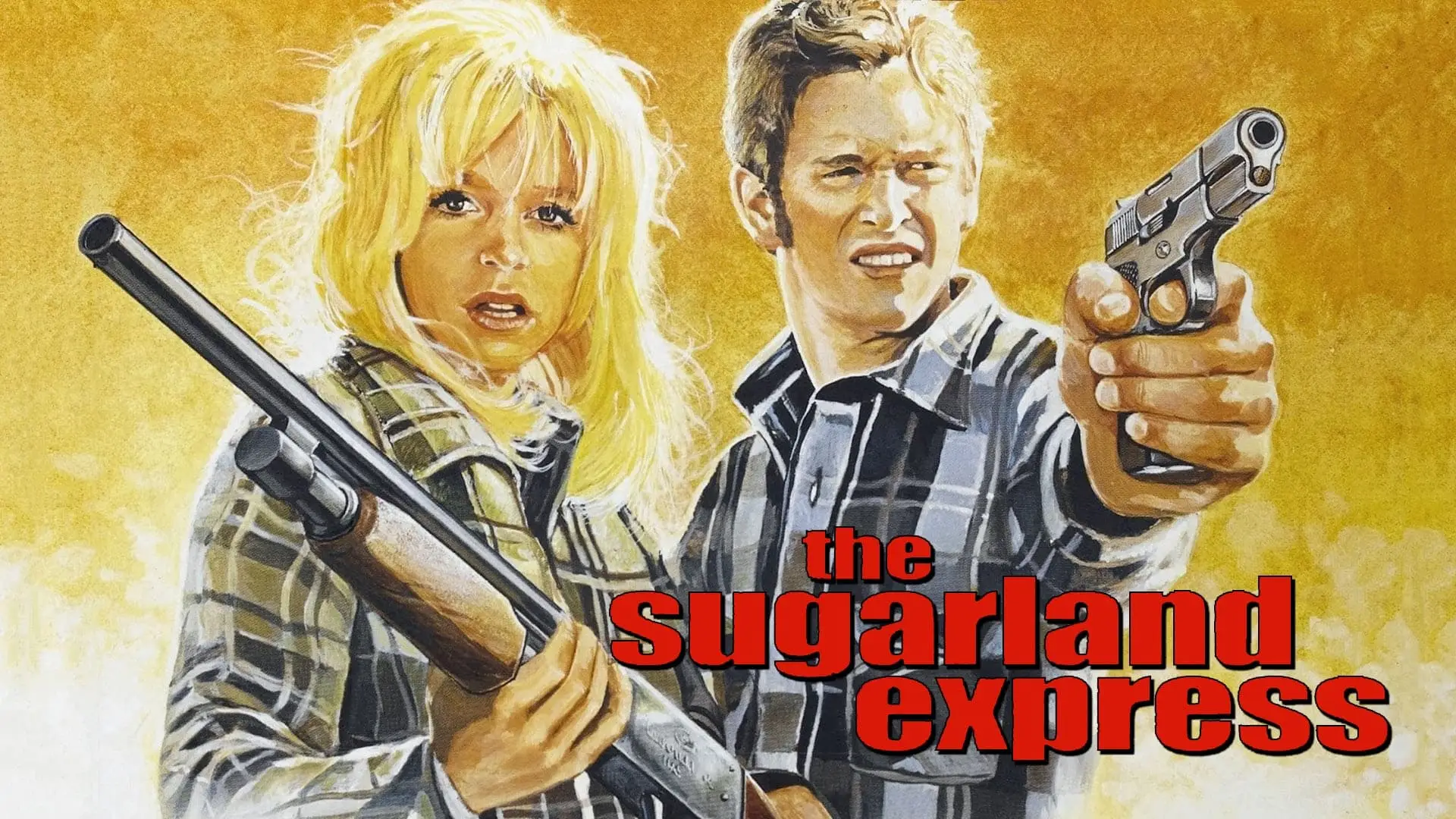
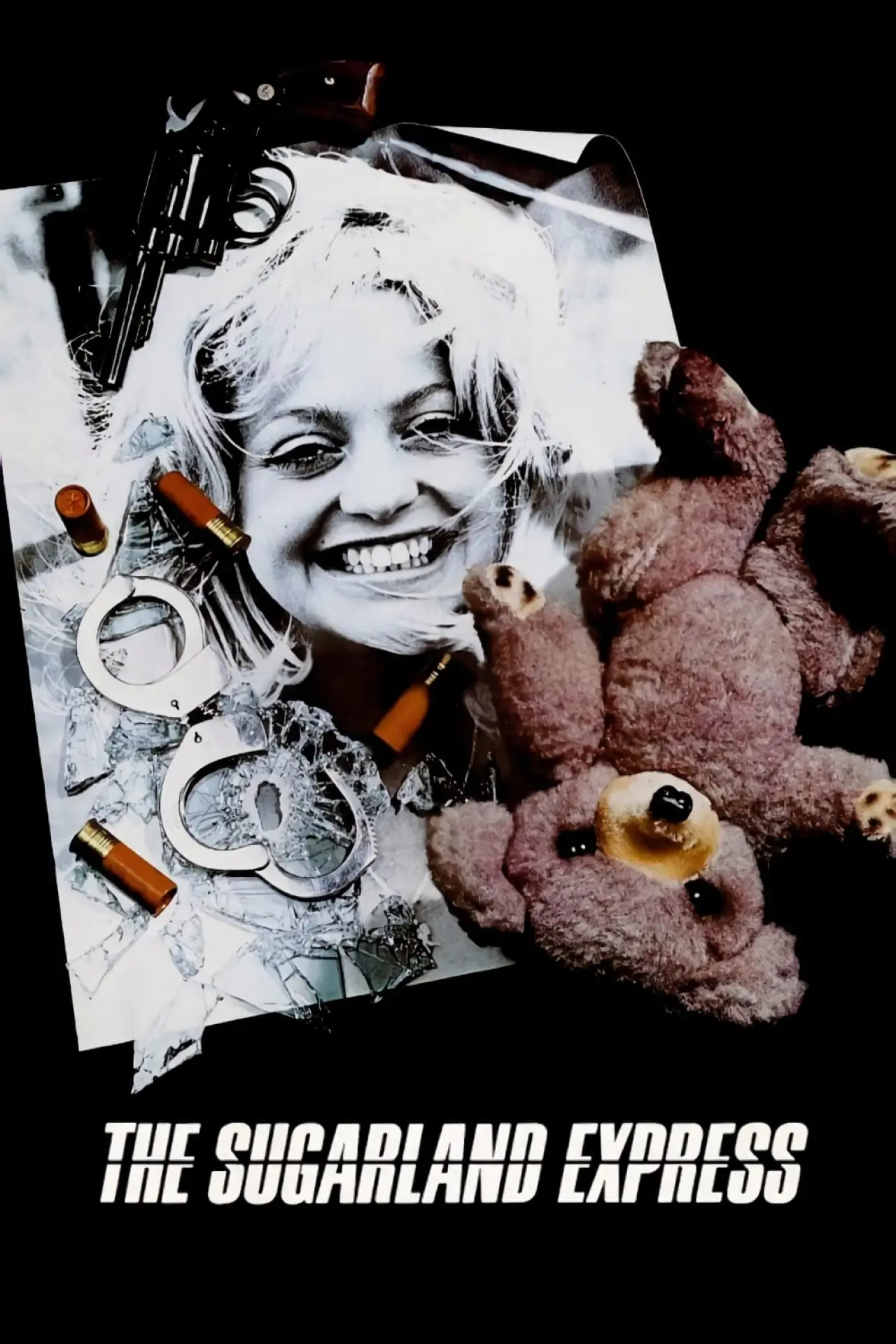
The Sugarland Express follows Lou Jean and Clovis Poplin, a young married couple in Texas whose son has been placed with a foster family by the state. Determined to get the boy back, Lou Jean helps Clovis break out of prison even though his release is only months away, and together they take their child from the foster home. When a highway patrolman stops them, they seize his car and hold him hostage, and a pursuit grows across the state as more patrol cars join in. The chase becomes a public spectacle followed on radio and television, turning the couple into folk figures while they travel toward Sugarland.
The film is based on a true story and was directed by Steven Spielberg, the fourth of the forty films he has directed in chronological order, arriving between Something Evil and Jaws. Matthew Robbins and Hal Barwood wrote the screenplay, and Richard D. Zanuck and David Brown produced for Universal Pictures and Zanuck/Brown Productions. Goldie Hawn plays Lou Jean, with William Atherton as Clovis, Ben Johnson as Captain Tanner, and Michael Sacks, Gregory Walcott and Steve Kanaly among the credited cast of forty.
Made for about three million dollars, the film took roughly thirteen million worldwide, a modest return for its time. On IMDb it holds 6.7 out of 10 from over eighteen thousand votes, and on TMDB 6.6 out of 10 from several hundred votes. A critics' rating of 7.2 out of 10 from fifty-two reviews places professional assessments somewhat above the audience scores.
What's left behind the scenes
- Steven Spielberg faced the challenge of somehow combining Goldie Hawn's acting style with William Atherton's performance. Atherton was an experienced actor with stage training, so he improved with each take in every scene. As for Hawn, she performed best in the first two takes, although if a scene required 12 or more takes, the actress would find a 'second wind.' Spielberg concluded that he needed to start with close-ups of her. He would then film Atherton in close-up until Hawn began to 'recover,' and then he would start filming them both.
- Stunt coordinator Carey Loftin (1914-1997) brought the best stunt drivers from all over Hollywood to the set to ensure that the filming of the car crashes would be carried out without casualties. The most challenging was the nighttime shoot of a scene in which a police car crashes into the side of a stolen police car, then another car crashes into the first police car, followed by impacts into several other cars one after another. There was no lighting at the intersection where the filming took place, so a tractor rental set was constructed, and 200 light bulbs were hung over it. These, along with a nearby gas station, provided enough light for Vilmos Zsigmond to film. Steven Spielberg then held a full rehearsal of the scene, but without the car collisions, because there was no money in the budget for additional vehicles. They then began filming the actual stunt, using 4 cameras simultaneously. Loftin himself drove the car that hit the stolen police car on the side, and he succeeded on the first attempt.
- Many minor roles in the film were filled by local residents who had no acting education or experience. At the very least, this saved the filmmakers budget money.
- Preparation for filming scenes on the highway took an hour and a half. First, the police had to stop or redirect traffic within 3 kilometers of the filming location. After each take, the vehicles involved in the filming were transported back to where the take began, while the police allowed the cars stuck in traffic to pass.
- Steven Spielberg's filming crew was consulted by a direct participant in the events – patrolman Kenneth Crown, who was held hostage by the Dent gang.
- The film is based on events from May 1959, when a married couple kidnapped a police officer and went on a chase in his patrol car in an attempt to escape the police. At one point, over 150 police cars and vehicles with reporters were in pursuit. Eventually, FBI agent Bob Wyatt (who retired in 2004) shot the man and arrested the woman.
- The film was shot on location in Texas – in Del Rio, Floresville, Pleasanton, San Antonio, and on the grounds of the Jester Prison in Sugarland.
- During filming, Steven Spielberg and cinematographer Vilmos Zsigmond (1930-2016) had breakfast together every morning and discussed the upcoming shooting. They had agreed in advance that the film should give the impression of being a documentary, so they watched documentaries at night to better understand the nature of the problems they would face on set and how to solve them. Zsigmond's fondness for shooting in natural light was very helpful.


 Auditions in India
 Casting calls in USA
 Castingi w Polsce
 Кастинги в Україні

