Hiroshima Mon Amour




All team (19)
Short description
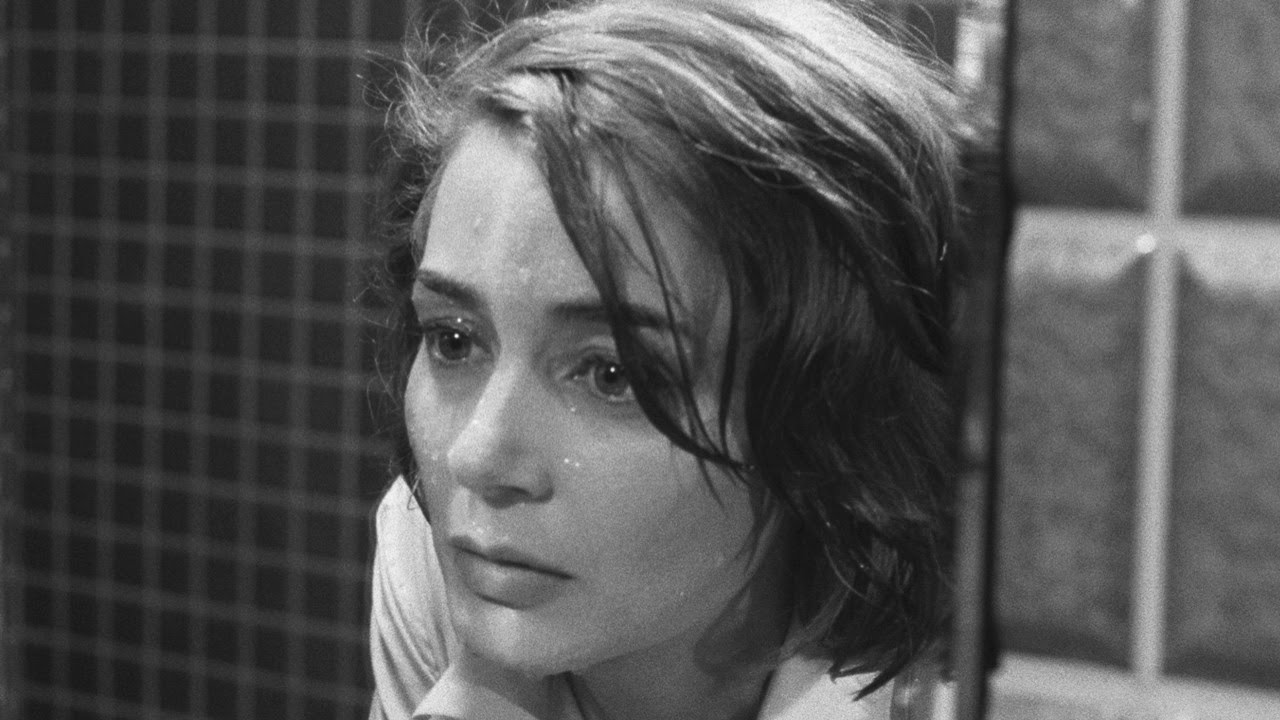
Hiroshima Mon Amour follows a French actress who travels to Hiroshima in 1957 to appear in a film about peace. On the eve of her departure, she begins an intense affair with a Japanese architect. As they talk through the night, their present encounter stirs memories of her youth in Nevers during the Second World War, when she loved a German soldier. The man urges her to confront what she has seen and felt in Hiroshima, and the two of them circle each other's pasts, weighing personal grief against the larger devastation the city carries.
Alain Resnais directed, working from a screenplay by Marguerite Duras; Anatole Dauman and Samy Halfon produced. The film was Resnais's second feature, arriving between his documentary Night and Fog and Last Year at Marienbad. Emmanuelle Riva plays the actress and Eiji Okada the architect, with Stella Dassas, Pierre Barbaud and Bernard Fresson in supporting roles. A French-Japanese co-production shot in black and white across two countries, it runs 92 minutes.
Hiroshima Mon Amour has held up as one of the defining works of the French New Wave, and its reputation rests on unusually broad agreement. On IMDb it scores 7.8 from roughly 39,000 votes, and on TMDB 7.7 from about 957 votes, while the critics' rating stands higher at 8.8 from 46 reviews.
What's left behind the scenes
- At the time of filming, Japanese actor Eiji Okada did not know French, and therefore was forced to memorize his lines by ear.
- It was assumed that Françoise Sagan would write the screenplay for the film, but Marguerite Duras took on the work after the writer refused.
- Alain Resnais claimed that his film was allegedly built on a clear algorithm: "I explained to Marguerite the algebraic concept of the work. If you represent "Hiroshima" with a diagram, you will discover a quartet form close to a musical score: themes, variations on the initial theme, repetitions, returns that may seem unbearable for those who do not accept the rules of the game in this film. The diagram would show that the film is constructed like a triangle, in the form of a funnel."
Similar movies










 Auditions in India
 Casting calls in USA
 Castingi w Polsce
 Кастинги в Україні
