GoodFellas







Short description
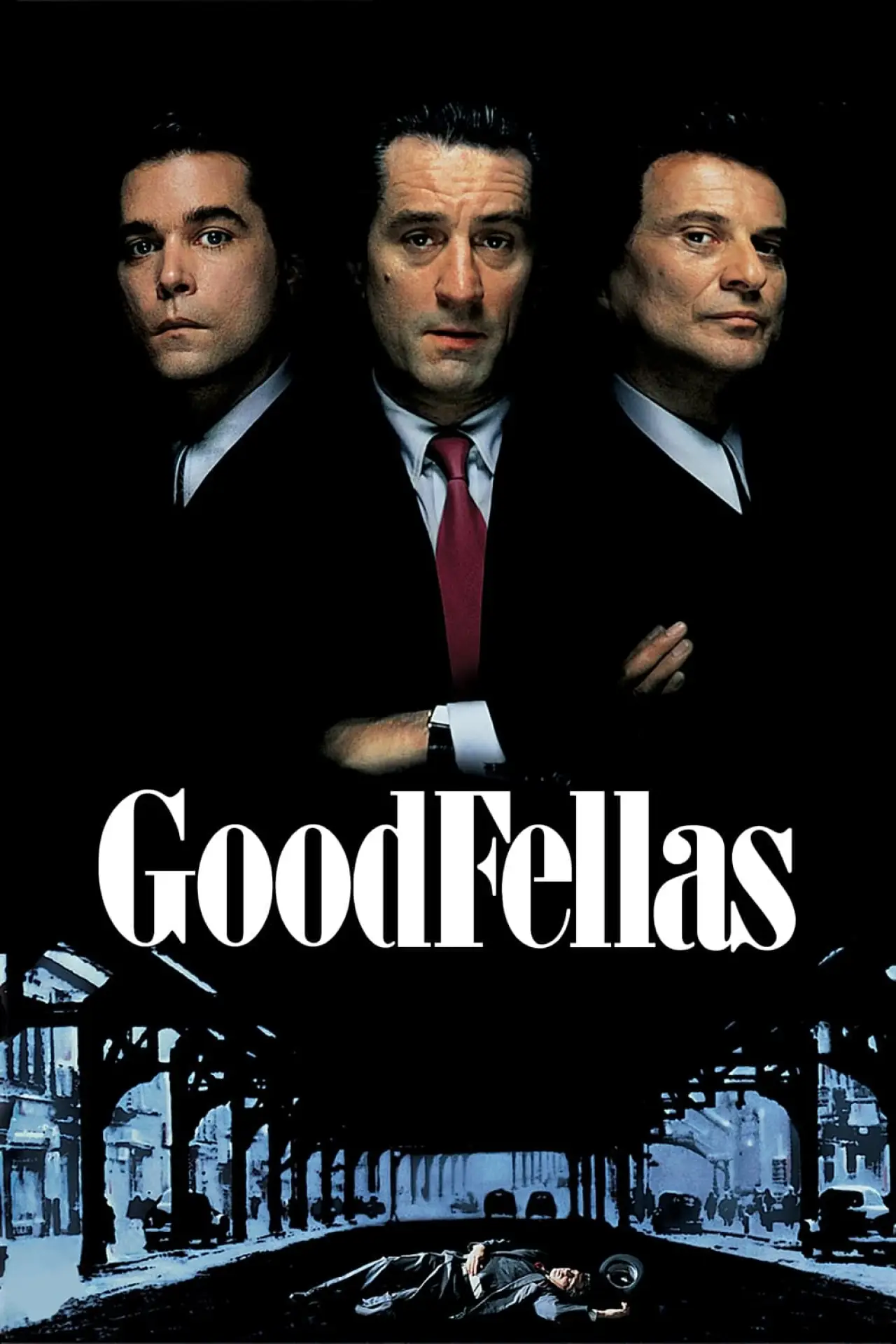
GoodFellas follows Henry Hill, a Brooklyn boy of Irish and Sicilian parentage who is drawn into the neighborhood Mafia as a teenager. Taken under the wing of local boss Paul Cicero, he learns that silence and loyalty earn respect, and he builds a life of fast cars, expensive suits and easy money alongside the volatile Tommy DeVito and the calculating Jimmy Conway. His wife Karen only learns what he does after they marry. As the crew's crimes grow bolder, so does the violence, and the world Henry idealized proves far more dangerous than he imagined.
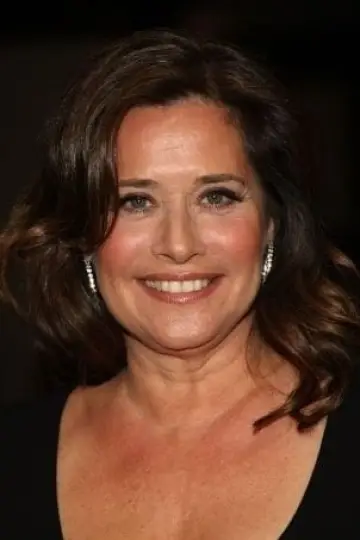
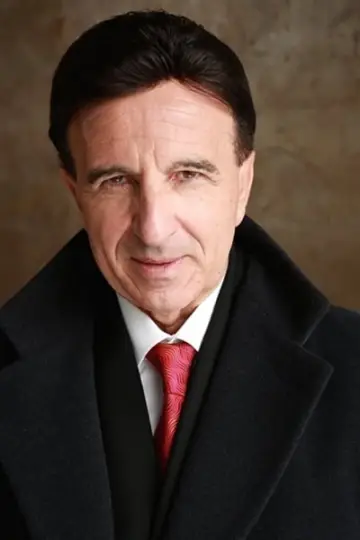
Martin Scorsese directed and co-wrote the screenplay with Nicholas Pileggi, adapting Pileggi's nonfiction book about the real Hill. The film is the sixteenth of the thirty-eight Scorsese has directed in chronological order, arriving between New York Stories and Cape Fear, and Irwin Winkler produced it for Warner Bros. Ray Liotta plays Henry, with Robert De Niro as Conway, Joe Pesci as DeVito, Lorraine Bracco as Karen and Paul Sorvino as Cicero; 144 cast members and 81 crew are credited.
Released in September 1990, the film cost about 25 million dollars and returned roughly 47 million worldwide, a modest multiple of its budget. Its reputation has grown well beyond that showing. On IMDb it holds 8.7 out of 10 from 1.4 million votes, and on TMDB 8.5 from far fewer voters. A critics' rating of 9.2 from 168 reviews places it above both audience scores.
What's left behind the scenes
- Rumors circulated that the real Jimmy Conway (born James Burke) was so thrilled that De Niro would be playing him that he called him from prison and gave him some valuable advice. However, Nicholas Pileggi vehemently denied this, claiming that Conway and De Niro never communicated. Nevertheless, he did not deny that people who knew the real main characters quite well were involved in the project.
- The word "fuck" is used 246 times in the film; in most cases, it is used by Joe Pesci's character. Including various variations, it appears 275 times, or one swear word every 28 seconds.
- The project had to be postponed for several years due to Scorsese’s commitments on the sets of other planned films. After that period, the director began to wonder if he should return to gangster films. It was then that he gave the final version of the script to the renowned film director and screenwriter Michael Powell. At that time, Powell was married to editor Thelma Schoonmaker, one of Scorsese’s muses. After reading the script, the couple convinced the director of the necessity of making the film.
- Scorsese envisioned the author of the book, Nicholas Pileggi, as the screenwriter from the very beginning. The writer knew little about scriptwriting, but the director taught him the basics.
- At Scorsese's request, Joe Pesci himself devised and filmed the scene where his character Tommy DeVito loses his temper, repeating the line 'Do you think I'm funny?'
- After four years of preparation, Scorsese could finally admit to himself that he was ready to film. The first thing he wanted to do was change the working title of the future film. Since “Wise Guys” had already been used for both a television series and Brian De Palma’s comedy, Scorsese decided to call the film “Goodfellas.”
- In early script drafts, the story was told in chronological order, but Scorsese later had the idea that the film absolutely had to begin with a scene of Billy Batts' murder.
- Warner Bros. refused to produce the film unless one of the leading roles was played by a Hollywood superstar. Scorsese then remembered his close friend Robert De Niro, showed him the script, and asked him who he wanted to see in the role of Jimmy Conway. De Niro read it and replied, "Myself." Soon after, Warner Bros. agreed to finance the film.
- Tommy’s final shot into the camera is considered a kind of quote from “The Great Train Robbery” (1903), where, after all the action, a bandit also shoots a revolver as if into the audience.
- Filming took place in the spring and summer of 1989, partly in Queens, a district of New York, and partly on Long Island.
- Martin Scorsese's father and mother appeared in small roles in the film.
- The real Henry Hill (Ray Liotta) once moved to Redmond, where he opened an Italian restaurant. However, after the film's release, he returned. One of his daughters appears in the wedding scene.
- The real Hill said that the filmmakers captured the image of the real Tommy DeVito with 99% accuracy, with one 'but' – Tommy was enormous, which stands in stark contrast to the short stature of Joe Pesci.
- As soon as the director began reading Pileggi’s book, he immediately understood that it had excellent potential for adaptation. Scorsese was pleasantly surprised to discover that the places described in the book were also very familiar to him, as he grew up in Little Italy – a district of New York. Enchanted by this idea, Scorsese called Pileggi himself at his office at New York magazine. The writer was not in the building, and the director told his secretary to make sure Pileggi called him back. Upon arriving at the office, Pileggi did not find his secretary at her desk, but found a note saying that Scorsese himself had called. The writer didn't believe it and threw it in the trash, thinking it was another prank from a colleague. Not receiving the call, Scorsese went to Pileggi's house and told him that he had been searching for his book for years. Not expecting such a confession, Pileggi said he had been waiting to meet him all his life, and had only considered Scorsese as the director for the adaptation of his novel.
- After Joe Pesci's mother watched the film, she called her son and said the movie was good, but she didn't like how often he swore.
- Robert De Niro helped Scorsese by suggesting Ray Liotta for the role of Henry Hill. Liotta, as it turned out, had already read the Pillegi book and quickly got into the role.
- For the role of Karen Hill, Henry’s wife, Scorsese considered Lorraine Bracco. At the time, she was married to actor and close friend of Scorsese, Harvey Keitel, and had already auditioned for a role in the director’s black comedy “After Hours.” Scorsese invited her and Ray Liotta to his apartment for a three-hour conversation. After it ended, the director approved her for the role of Karen.
- The film is based on Nicholas Pileggi's book "Wiseguy: Life in a Mafia Family" (1985).



 Auditions in India
 Casting calls in USA
 Castingi w Polsce
 Кастинги в Україні

