Roman Holiday






Short description
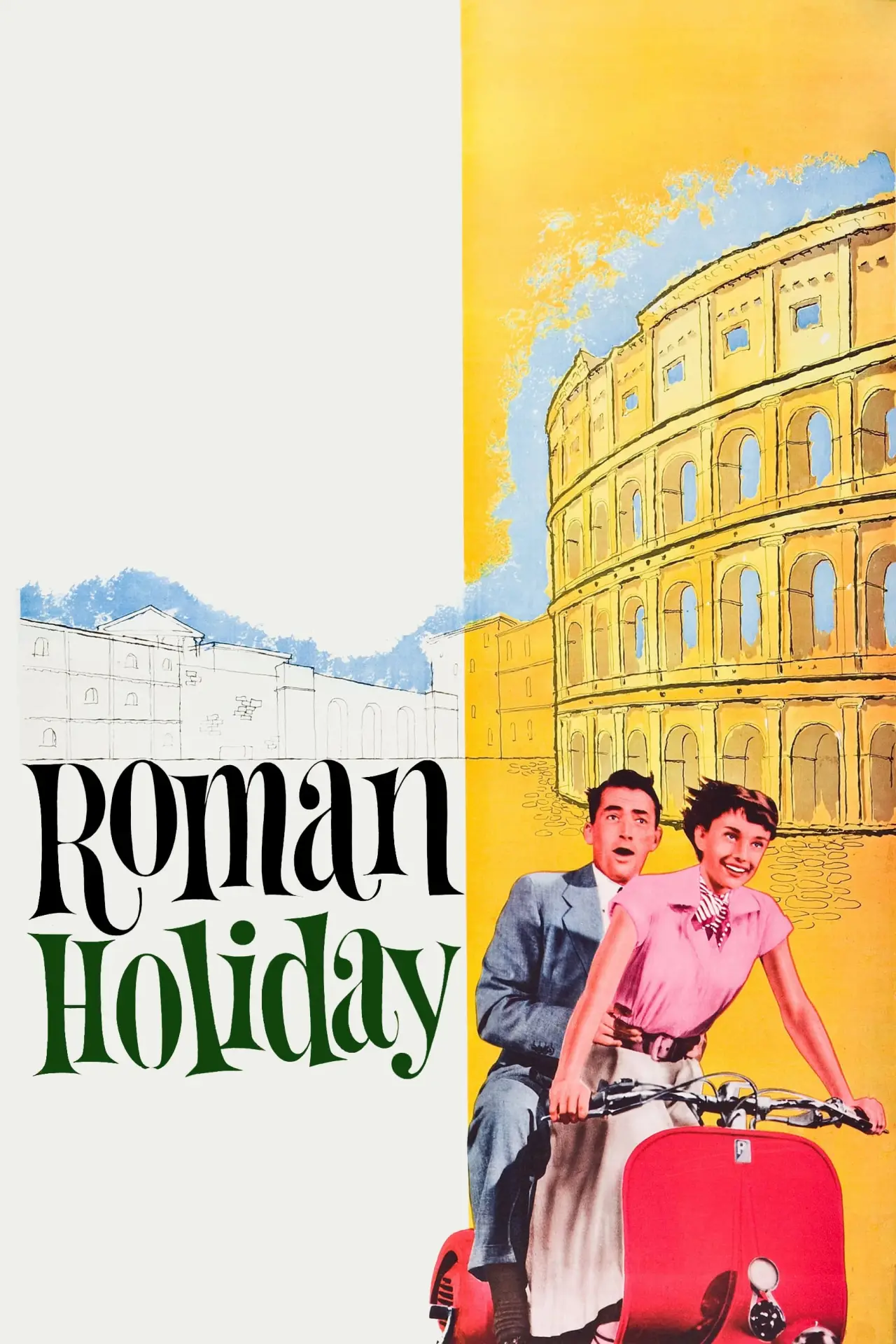
Roman Holiday centres on Princess Ann, a young royal from a small Central European country who is touring European capitals on an official visit. Exhausted by her tightly scheduled duties in Rome, she slips away from her residence for a taste of ordinary life. A sedative given to her by the court doctor takes effect before she can return, and she falls asleep in the city. An American reporter, Joe Bradley, finds her and, not recognising her, takes her to his apartment for safety. Once he realises who she is and that her press conference has been cancelled, he sees the chance for an exclusive story, though the time the two spend together complicates his plan. Gregory Peck plays Joe, Audrey Hepburn plays Ann, and Eddie Albert appears as the photographer Irving Radovich.
The film was directed and produced by William Wyler, working from a screenplay by Dalton Trumbo, Ian McLellan Hunter and John Dighton. It was his fourteenth feature in chronological order, following Detective Story and preceding The Desperate Hours. Made by Paramount for about two million dollars, it returned roughly twelve million worldwide, a strong multiple of its cost, and its cast of fifty-three credited players indicates a large production.
Audience response has remained high over the decades: on IMDb it holds 8 out of 10 from around 158,000 votes, while on TMDB it scores 7.9 from a much smaller base of about 2,300. A critics' rating of 8.6 from 67 reviews places it slightly above both audience measures.
What's left behind the scenes
- After filming was completed, Gregory Peck told the producers that since Hepburn was sure to win an Oscar for her role, her name should be listed first in the credits.
- The film's screenwriter, Dalton Trumbo, was blacklisted as part of the legendary “Hollywood Ten.” Therefore, only the story author, Ian McLellan Hunter, was credited in the film credits, and he was the one who received the “Oscar.” Trumbo’s wife, Cleo, was able to receive the golden statuette rightfully belonging to her husband only in 1993, many years after his death (he died in 1976). Thus, two “Oscars” were awarded for the best screenplay of 1953. Trumbo’s name was added to the credits of the restored version of “Roman Holiday,” which was released in 2002.
- After completing work on the film, Gregory Peck, who played Joe, told the producers that, since Hepburn would surely receive an "Oscar" for her role, her name should be listed first in the credits.
- In 1999, this film was added to the National Film Registry of the Library of Congress.
- Screenwriter Dalton Trumbo was blacklisted as part of the legendary 'Hollywood Ten.' Consequently, only the story author, Ian McLellan Hunter, was credited in the films' titles instead of the screenwriter. Trumbo's wife was only able to receive the Oscar statuette that rightfully belonged to her husband in 1993, many years after his death (he passed away in 1976). Trumbo's name was added to the credits of the restored version of the film released in 2002.
- During the filming of the scene where the princess says goodbye to Joe, the inexperienced Hepburn couldn't force herself to cry. As a result, after several futile takes, director William Wyler became furious, and then the actress genuinely burst into tears, which was captured on film.
- During the filming of the scene in which the princess says goodbye to Joe, the inexperienced Hepburn was unable to force out any tears. As a result, after several wasted takes, director William Wyler became angry, which caused the actress to cry for real.
- Frank Capra left the project when he learned that the film would be shot from a screenplay by Dalton Trumbo.
- Audrey Hepburn landed the role thanks to a screen test that has since become legendary. The cinematographer was told not to stop the camera after the scene ended. After the command 'Cut!', the actress relaxed, acted naturally, and answered questions candidly; ultimately, it was these few minutes that gave her the coveted role.
- Frank Capra was originally expected to direct the film, and he intended to cast Cary Grant and Elizabeth Taylor in the lead roles.
- Filming took place from June 23 to October 11, 1952.
- Initially, Frank Capra was supposed to direct this film, and he intended to cast Cary Grant and Elizabeth Taylor in the lead roles.
- William Wyler intended to cast Jean Simmons in the role of Anna, and when she turned out to be busy with other projects, he was prepared to walk away from the film entirely.







 Auditions in India
 Casting calls in USA
 Castingi w Polsce
 Кастинги в Україні

