Strangers on a Train



Short description
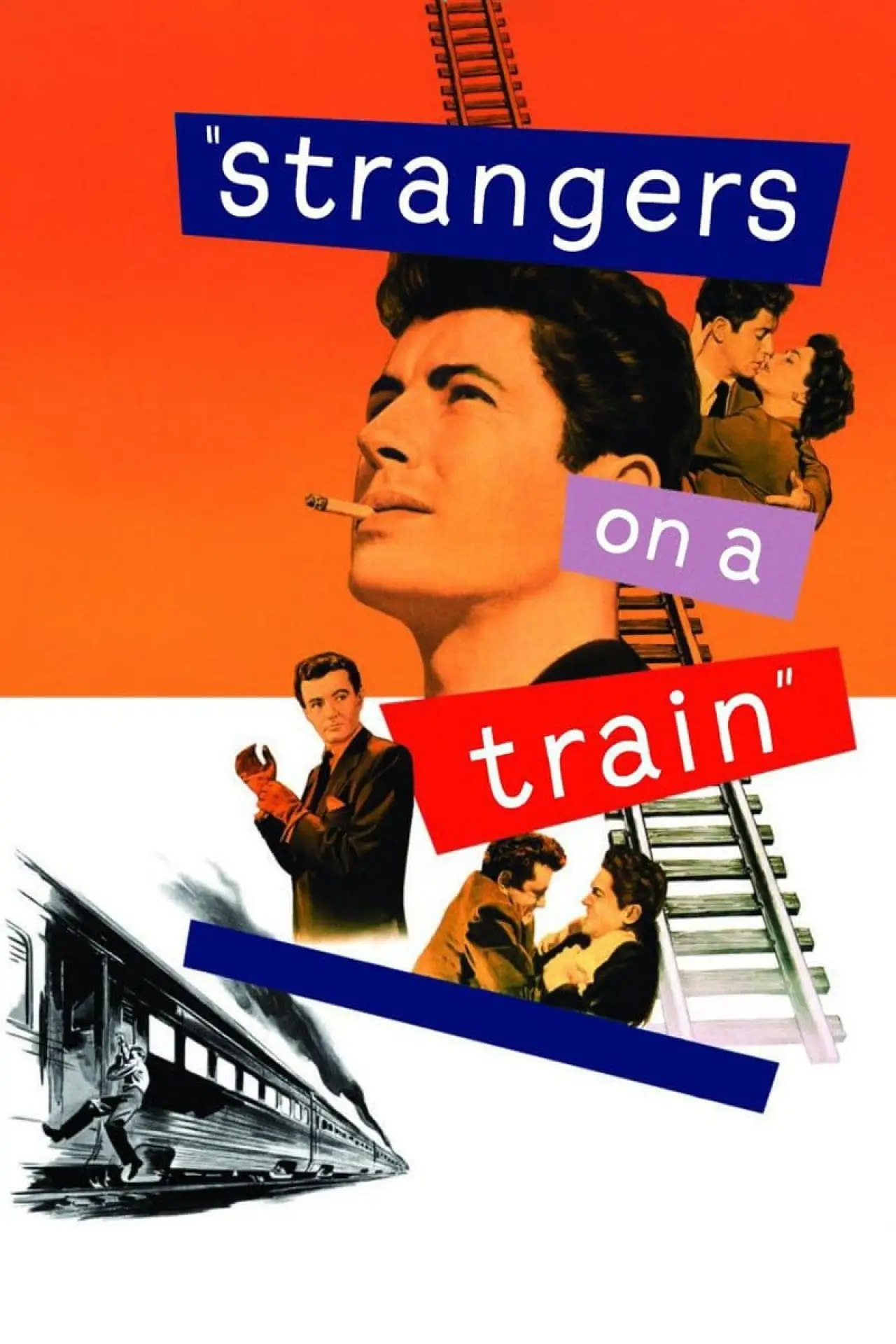
Strangers on a Train is a thriller about two men who meet by chance on a railway journey. Guy Haines is a successful tennis player whose marriage has broken down, while Bruno Antony is a wealthy, eccentric man with a domineering father. During their conversation, Bruno proposes a scheme in which each of them would murder the person troubling the other, so that neither would have an obvious motive. Guy dismisses the idea, but Bruno carries out his side of the plan anyway, killing Guy's wife, and then presses him to keep his part of the bargain.
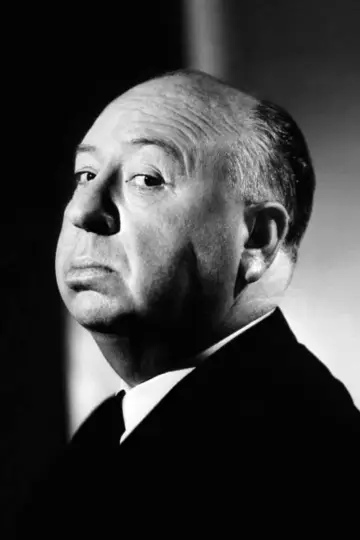
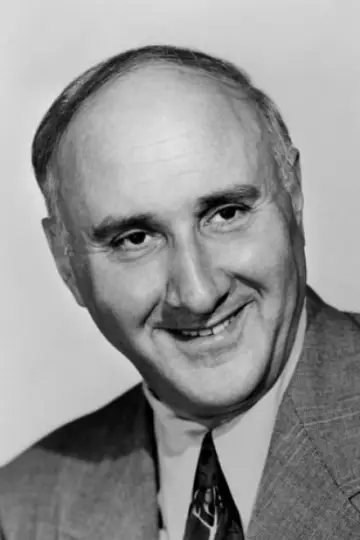
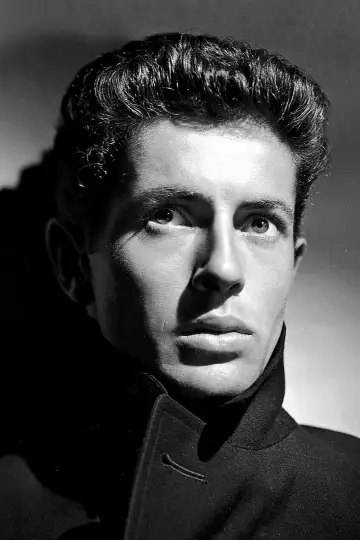
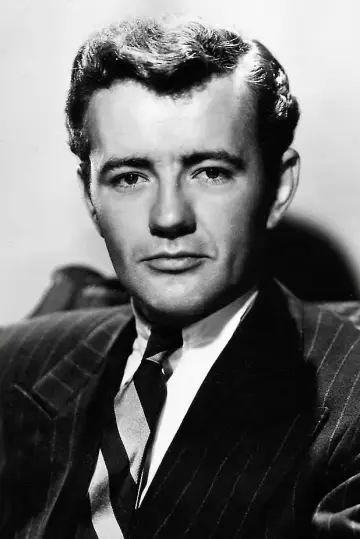
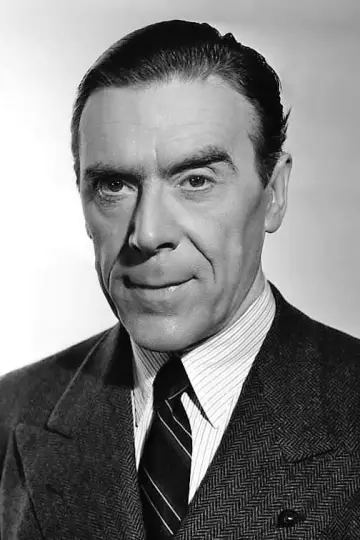
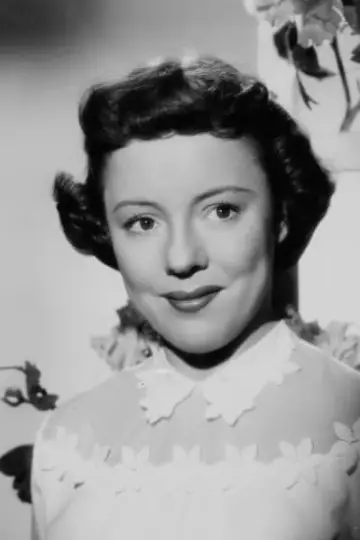
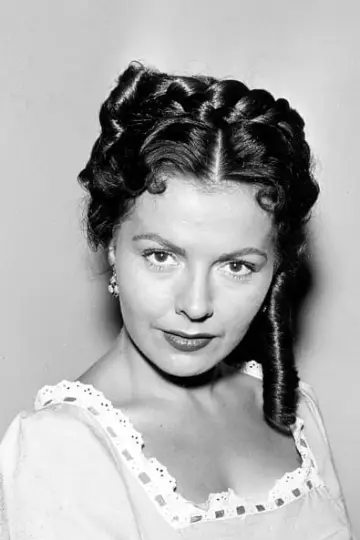
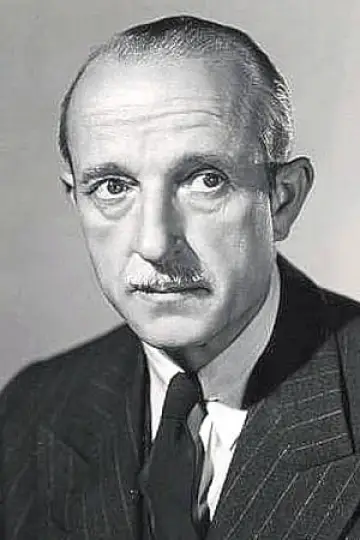
The film was directed by Alfred Hitchcock, who also produced it, from a screenplay by Raymond Chandler and Czenzi Ormonde. It belongs to the middle of Hitchcock's career, released between Stage Fright and I Confess as the twenty-sixth of the forty-three films he directed. Farley Granger and Robert Walker lead the cast as Guy and Bruno, with Ruth Roman, Leo G. Carroll, Patricia Hitchcock and Kasey Rogers in supporting roles.
Made for about one million dollars, it took roughly seven million dollars worldwide. On TMDB it holds a rating of 7.7 out of 10 from around 1,940 votes, while critics rated it 8.8 out of 10 from 58 reviews, a notably higher assessment than that of the general audience.
What's left behind the scenes
- The character of Bruno is named after Bruno Richard Hauptmann, the alleged kidnapper and murderer of the son of legendary aviator Charles Lindbergh.
- Raymond Chandler is considered the main screenwriter of the film and is listed first in the credits, although the majority of the work was done by the second screenwriter, Cheney Ormonde.
- Hitchcock's cameo is a man with a double bass who gets on the train at the very beginning of the film, immediately after Guy gets off.
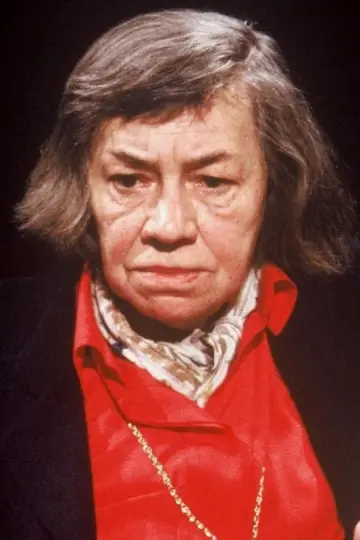
- Hitchcock purchased the rights to Patricia Highsmith's novel anonymously to prevent the price from increasing. This acquisition cost him only $7,500.
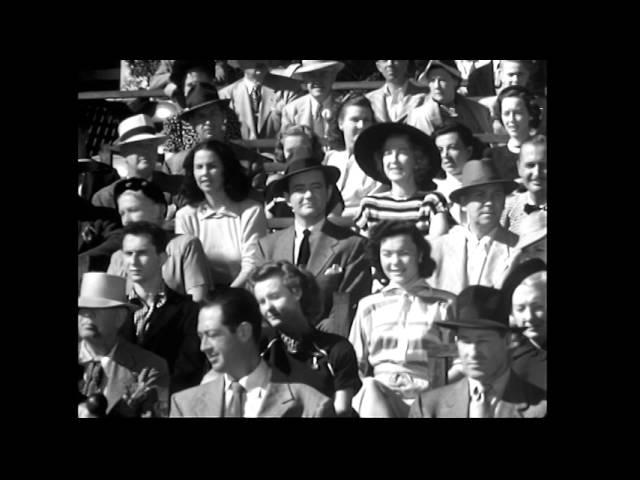
- The film’s interiors were shot at the Warner studio, and outdoor scenes were filmed in Los Angeles (an amusement park), Washington (the Jefferson Memorial), New York (Pennsylvania Station), and Danbury (a provincial train station). In the summer of 1950, Hitchcock traveled to Queens to film the packed stands at the Davis Cup matches. On October 17, 1950, the film crew left for the East Coast, where filming took place at Pennsylvania Station (which was passed off as Union Station in the film) and in the small town of Danbury (which became the provincial Metcalfe in the film) over six days. By this time, the bulk of the script was already complete.
- Robert Burks was chosen as the cinematographer – a specialist in complex optical effects, capable of creating the mood the director required. The director was pleased with his work and continued to collaborate with Burks for the next 14 years. It was Burks who managed to capture what Hitchcock had dreamed of throughout his 20-year film career – to film a murder reflected in the victim’s glasses.
- Film critic Roger Ebert considers 'Strangers on a Train' to be one of Hitchcock's finest works; he included his analysis in his book about the greatest films in cinema history.
- The amusement park was constructed at the ranch of his colleague Rowland V. Lee in Chatsworth, according to Hitchcock’s detailed instructions. The actual “Tunnel of Love” was found in one of the areas of Los Angeles, Canoga Park. The director forced the actress playing Miriam to wear glasses with strong lenses, even though she had excellent vision. This disoriented her during filming. In one scene, it is visible how she feels her way, running her hand along the furniture. The tennis match was filmed on the courts of a tennis club in the suburban South Gate. Fred Reynolds portrayed Guy’s opponent in the shot, while Granger’s coach, Jack Cashingham, opposed him off-camera. The remaining scenes were filmed in the studio against landscape backdrops.
- In the final scene of the American version of the film, the Morton sisters wait anxiously in their home for the fateful phone call from Guy. To emphasize its importance, Hitchcock requested that the phone be visible in the foreground, with the girls in the background. The imperfect technology of the time hindered the realization of his vision, not allowing both the phone and the actresses to fit in one frame. To solve the problem, they placed a giant phone prop in front of the camera. When Ann hears the ring, she runs to the table and picks up the receiver. However, the receiver in her hand is normal size. 'It was all shot in one take,' Hitchcock recalled. As Ann walks forward, the camera subtly moves towards her, causing the phone to be momentarily out of frame. This was enough time for an assistant to hand the actress a regular phone receiver.
- This film determined the location of Carol Burnett’s star on the Hollywood Walk of Fame. In 1951, Carol worked as a ticket taker at the Warner Theatre on Hollywood Boulevard, where “Strangers on a Train” was currently playing. Two people were late for a showing, and Burnett, having already seen the film, said that this wonderful picture should be watched from the beginning. The theater manager fired Carol. Several years later, when Carol Burnett was asked where she would like to have her star placed on the Walk of Fame, Burnett chose a spot directly in front of the Warner Theatre.
- Hitchcock traditionally meticulously prepared the climactic scenes of his films. In 'Strangers on a Train,' the intention was for the expressionistic scene of the 'deranged' carousel, which falls apart as it moves, to remain in the viewer’s memory. The creation of this vivid image utilized the special effects available at the time – miniature models, background projection, and montage inserts. Editor William Ziegler was responsible for seamlessly combining all the elements. First, they filmed the explosion of a miniature carousel model. Then, the image of the explosion was projected onto a giant screen, against which they placed extras of crying children and screaming mothers, seemingly being hit by the wooden horses of the disintegrating attraction.
- The scene where a man crawls under a wildly spinning carousel is not a photographic trick; the actor actually crawled under the carousel. According to Hitchcock, it was the most dangerous stunt performed under his direction.
- In Raymond Chandler's screenplay version, Bruno Anthony was arrested at the end and placed in a mental hospital, with the final shot showing Bruno already in the institution, writhing in a straitjacket.
- Hitchcock adored the stories of Edgar Allan Poe from a young age and made references to his favorite author in some of his films. In 'Strangers on a Train,' a certain analogy can be traced between the spinning carousel at the end of the film and Poe’s 'A Descent into the Maelström.'
- The train station scenes in Metcalfe were filmed at the former New Haven Railroad station (Danbury, Connecticut). It is now the Danbury Rail Museum.
- The version of the film shown in Germany was missing 5 minutes (the most violent scenes had been cut from the print). They were later added for television broadcast, but were accompanied only by subtitles, while the rest of the film was dubbed.
- From the very beginning, the role of the mentally unstable Bruno Anthony was intended for Robert Walker. When choosing an actor for this role, Hitchcock was guided by the fact that Walker had just been discharged from a psychiatric hospital. Six months after the completion of the film, Walker’s mental illness worsened, and he died due to an allergic reaction to medication.
- To promote his new film, Hitchcock, as usual, posed for photographers in unusual positions. One promotional photo shows him inserting the letter L into the word 'strangers' in the film's title. The pun is that it creates the word 'stranglers'. In another photo, he wraps his arms around the neck of his own daughter, Patricia (who plays Barbara). One press release claimed that Hitchcock, promising his daughter a hundred dollars for an evening ride on the Ferris wheel, ordered the electricity to be turned off when she was at the very top, causing the trembling girl to 'hang in complete darkness for a whole hour'. Patricia herself defends her father against accusations of sadism, calling such stories tall tales designed to generate interest in the film.
- For the episode where Guy's lighter falls into a drain and Bruno tries to retrieve it, Hitchcock personally selected the garbage lying at the bottom of the drain.
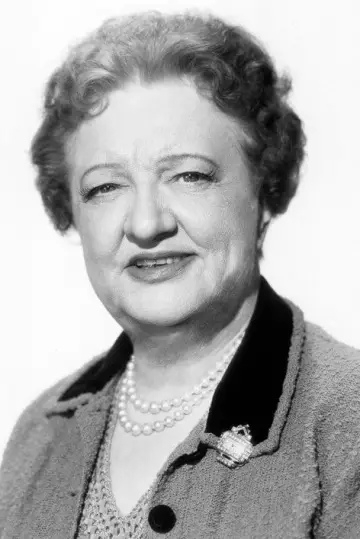
- “Strangers on a Train” marked the film debut of 67-year-old Marion Lorne, who played Bruno’s mother. The film also features the only notable role of Patricia Hitchcock, Alfred Hitchcock’s daughter.
- Originally, the film did not end with the scene of Guy and Ann traveling by train; in another version, the film ends just before that episode. The reel containing this footage was mistakenly labeled as the “British version,” and studio executives decided that this was the version shown in the United Kingdom. The “incorrect” version of the film was also distributed in America.
- Hitchcock personally devised a tie for Bruno with a lobster pattern featuring clasped claws, as if revealing Bruno to be a strangler.
- Alfred Hitchcock originally wanted William Holden to play Guy Haines.
- “Strangers on a Train” was Robert Walker’s last completed film; he died eight months after filming.
Similar movies



 Auditions in India
 Casting calls in USA
 Castingi w Polsce
 Кастинги в Україні
