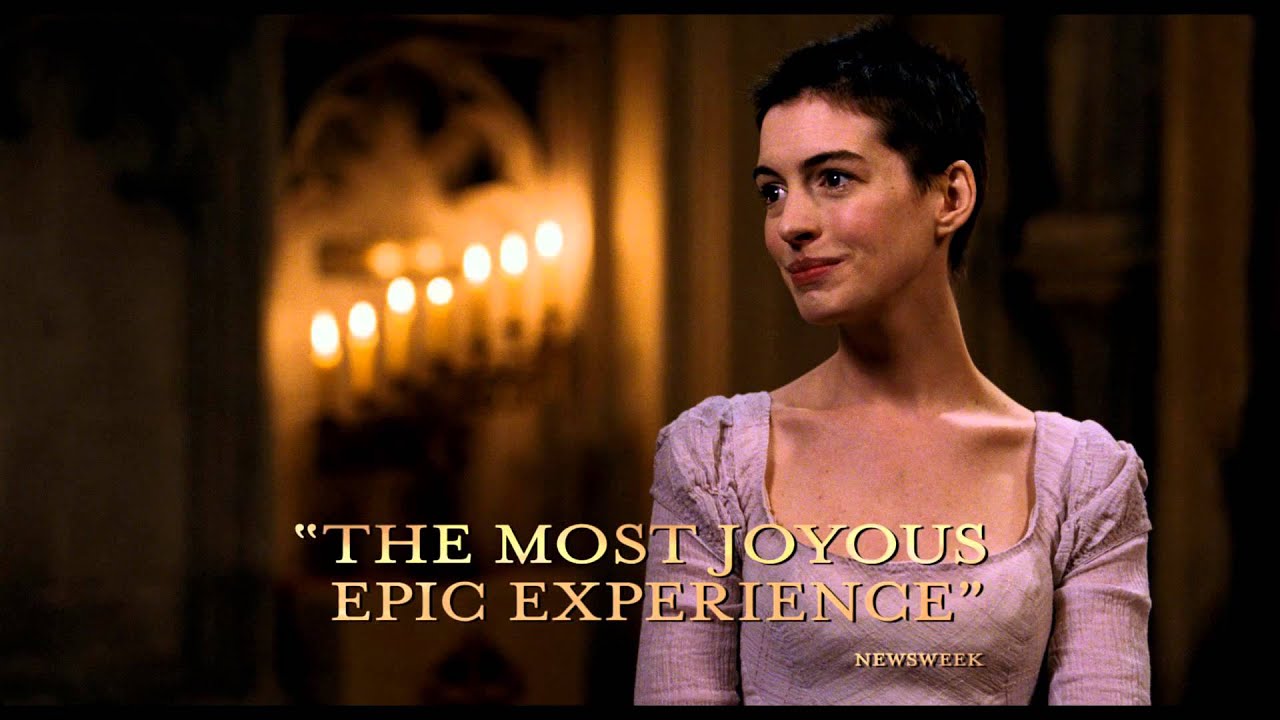
Les Misérables - videos, teasers and stills from filming

All videos, teasers and footage from the filming of the film "Les Misérables"
Les Misérables (2012)
Timing: 2:38 (158 min)
Les Misérables - TMDB rating
7.308/10
5546
Les Misérables - Kinopoisk rating
7.907/10
104347
Les Misérables - IMDB rating
7.5/10
361000
Watch film Les Misérables | TV Spot: "Medley"
TV Spot: "Medley"
English
0:30
Watch film Les Misérables | TV Spot: "Tomorrow"
TV Spot: "Tomorrow"
English
0:30
Watch film Les Misérables | TV Spot: "Legend"
TV Spot: "Legend"
English
0:30
Watch film Les Misérables | Teaser
Teaser
English
1:38
Watch film Les Misérables | "On My Own" Trailer
"On My Own" Trailer
English
2:27
Watch film Les Misérables | I Dreamed a Dream
I Dreamed a Dream
English
4:48
Watch film Les Misérables | Look Down
Look Down
English
10:20
Watch film Les Misérables | Offizieller Trailer
Offizieller Trailer
Deutsch
2:37

What's left behind the scenes

  • The film is based on Victor Hugo's novel "Les Misérables" (1862).
  • Typically, the soundtrack for film musicals is recorded over several months, and actors perform to a playback track during filming. But in "Les Misérables," each song was recorded live on set to make the actors' performances more natural and spontaneous.
  • Amy Adams, Jessica Biel, Marion Cotillard, Kate Winslet, and Rebecca Hall were considered for the role of Fantine.
  • Scarlett Johansson, Lea Michele, Lucy Hale, Evan Rachel Wood, Emily Browning, and Hayden Panettiere auditioned for the role of Éponine.
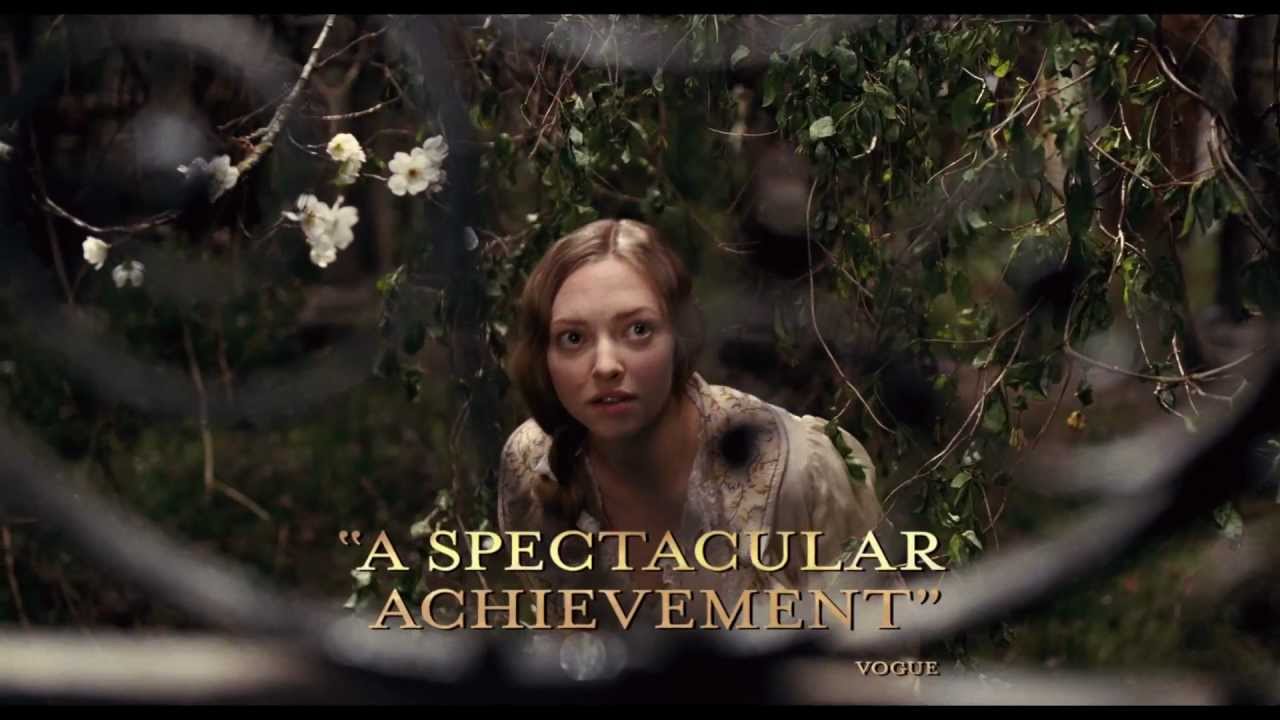
  • Emma Watson, Shailene Woodley, Miranda Cosgrove, Emily Marie Palmer, Lili Reinhart, and Portia Doubleday auditioned for the role of Cosette, which was ultimately given to Amanda Seyfried.
  • Geoffrey Rush was considered for the role of Monsieur Thénardier before the filmmakers settled on Sacha Baron Cohen.
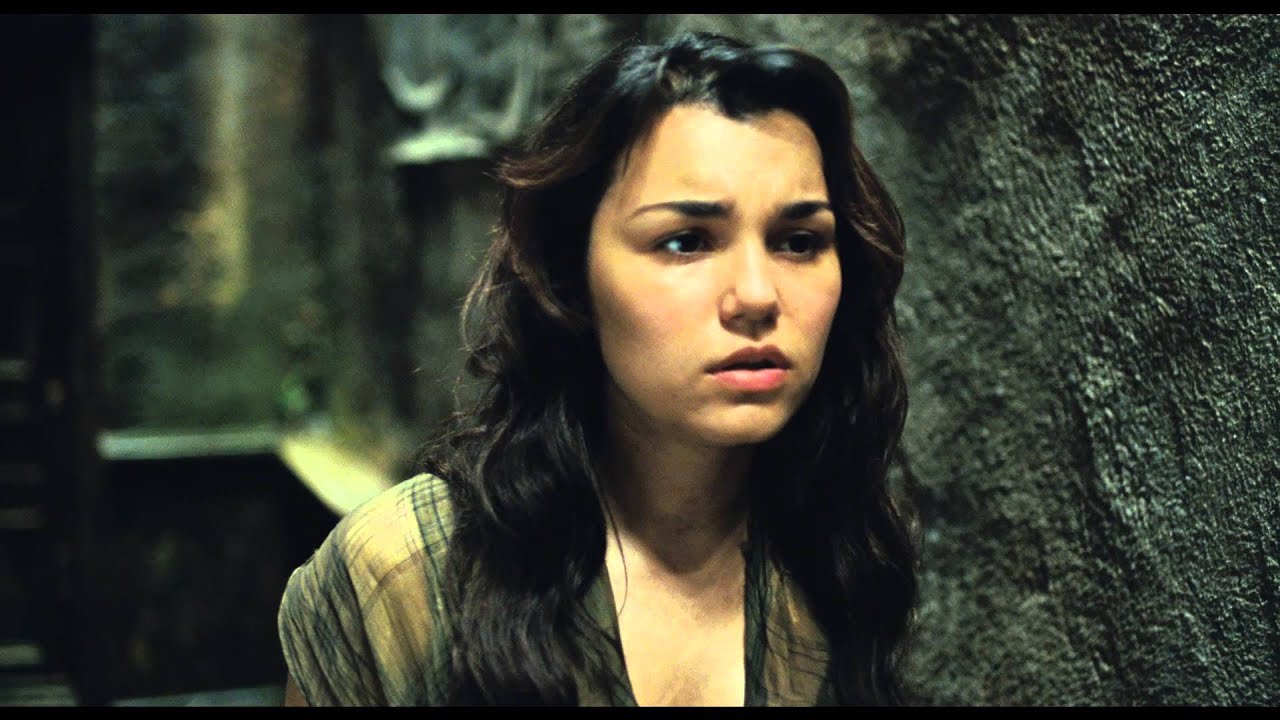
  • After months of auditions, Samantha Barks landed the role of Éponine, which she had previously played in one of the West End theaters and at a concert celebrating the musical's 25th anniversary. Barks was performing in Oliver! in Manchester when, to her surprise, Cameron Mackintosh (the film's producer) came on stage and announced that she had been chosen for the role.
  • Before Russell Crowe was cast as Inspector Javert, Paul Bettany was considered for the role.
  • Jamie Campbell Bower could have played the role of Enjolras, but he declined.
  • Anne Hathaway's audition was so wonderful that everyone present was moved to tears by the end of it.
  • Composer Claude-Michel Schönberg and poets Herbert Kretzmer and Alain Boublil wrote a song specifically for the film. Schönberg also wrote the film's score.
  • Anne Hathaway sang with Hugh Jackman twice at the Academy Awards ceremony. The second time, Hathaway hosted the ceremony and sang Jackman the song "On My Own" because he refused to sing with her. Later, when Jackman got a role in this film, he recommended Hathaway for the role of Fantine. And ultimately, she landed the role.
  • Both Anne Hathaway and Amanda Seyfried performed with Hugh Jackman at the Academy Awards ceremony, though separately.
  • Colm Wilkinson, who played the Bishop of Digne, portrayed Jean Valjean in both the London and New York stage productions of the musical.
  • Many years ago, Anne Hathaway had the opportunity to play the lead female role in another film adaptation of a Broadway musical. It was Joel Schumacher's 'The Phantom of the Opera' (2004). She had to decline due to a contract with Disney for a sequel to 'The Princess Diaries' (2001).
  • Samantha Barks and Alistair Brammer performed the roles they played in the film at the 'Les Misérables: 25th Anniversary Concert' (2010).
  • Frances Ruffelle, who played Éponine in the Broadway and West End productions, played a prostitute in the film. When producer Cameron Mackintosh announced her character's name, he referred to her as 'the most beautiful whore.' Ruffelle also participated in the 'Les Misérables: 25th Anniversary Concert' (2010), but in her classic role as Éponine.
  • Helena Bonham Carter and Sacha Baron Cohen previously starred together in the musical "Sweeney Todd: The Demon Barber of Fleet Street" (2007).
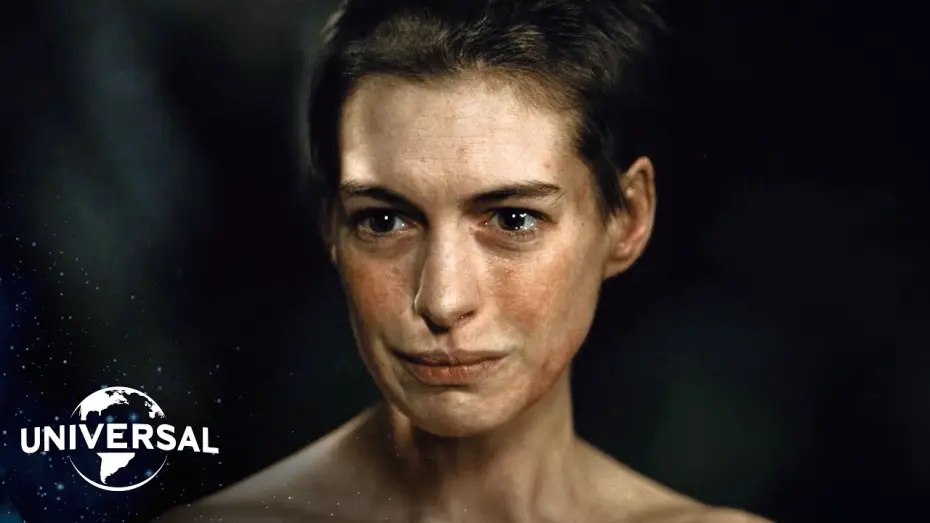
  • Anne Hathaway was actually given a very short haircut for the scene where her character sells her hair.
  • Hugh Jackman lost a significant amount of weight and grew a real, unkempt beard for the Valjean-prisoner scenes. Fortunately, these scenes were filmed first, and he was able to shave and regain his usual weight for filming the Valjean scenes.
  • Amanda Seyfried said in an interview that her auditions lasted 4 months before she got the role of Cosette. She was completely unaware of other contenders for the role, but constantly heard that she wasn't a good fit for the musical. During the auditions, Seyfried also played the role of Fantine. She got into good vocal and physical shape, hoping to get one of the roles. After the role of Fantine went to Anne Hathaway, Seyfried was given the role of Cosette.
  • Producer Cameron Mackintosh, who also produced the original English musical, had wanted to adapt it for the screen since the early 1990s.
  • Many of the film's extras are either West End stars or people who have participated in various stage productions of the musical "Les Misérables." Among them are: Kerry Ellis, Hadley Fraser, Katie Hall, Diane Pilkington, Nancy Sullivan, Gina Beck, Robin North, Fra Fee, Alistair Brammer, Killian Donnelly, Linzi Hateley, Caroline Sheen, Katie Scrimshaw, Christopher Key, Gemma Wardle, and Alexia Khadim.
  • The idea of recording the actors' singing live during their performance may have been realized before this film, but the way it was implemented is undoubtedly unique. The actors had special headphones through which they heard the pianist playing off-screen, in order to hit the notes of the melody accurately. The main innovation here was that there were no preliminary counts or a set tempo; the piano followed the actors' actions, not vice versa. And this approach was truly used for the first time in a film adaptation of the musical. The orchestral music was added during post-production.
  • Anne Hathaway's first encounter with the role of Fantine came in 1987, when her mother, Kate McCauley, played the role on the first American tour of the musical.
  • Anne Hathaway lost a total of 11 kg for her role as Fantine, while Hugh Jackman lost almost 14 kg for the role of Valjean the convict.
  • Amanda Seyfried had already played the role of Cosette before, when she was 7 years old.
  • Eddie Redmayne's audition was unusual. He filmed himself singing on his iPhone in his trailer during a break from filming in North Carolina, and then sent the video.
  • In addition to the actors singing live, which allowed them to add improvisation to their vocal performances, much of the movement was also improvised. In particular, Valjean's first solo, his monologue, was filmed using a Steadicam, allowing Hugh Jackman to move as he felt necessary to better convey the heavy emotions of the scene.
  • Hugh Jackman went 36 hours without water to look gaunt and exhausted as a prisoner.
  • Helena Bonham Carter is a distant relative of French politician Achille Fould, a major rival of Victor Hugo due to his support of Louis Napoleon III.
  • According to Anne Hathaway, director Tom Hooper suggested she try filming a take of her song “I Dreamed a Dream” while lying in a coffin. But the idea was ultimately abandoned because it looked too absurd.
  • Despite some scenes being filmed in a single take, Anne Hathaway revealed in an interview that filming the song 'I Dreamed a Dream' took 8 hours because she wanted to delve deeper into the mood of the scene to convey it as emotionally as possible in her performance. And she succeeded on the fourth take, which made it into the final version of the film.
  • The film initially ran for 4 hours and included a 15-minute battle scene. However, it was eventually cut down to two and a half hours.
  • There’s noticeable improvisation in the scene where Thénardier says he loves Cosette like a native daughter, while being unable to remember how to pronounce her name correctly. He calls her Colette several times, and once even Courgette. The latter name translates to 'squash' from French. Although this is never mentioned in the musical, in Victor Hugo’s novel, Cosette is a nickname given to her by her mother, while her real name is Euphrasie.
  • Eddie Redmayne said that Tom Hooper shot the scene 'Empty Chairs at Empty Tables' about 15 times in a row.
  • The large elephant statue that appears in several scenes of the film was both a real statue in Paris (between 1813 and 1846), and an object vividly described by Victor Hugo in his novel 'Les Misérables'. This monument is known as the 'Elephant of the Bastille'. Initially, Napoleon wanted it to be a bronze monument to his military achievements, erected on the site of the former Bastille, but ultimately only a model of the monument was made from plaster and wood. By the time it was demolished in 1846, it had become infested with a huge number of insects that severely damaged the statue’s appearance. In Hugo’s novel, he describes it as an ugly, dilapidated eyesore despised by all.
  • Helena Bonham Carter played Mrs. Lovett in the film "Sweeney Todd: The Demon Barber of Fleet Street" (2007), and Madame Thénardier in "Les Misérables" (2012). Actress Jenny Galloway, who played Madame Thénardier in the original stage production of "Les Misérables", also played Mrs. Lovett in the Broadway production of "Sweeney Todd".
  • The Broadway production of "Les Misérables" premiered at the Broadway Theater in March 1987. A total of 6,680 performances were given, making it the third-longest-running show on Broadway (as of February 2013). In 1990, it moved to the Imperial Theater. "Les Misérables" received 13 Tony Award nominations in 1987, winning eight of them (Best Musical, Best Actor, Best Actress, Best Scenic Design, Best Costume Design, Best Lighting Design, Best Direction of a Musical, Best Music, and Best Book).
  • Anne Hathaway refused to discuss how she lost 11 kg to play the dying Fantine. As she admitted, her methods were life-threatening and she does not want to advertise them. However, she confirmed that she ate oatmeal paste during this diet.
  • The scene in which Fantine is attacked by a rejected client is based on a real-life case from Victor Hugo's life, after which he came up with the character of Fantine. Hugo was walking to his editor's office when he encountered a young man harassing a prostitute. When she rejected his advances, he pushed her to the ground. And when she began to fight back with her fists, he immediately called the police to arrest the "woman who attacked him." Hugo was already somewhat famous at the time and put in a good word for her when the police arrived, as a result of which she was not arrested. Hugo said he was horrified by the injustice of the situation and began to think about how this woman might have small children who were completely dependent on her. That's how the image of Fantine appeared in his mind.
  • Anne Hathaway insisted on performing one stunt herself. It was the stunt from the scene where Fantine's body is thrown out of a window into a cart (this scene was cut in the theatrical version). Director Tom Hooper and the producers had pre-hired a stunt double and were reluctant to allow Hathaway to perform the stunt herself. But she eventually managed to convince them when she said, "Don't make me say this... Guys, I'm Catwoman" (her previous role in "The Dark Knight Rises," 2012).
  • As Hugh Jackman stated, the death scene of Jean Valjean was the most difficult for him, because filming took place on a cold early morning, which severely hindered his speech.
  • Enjolras dies in the film in the same position as in the original musical, hanging upside down. The only difference is that in the stage production he was dangling from the barricades, not from a window.
  • The appearance of the bishop at the end of the film is a reference to a scene from the original novel: when Valjean is dying, the bishop asks him if he wants a priest to be called. To which Valjean replies that he already has one.
  • When a small child jumps onto the back of a horse-drawn carriage, disc brakes are clearly visible on the rear axle of the carriage. Such brakes were not used until the 1890s, which is several decades later.
  • The calf wandering in the frame during the barricade scene belongs to the Hereford breed. This breed did not exist until 1880, and it did not appear in France until the 20th century.
  • The bishop wears liturgical vestments, including a vestment and epitrachelion. During that period in history, the epitrachelion was worn under the vestment, not over it, as shown in the film.
  • When we first see Enjolras speaking to the crowd, he and Marius are holding pamphlets in their hands. When he raises his hand above his head, the camera changes angle. It is visible that the pamphlet is no longer in his hand.
  • During the final scene, the sky is sometimes cloudy and sometimes completely clear.
  • During the scene where Jean Valjean and the young Cosette are fleeing from Javert, Valjean lowers Cosette from the roof using a rope. As soon as she is lowered, the rope immediately falls next to her. It is unclear how Valjean managed to descend without the rope's help.
  • When Jean Valjean tells Cosette that her mother has died, he removes his hat before kneeling. Later, when the camera focuses on Cosette, it is noticeable that he has no hat at all, and when the camera returns to Valjean, the hat is back on his head.
  • Eponine sings the lines “You see I told you so; there's lots of things I know” (“See, I told you so; I know a lot of things”). In the original libretto, this is a reference to the lines previously spoken to her, “Don't judge a girl on how she looks; I know a lot of things, I do” (“Don't judge a girl by her appearance; believe me, I know a lot”). But these lines were removed from the film, making the first lines meaningless.
  • In the “In My Life” scene, when all the women quickly line up in two rows, the position of Fantine and the women standing on either side of her changes about three times.
  • After the “A Little Fall of Rain” scene, Enjolras, wearing a red jacket, and another character kneel to lift Eponine. After a shot change, Enjolras stands up to catch Eponine. However, in the next shot, another character is already carrying Eponine in their arms, while Enjolras is kneeling behind Marius.
  • When Jean Valjean confesses to Marius, the wardrobe in the bedroom periodically disappears after a shot change.
  • An earpiece in Anne Hathaway’s right ear, used for musical playback, can be noticed in the scene where she sings along with the rest of the chorus.
  • During the "Empty Chairs" scene, an ear piece is clearly visible in Marius's right ear.
  • When Javert contemplates suicide, he is on a bridge over the Seine River, east of Notre Dame Cathedral. When they show him jumping into the river, it’s visible that the river is flowing eastward (away from Notre Dame). In reality, it flows westward.
  • Towards the end of the song “Stars,” a shot from behind Javert shows him facing Notre Dame Cathedral, with the moon in the sky to his right. However, the light on his forehead is coming from the left side.
  • When showing the dead bodies after the battle, one of them can be seen breathing, and the boy closest to the camera glances away.
  • All inscriptions and signs in the film are written in French, however, in the Thénardiers' house, a glasses case and a tin have labels in English.
  • During the "confrontation" scene, where Javert and Valjean fight in the hospital after Fantine's death, a portion of Valjean's vocals were cut, but you can still see Hugh Jackman's lip movements at that moment.
  • During the storming of the barricades, the command "right shoulder forward" was given, after which the soldiers' formation turned to the right. In reality, that command is given to turn left. But in that case, the soldiers would have run into a house.
  • There's an inaccuracy regarding the dam where Javert intended to commit suicide. It didn't exist until 1975, so nothing like that could have been on the Seine in 1832.
  • The film is based on Victor Hugo’s novel “Les Misérables” (1862).
  • During the 'Empty Chairs' scene, an earpiece in Marius's right ear is clearly visible.
  • During the 'confrontation' scene, where Javert and Valjean fight in the hospital after Fantine's death, part of Valjean's voice was cut, but you can notice Hugh Jackman's lip movements at that moment.
  • During the storming of the barricades, the command 'right shoulder forward' was given, after which the soldiers' formation turned to the right. In reality, this command is given to turn left. But in that case, the soldiers would have bumped into the house.
Did you like the film?

© ACMODASI, 2010-2026

All rights reserved.
The materials (trademarks, videos, images and text) contained on this site are the property of their respective owners. It is forbidden to use any materials from this site without prior agreement with their owner.
When copying text and graphic materials (videos, images, text, screenshots of pages) from this site, an active link to the site www.acmodasi.in must necessarily accompany such material.
We are not responsible for any information posted on this site by third parties.