Cannibal Holocaust
They eat and they are eaten!




Genre
Budget
$100 000
Revenue
$2 000 000
Website
Director
Actors
Robert Kerman, Francesca Ciardi, Perry Pirkanen, Luca Barbareschi, Salvatore Basile, Ricardo Fuentes, Carl Gabriel Yorke, Paolo Paoloni, Lionello Pio Di Savoia, Lucia Costantini
All actors and roles (10)
All actors and roles (10)
Scenario
Producer
Franco Di Nunzio, Franco Palaggi
Operator
Sergio D'Offizi
Composer
Artist
Massimo Antonello Geleng
Audition
Bill Williams
Editing
Vincenzo Tomassi
All team (31)
All team (31)
Short description
A New York University professor returns from a rescue mission to the Amazon rainforest with the footage shot by a lost team of documentarians who were making a film about the area's local cannibal tribes.
What's left behind the scenes
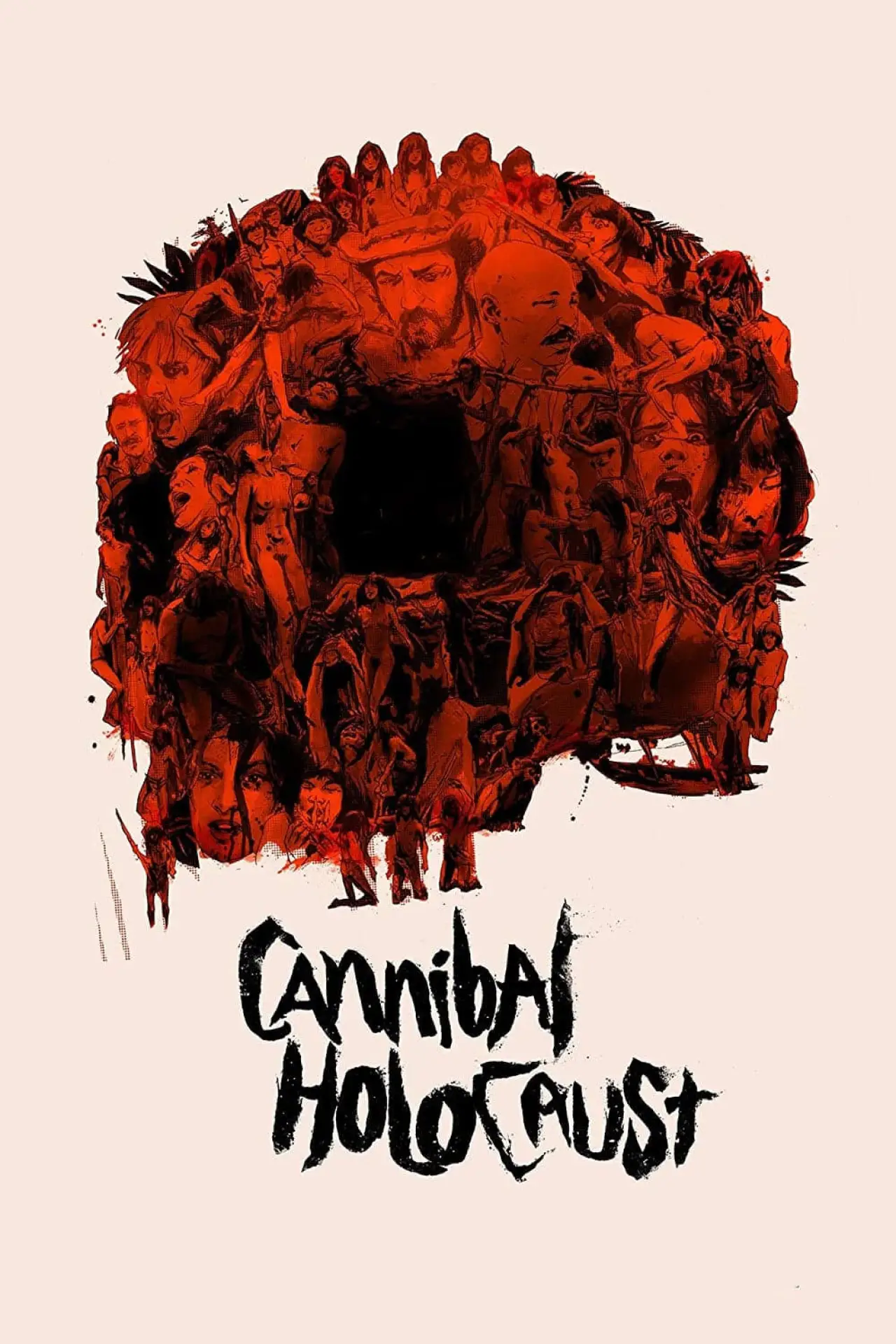
- The canonical painted poster for the film depicts a girl from one of the cannibal tribes pierced with a wooden stake. In court, director Ruggero Deodato explained that, in reality, the girl was seated on a bicycle seat attached to the top of a wooden pole and asked to hold a small pointed piece of wood in her mouth. After that, she was doused with fake blood. He noted that the girl herself was remarkably calm and remained motionless throughout the filming of the scene.
- Robert Kerman was a porn actor and hoped to establish himself in mainstream cinema after this film. However, no new offers came, and he returned to porn.
- When Carl Gabriel Yorke arrived in the Amazon for filming, he was not given a script and had no idea what the film would be about. In his first filmed scene, his character's leg was cut off. In a later interview, Yorke said that at the time he didn't know if the film was a Hollywood production or a snuff film.
- The Yanomami and Shamatari are real South American indigenous tribes. But they are not depicted accurately in the film.
- The film has 6 unofficial sequels.
- Actor Perry Pirkanen was unable to hold back tears after filming the scene of the turtle's death.
- All animal deaths in the film were real. The list of animals killed includes a coati (coatimundi), a yellow-spotted river turtle, a boa constrictor, a tarantula, a piglet, and two squirrel monkeys. The scene of the monkey's death was filmed twice, resulting in the deaths of two animals. Ruggero Deodato originally wanted to create monkey dummies for this scene, but the locals insisted on using real ones, as their brains are considered a delicacy. All the dead animals were given to the tribes.
- Immediately after the piglet was killed, actor Carl Gabriel Yorke botched a long monologue that director Ruggero Deodato had planned to include in the film. Yorke rehearsed the speech well several times, but stumbled during filming when he heard the piglet's death squeal. It was impossible to reshoot it, as there were no more piglets on set.
- The production team was unable to find a local woman to play the role of the tribe member who is raped and killed. Costume designer Lucia Costantini played the role.
- For the scene where the professor bathes naked in the river, women were hired from a local brothel.
- After watching the film, director Sergio Leone wrote a letter to Ruggero Deodato, stating: 'Dear Ruggero, what a film! The second part is a masterpiece of cinematic realism, but everything seems so real that I think you will have problems with the whole world.'
- Director Ruggero Deodato stated that 'Cannibal Holocaust' was based on a documentary film he had seen previously, also telling the story of a documentary crew that perished while researching African tribes. This documentary film, showing some incidents that the director later recreated in his film, was allegedly destroyed after being shown. An Italian cable network claimed to have a copy of the film and was going to show it uncensored. This never happened, but it was confirmed that a copy of the original exists.
- In a 2005 interview, actor Carl Gabriel Yorke said that Francesca Ciardi, while rehearsing a sexual scene with him, suggested 'actually doing it.' Yorke refused, saying he had a girlfriend in New York. But in 2009, Ciardi claimed that the sex on camera was real, and that she and Yorke were lovers during filming.
- In Japan, the film took second place at the box office in 1983, after 'E.T. the Extra-Terrestrial.'
- The film's original title was "The Green Inferno." But at the last moment, it was changed to something more "shocking."
- Composer Riz Ortolani used a small portion of his soundtrack from "The Torment of Innocents" (1972) for this film.
- Director Ruggero Deodato stated that he deeply regrets everything he did during filming, especially the killing of animals, and that it would have been better if he had never made such a film.
- Ten days after its premiere in Milan (February 7, 1980), the film was seized by an Italian court, and director Ruggero Deodato was arrested and charged with obscenity. He was later accused of murdering several actors and faced the prospect of imprisonment. Meanwhile, the actors playing the lead roles in the film had signed contracts requiring them to disappear for one year after filming to create the illusion of their actual deaths. Deodato was forced to seek help from actor Luca Barbareschi and ask him to contact the three other actors who played the missing film crew. When all the actors appeared in court alive and well, the murder charges were dropped.
Similar movies
8.5/10
8.4/10
8.3/10
8.1/10
7.7/10
7.6/10
7.4/10
7.4/10
7.4/10
7.4/10


 Auditions in India
 Casting calls in USA
 Castingi w Polsce
 Кастинги в Україні
