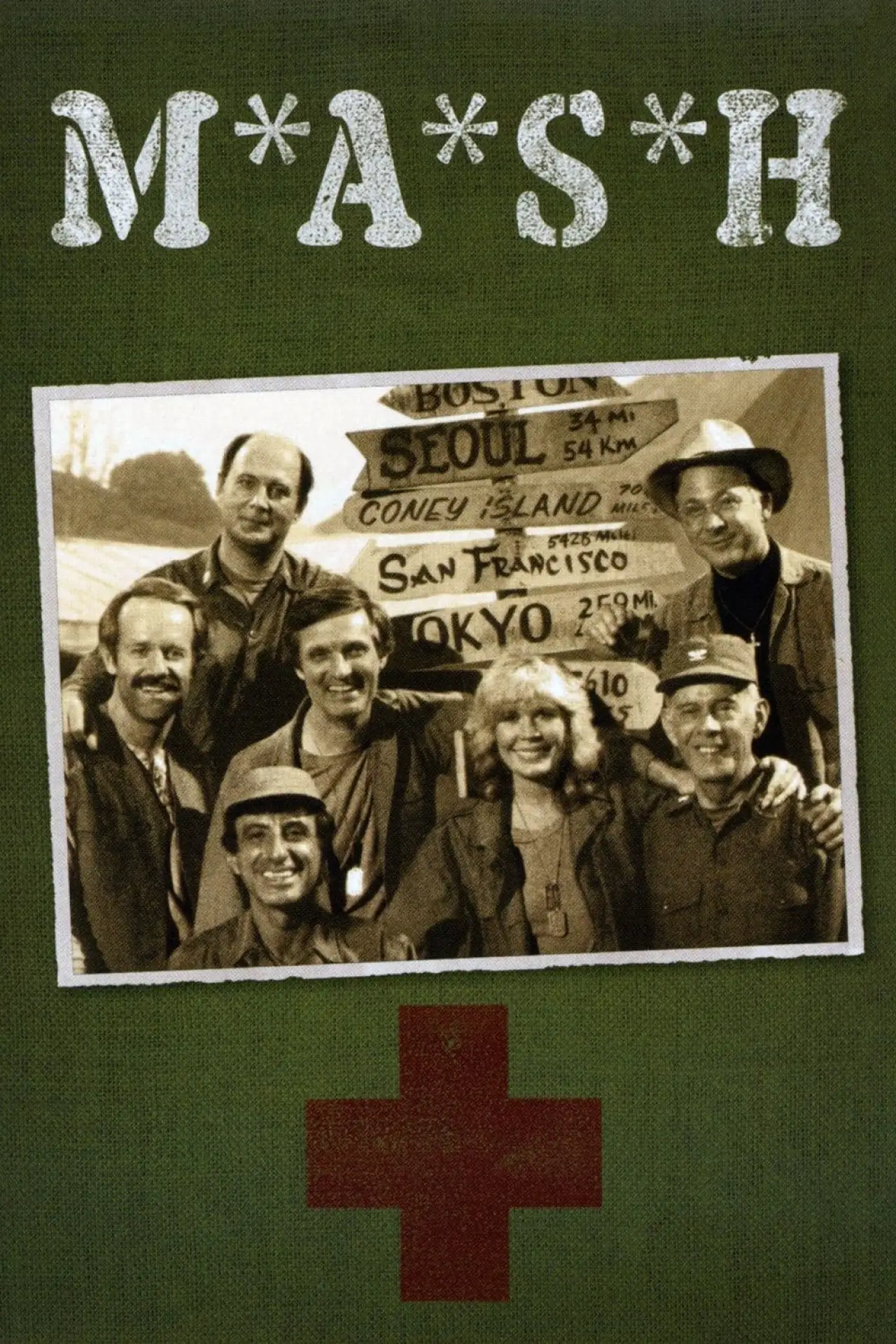
M*A*S*H
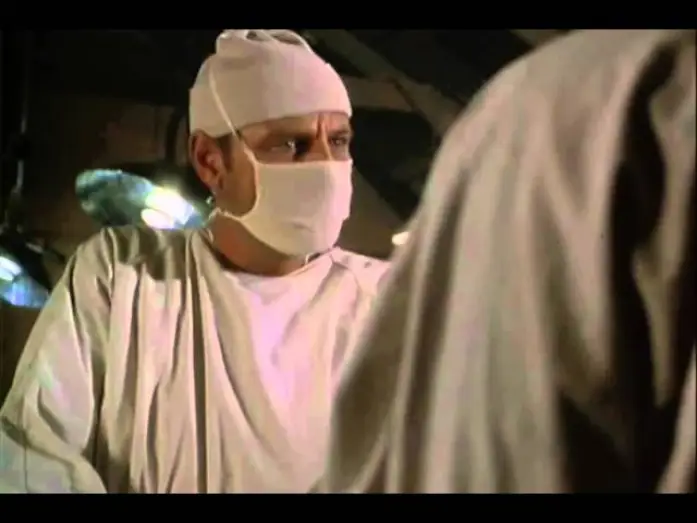
Goodbye, Farewell, and Amen.
M*A*S*H (1972-1983)
Seasons: 11,
episodes: 251
Average rating:
8.5/10
87 956



Production
Status
Completed
Creators

Larry Gelbart
Scenario
Richard Hooker
Author
Composer

Johnny Mandel
Producer
Larry Gelbart
Actors
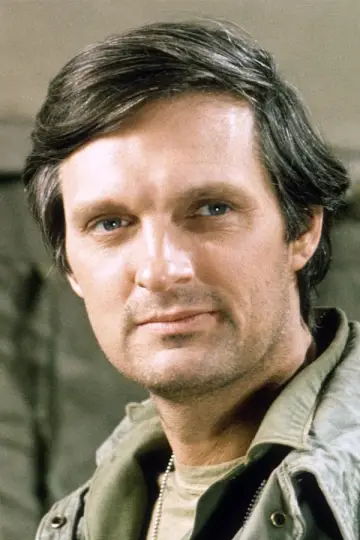
Alan Alda
Hawkeye Pierce
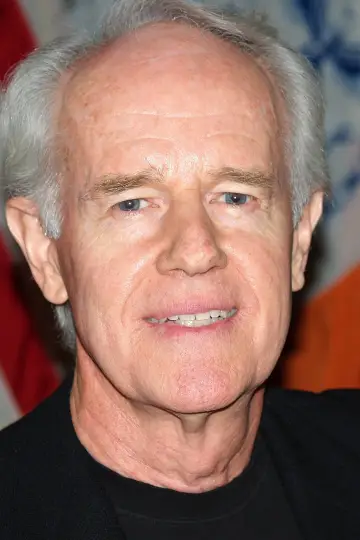
Mike Farrell
B. J. Hunnicutt
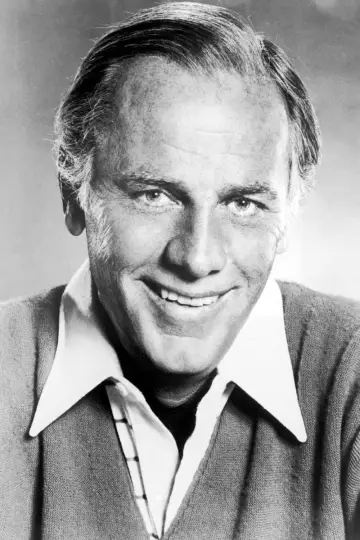
McLean Stevenson
Henry Blake
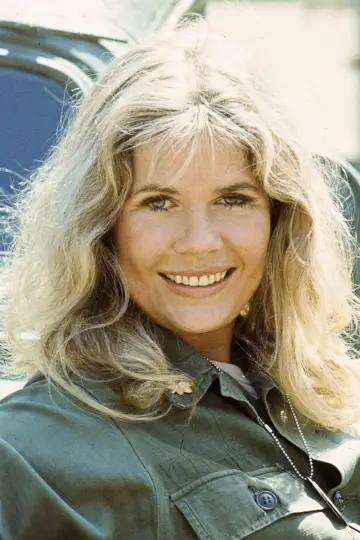
Loretta Swit
Margaret Houlihan
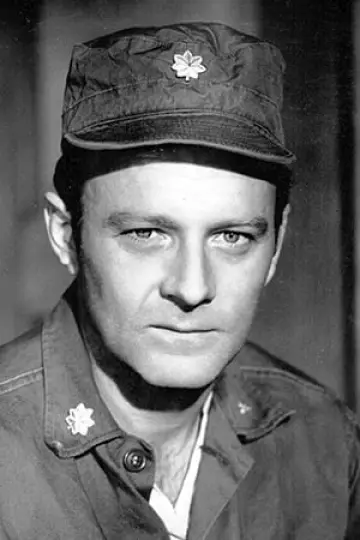
Larry Linville
Frank Burns
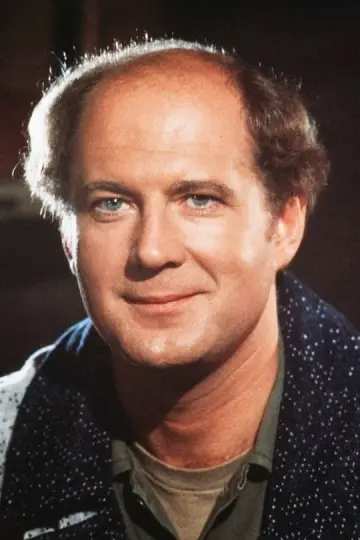
David Ogden Stiers
Charles Winchester

Gary Burghoff
Radar O'Reilly
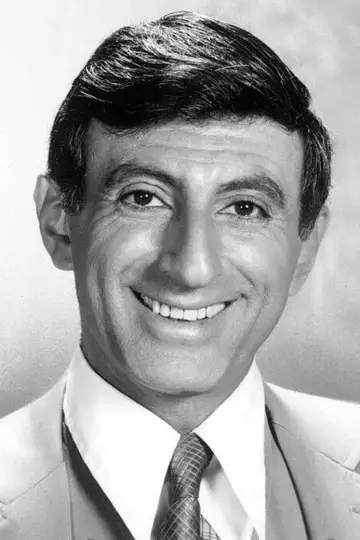
Jamie Farr
Maxwell Klinger
Short description
The 4077th Mobile Army Surgical Hospital is stuck in the middle of the Korean war. With little help from the circumstances they find themselves in, they are forced to make their own fun. Fond of practical jokes and revenge, the doctors, nurses, administrators, and soldiers often find ways of making wartime life bearable.
Seasons
| Season | Episodes | Release date | Rating |
|---|---|---|---|
| 24 | 1972-09-17 | 7 | |
| 24 | 1973-09-15 | 6.7 | |
| 24 | 1974-09-10 | 6.5 | |
| 24 | 1975-09-12 | 7.7 | |
| 24 | 1976-09-21 | 7.6 | |
| 24 | 1977-09-20 | 7.5 | |
| 25 | 1978-09-18 | 7.7 | |
| 25 | 1979-09-17 | 7.7 | |
| 20 | 1980-11-17 | 7.5 | |
| 21 | 1981-10-26 | 7.3 | |
| 16 | 1982-10-25 | 7.1 |
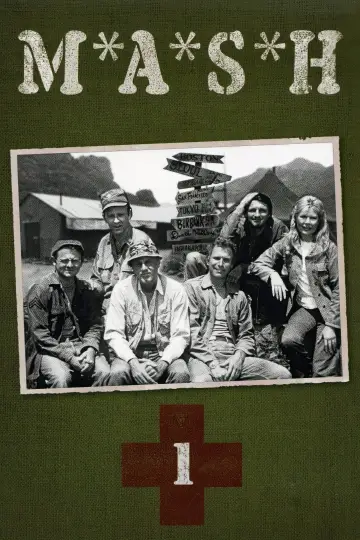
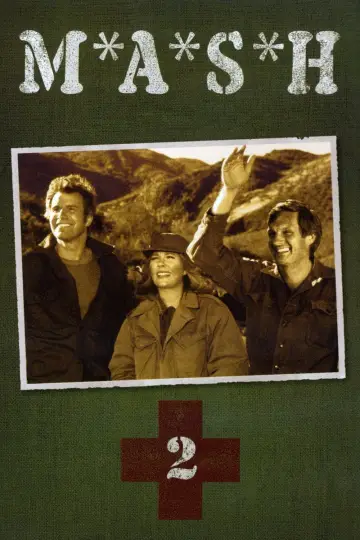
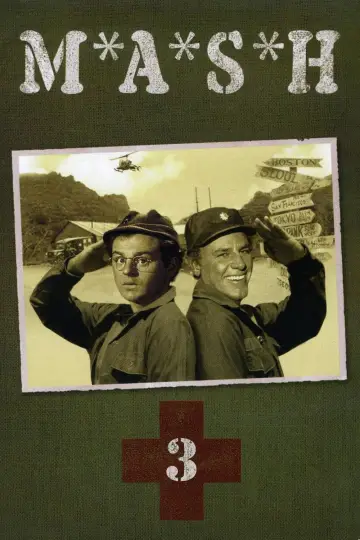
What's left behind the scenes
- Gary Burghoff grew tired of the role of Radar by at least the fourth year of filming. With each season, he appeared in fewer and fewer episodes. In the sixth season, Max Klinger (Jamie Farr) began appearing more frequently as the clerk. In the seventh, he was involved in only half of the episodes. Burghoff planned to leave the show by the end of the seventh year, but the producers forced him to wait until the beginning of the eighth. He appeared in a two-part farewell episode and several scenes preceding it in the eighth season.
- Disposable syringes appear in the series, although the first disposable plastic syringe was not patented until 1956 by New Zealand pharmacist Colin Murdoch.
- Many plots in the early seasons are based on real stories told by army hospital doctors.
- Godzilla movies are often mentioned, although the first one was filmed after the war.
- In the tenth episode of the fourth season, Pierce says that the Vice President of the United States is Richard Nixon; later, in episode 14, the date is given as May 1952. Nixon became Vice President in January 1953.
- By the third season, McLean Stevenson had become completely disillusioned with the series, playing what he considered a supporting role as Henry Blake, and notified the producers that he wanted to leave the show. On March 18, 1975, Blake's farewell episode, 'Abyssinia, Henry,' aired, in which Henry heads home; it became the most tragic episode of the series. In the final scene, Radar reports in the operating room that the plane Blake was on was shot down over the Sea of Japan. The scene was filmed twice due to camera noise. The first time, the actors were told that Henry had arrived home, and in the second take, the original script was played out. Because no one except the director and writers knew the full plot, the filming felt very 'natural.' After the broadcast, thousands of upset viewers sent numerous letters expressing their dissatisfaction with the ending, after which it was decided that no other character would ever be written out of the series in such a sad manner.
- In the episode 'The Army-Navy Game' (Season 1, Episode 20), the football game between the Army and the Navy takes place after Christmas 1950. In reality, the game was held on the first Saturday of December, 18 days before Christmas. The radio announcer calls it the '53rd game,' and it ends with a score of 42-36 in favor of the Navy. In reality, the 1950 game (which was only the 51st) was won by the Navy with a score of 14-2.
- Initially, nurses involved in supporting plots were assigned names such as "Nurse Able," "Nurse Baker," or "Nurse Charlie." This was derived from the phonetic alphabet used in the US before 1955, where the letters A, B, and C were pronounced as Able, Baker, and Charlie (now Alpha, Bravo, Charlie). In later seasons, nurses were given ordinary names, especially those who appeared regularly.
- Hospital 4077 was filmed using two sets of decorations. The "outdoor" sets were located near Malibu, California. Interior scenes were filmed at the 20th Century Fox studios. Later, the studio sets were improved to film some "exterior" scenes (for example, many night scenes in the later seasons were shot in the studio).
- The first episode is set in June 1950 and mentions 'wounded Canadians.' The first Canadians, the Princess Patricia’s Canadian Light Infantry, did not arrive in Korea until December 1950.
- In episodes from the first two seasons, a plastic model of a UH-1 'Huey' helicopter can be seen in Henry Blake's office. This aircraft did not exist during the Korean War; its first flight took place in 1956, and it later became an icon of the Vietnam War. Additionally, in a scene showing an aircraft carrier, a CH-47 'Chinook' appears, which also did not exist during the period depicted.
- In the early episodes of the third season, it is mentioned that General MacArthur has been replaced by General Ridgway and sent home. Nevertheless, later episodes state that he is still in command, and he even appears on screen in the 21st episode of that season.
- In the pilot episode, Mulcahy's father was played by George Morgan; in all subsequent episodes until the end of the series, the role was played by William Christopher.
- The characters in the series occasionally mention a 'twenty' ($20 bill) in their calculations, but the first $20 bill was not introduced until 1969 (series 681). Prior to the release of this series of banknotes, the largest denomination in military currency was the $10 bill.
- Larry Linville noted that his character, Frank Burns, became increasingly foolish after head writer Larry Gelbart left the series in the fourth season and the paths of Margaret and Frank diverged further. During the fifth season, Linville realized he had developed Frank's character as far as he could, and since he had a five-year contract, the actor decided to leave the show. Unlike Stevenson and Rogers, Linville did not regret leaving the series and felt that he had 'given everything possible to his character.'
- In the 21st episode of the fifth season ('Movie Tonight'), Radar portrays and quotes John Wayne from the 1963 film 'McLintock!'
- The main musical theme of the series is the composition 'Suicide is Painless' (which was also used in the feature film), which became a hit after the series premiered. The authors of the original version, Johnny Mandel (music) and Mike Altman (lyrics), released the soundtrack as a separate album.
- At the end of the series' filming, the sets were almost entirely destroyed by a fire on October 9, 1982. The fire was written into the final episode.
- In the 18th episode of the second season, the 1958 film 'The Drop' is mentioned.
- In the sixth episode of the fourth season, a North Korean prisoner is dressed in a brown uniform. North Koreans and Chinese soldiers wore light-colored padded jackets and uniforms.
- During the first season, McIntyre and Pierce's neighbor in the 'Swamp' (their living tent) was a Black surgeon, 'Harpooner' Jones, played by actor Timothy Brown. The character disappeared after the 11th episode of the first season, 'Germ Warfare,' because no evidence could be found that Black doctors served in the Korean War.
- Marines appear or are mentioned in various episodes across all seasons, although only the 1st Marine Division of the US was near Seoul between September and December 1950.
- The film is based on Richard Hooker's novel "M*A*S*H: A Novel About Three Army Doctors" (1968), a subsequent series of stories, and the motion picture "M*A*S*H" (1970).
- A photograph of a woman can be seen on Colonel Potter's desk in his office. The series mentions several times that this is Colonel Potter's wife. However, it is not just a photo of some woman; it is a photograph of Harry Morgan's actual wife.
- In one episode, Pierce receives an M101A1 howitzer in exchange for a jeep he won in a card game; in another, an anti-aircraft gun is sent to the hospital for protection against 'Five O'Clock Charlie' raids. The role of 'Five O'Clock Charlie' itself was played by an American Ryan PT-22 'Recruit' trainer aircraft.
- In the fourth season, the US President is referred to alternately as Truman and Eisenhower.
- In the first episode of the fourth season ('Bug Out'), it is stated that Colonel Potter arrives at the unit on September 9, 1952. However, in the sixth episode of the ninth season ('A War for All Seasons'), the entire camp, including Potter, celebrates first the New Year of 1951, and later 1952.
- In episode 16 of season 11, mention is made of the Battle of Dien Bien Phu, which took place in 1954.
- 'Goodbye, Farewell and Amen' was the final episode of M*A*S*H. It aired on February 28, 1983, and lasted two and a half hours. Approximately 106 million Americans watched this episode (77% of the television audience that evening). There is an urban legend that so many viewers watched the show live and waited until the end to use the restroom that immediately following the episode, the New York City Department of Sanitation recorded the highest water consumption in the city's history.
- During the filming of the final episode, representatives from the Smithsonian Institution approached the producers with a request for some of the sets. Upon the conclusion of the series, 'The Swamp'—the tent that served as the home for Pierce, McIntyre, Burns, BJ, and Charles—along with all its contents, was donated to the institute's museum.
- In the series '11.22.63', the main character, played by James Franco, answers a question about where he served by stating that he served in M.A.S.H. 4077.
- The currency in the series does not match what existed in reality; in the first episode of the first season, banknotes are visible that were not used by the US Army. At the start of the Korean War (June 25, 1950), series 472 notes were in circulation, which were similar in appearance and color to US Federal Reserve notes. In season 6, episode 8, money is exchanged, but no one exchanged blue for red or red for blue. There was only one currency exchange during the Korean War (June 20, 1950 – July 27, 1953), on June 20, 1951. This was an exchange for series 481 notes, which also resembled US Federal Reserve notes.
- In 'A Full Rich Day' and other episodes, Winchester uses a 'Webcor 210' tape recorder from the Chicago-based Webster Electrical Corp., manufactured in the early 1950s.
- The series and its opening sequence feature the H-13 (Bell 47) helicopter. These aircraft were indeed used in actual MASH units during the Korean War. The film also shows the Willys Jeep and ambulances based on the Dodge 3/4-ton truck. Among the tanks, the M48 and M4A1 HVSS appear in several episodes. One of the series' technical blunders is related to the tanks: both models are used to represent the same tank within a single episode.
- In the eighteenth episode of the fourth season, Radar is sleeping with a Marvel comic book, 'The Avengers.' 'The Avengers' first began publication in September 1963. Additionally, during the Korean War, Marvel was called Atlas Comics and only adopted the new name in 1961. Furthermore, the book itself changes in the shots—appearing once with the original logo and once with the new one.
- In the twenty-fifth episode of the eighth season, Potter mentions an April Fools' joke from 1950; however, the fighting didn't start until June, so MASH could not have existed at that time.
- In several episodes, the characters drink beer from pull-tab cans, although such packaging did not appear until ten years later.






 Auditions in India
 Casting calls in USA
 Castingi w Polsce
 Кастинги в Україні
