What Happens at Rehearsals Before the Shoot
Behind the Scenes: Cinema: What Happens at Rehearsals Before the ShootIn film and web series, there is generally less rehearsal than in theatre, and newcomers often treat it as a mere formality. However, this is exactly where the character's arc is shaped, emotional beats are established, and questions are resolved—issues that, if left until the set, would cost expensive retakes and valuable production time.
The Table Read
The first meeting of the entire cast where the script is read aloud by role around a table. Usually, the director, producers, and sometimes the screenwriter and production designers are present.

What is required of you: Read your role with intention, but do not perform at full intensity. A table read is not an audition or a showcase. The goal is to hear the story as a whole and understand how the dialogue flows.
What is actually happening: The director is listening to the balance of voices, the producer is gauging the runtime, and the screenwriter is identifying lines that don't sound natural when spoken aloud. In the Indian industry, this is also where potential dubbing or language nuances are flagged. The script is almost always revised after the read.
How to prepare: Read the entire script, not just your scenes. Mark anything unclear. Know exactly what happens to your character from the beginning to the end of the story.
The Breakdown (Character Work)
The director's work with an actor or a pair of actors on specific scenes. This may be a scheduled meeting or occur during a break on set in hubs like Mumbai or Hyderabad.
What is discussed: What is happening in the scene, what the character wants (the objective), what is stopping them (the obstacle), and how they evolve. Sometimes, a backstory not mentioned in the script is developed.
What is required of you: Come with your own interpretation. An actor who has no opinion on the role forces the director to do the work of two people. However, you must be able to let go of your version if the director envisions something different.
Good questions for the breakdown: Where did the character come from immediately before this scene? What happened between the scenes? What is the unspoken relationship between these people? What is the character hiding?
Partner Rehearsals
The scene is run "on feet," without a camera. This is where the physicality enters: where people stand, who enters first, and where physical contact occurs.
What is decided: The tempo-rhythm, the distribution of pauses, and the emotional turning points. It also tests chemistry—how your mannerisms blend with your co-star's.
Practical advice: Do not lock everything in stone. On set, the blocking will be adjusted to fit the camera angle, and a too-rigidly learned pattern will have to be broken.
On-Set Rehearsals
These happen on the day of the shoot, before the actual takes. There are several levels:
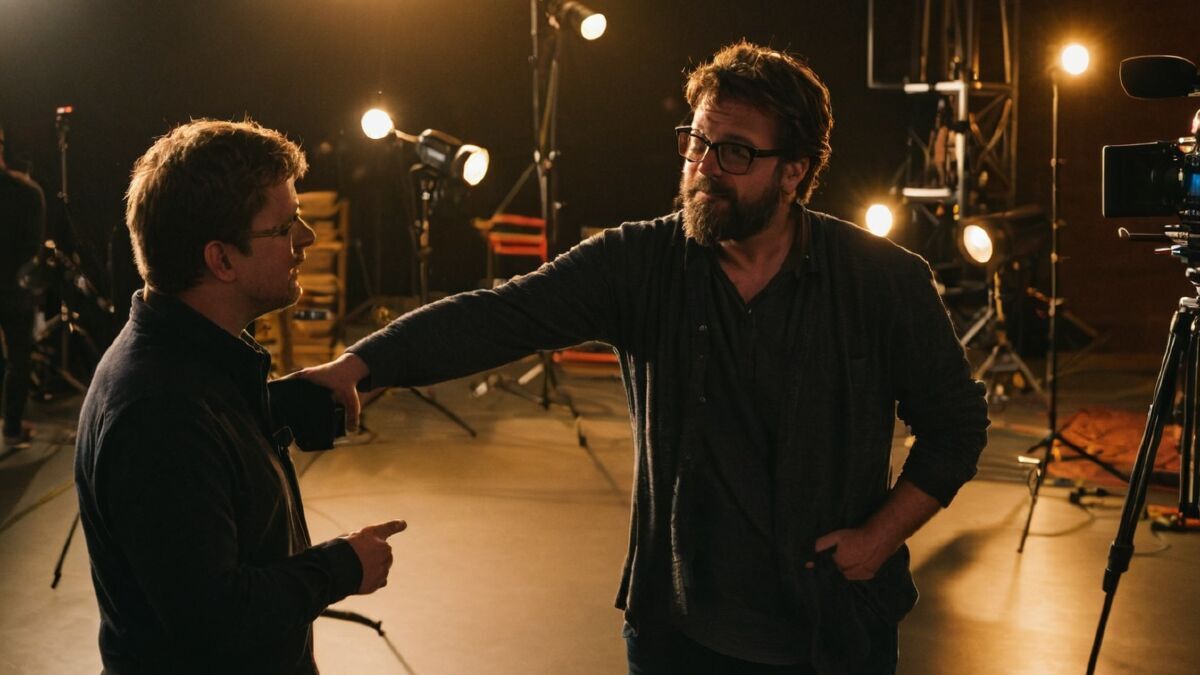
- Blocking. Actors walk through the scene for the crew. The cinematographer determines the frame, and the assistant director (AD) places marks on the floor.
- Technical Rehearsal. A walkthrough without acting, focusing on lighting and camera movement. Often, lighting doubles are used, but sometimes the lead actors are required.
- The Run-through. A full scene with acting, but without recording.
What is critical here: Remembering your marks and consistency. If you placed a cup on the left during blocking, it must be on the left in every take. The script supervisor tracks this, but it is your responsibility to maintain continuity.
Specialized Rehearsals
- Stunts. With the stunt coordinator; these are mandatory and happen multiple times. No improvisation is allowed.
- Dance and Movement. With the choreographer, done well in advance—sometimes weeks before the shoot.
- Weapons and Technical Gear. Briefings are mandatory, even if you have prior experience.
- Intimacy Scenes. Discussed separately and in advance, with a clear description of what will happen. Anything not agreed upon is not performed on set.
- Animal Work. With the trainer, so the animal becomes familiar with you.
How to Prepare for a Rehearsal
- Know the lines. Rehearsing with a script in your hand is a waste of everyone's time.
- Analyze the scene. Identify the event, the objective, the obstacle, and what the character is concealing.
- Bring options. Don't come with one "correct" solution, but with two or three different approaches.
- Write down your questions. It is appropriate to ask them during rehearsal, but not once the camera is rolling.
- Dress comfortably—you will be moving.
What Not to Do at Rehearsals
- Go at full power. Especially in emotionally heavy scenes; you will burn out before the actual shoot.
- Argue about interpretation for too long. A brief suggestion of your version is fine; a long discussion is not.
- Direct your partner. Telling a co-star "move over here" is not your role.
- Lock in your intonations. A memorized inflection becomes dead and robotic by the tenth take.
- Ignore marks and blocking. Saying "I'll feel it on set" can cost the crew hours of work.
If There Are No Rehearsals At All
This is common for junior artistes, commercials, and series with tight schedules. In this case, all preparation falls on you:
- Analyze the scene at home based on the event, objective, and obstacle.
- Prepare two versions of the performance—faster and slower, or harsher and softer.
- Learn the text so well that you can deliver it regardless of the blocking.
- Arrive early and check with the 2nd AD if there will be a run-through.
- Use the blocking on set as your rehearsal; it is your only chance to experiment.
In Brief
- Table reads are about the story as a whole, not about showcasing your acting.
- Come to the breakdown with your own version, but be ready to adapt.
- Partner rehearsals set the rhythm, but remember that blocking changes for the camera.
- During blocking, memorize your marks and ensure repeatability.
- Stunts, dance, weapons, and intimacy scenes must be rehearsed separately.
- If there are no rehearsals, the preparation is entirely yours, and blocking becomes your only trial.
Projects in the preparation stage can be found in the castings section.
Share


Author: Vikram Nair, film production writer
Publication date: 31 August 2026
Views: 39
Comments
Other materials in this section
Learn how fittings work, who is responsible for the wardrobe, and why continuity is more important than your comfort on set.
Learn how raw footage is transformed into a final film, why scenes are trimmed or cut entirely, and how to handle the editing process as a professional actor.
Lighting, sound, pace, and physical conditions differ wildly between a studio set and an on-location shoot. Here is how to prepare for each and how it affects your performance.
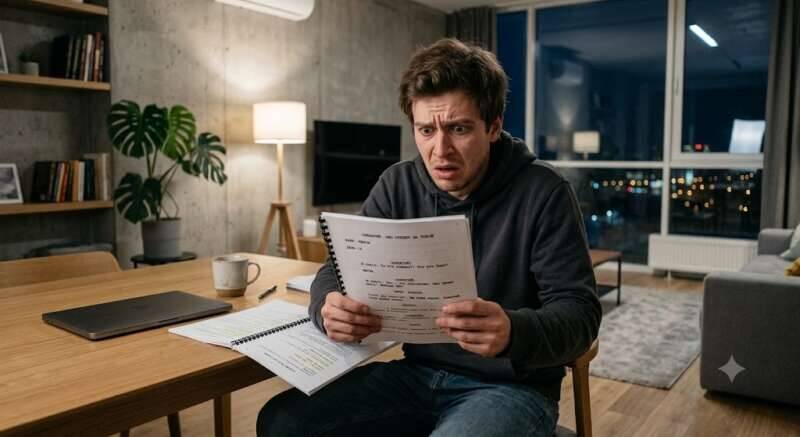
A short method for taking a scene apart the night before an audition: what happens, what the character wants and what stands in the way.
A detailed guide to decoding call sheet fields, the difference between call time and shoot time, and how to plan your day on a professional set.
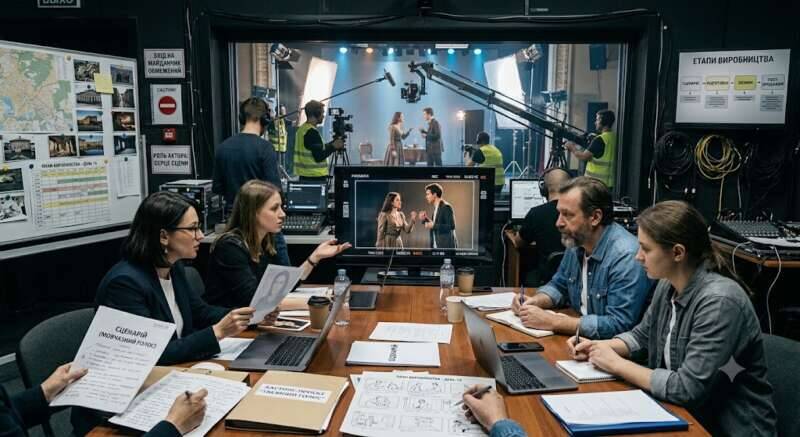
How background work differs from an episodic role, when a line appears, and why the path from crowd work upward does not open for everyone.
 Auditions in India
 Casting calls in USA
 Castingi w Polsce
 Кастинги в Україні
