Working as a Model for Exhibitions and Product Launches
Behind the Scenes: Fashion and Modelling: Working as a Model for Exhibitions and Product LaunchesExhibition work is a segment that is often undervalued: it doesn't provide high-fashion shots for your portfolio or lead to magazine covers, but it ensures a regular income, trains your communication skills, and creates contacts in industries far beyond fashion. For many models, this serves as a financial foundation, allowing them to comfortably wait for acting or commercial projects.

Common Roles
Booth Model / Stand Model
Working at a company's booth: greeting visitors, providing basic product information, distributing brochures, and inviting guests to speak with a specialist. You are required to know basic product details provided during the briefing.
Hostess
Greeting guests, managing registration, escorting visitors, and assisting with navigation. This role focuses more on service and communication and less on the specific product.
Promotional Model
Distributing samples, conducting simple activities, and attracting attention to the venue. Often involves wearing a specific costume or branded uniform.
Product Presentation Model
Demonstration: cars, electronics, jewelry, or apparel. The work is more static but requires endurance—standing next to an object for several hours is harder than it looks.
Activity Host
Conducting contests, quizzes, and short interactive sessions at the booth. Requires strong speaking skills and the ability to engage a crowd; these roles are typically paid higher.
Multilingual Booth Model
A distinct and well-paid position at international exhibitions. Proficiency in multiple languages (such as English, Hindi, and regional languages like Tamil or Telugu) significantly increases your rate.
How This Differs From Shoots
- Duration. A shift lasts eight to ten hours, almost entirely on your feet, usually for several consecutive days.
- Communication. The primary load is not physical but communicative: hundreds of short interactions per day.
- Appearance is important, but not the only factor. Poise, speech, friendliness, and the ability to learn quickly are highly valued.
- Broader requirements for age and look. Unlike high-fashion shoots, a wide variety of types are in demand here.
- Regularity. The exhibition calendar is known in advance, and work can be planned months ahead.
How to Prepare for a Shift
Footwear
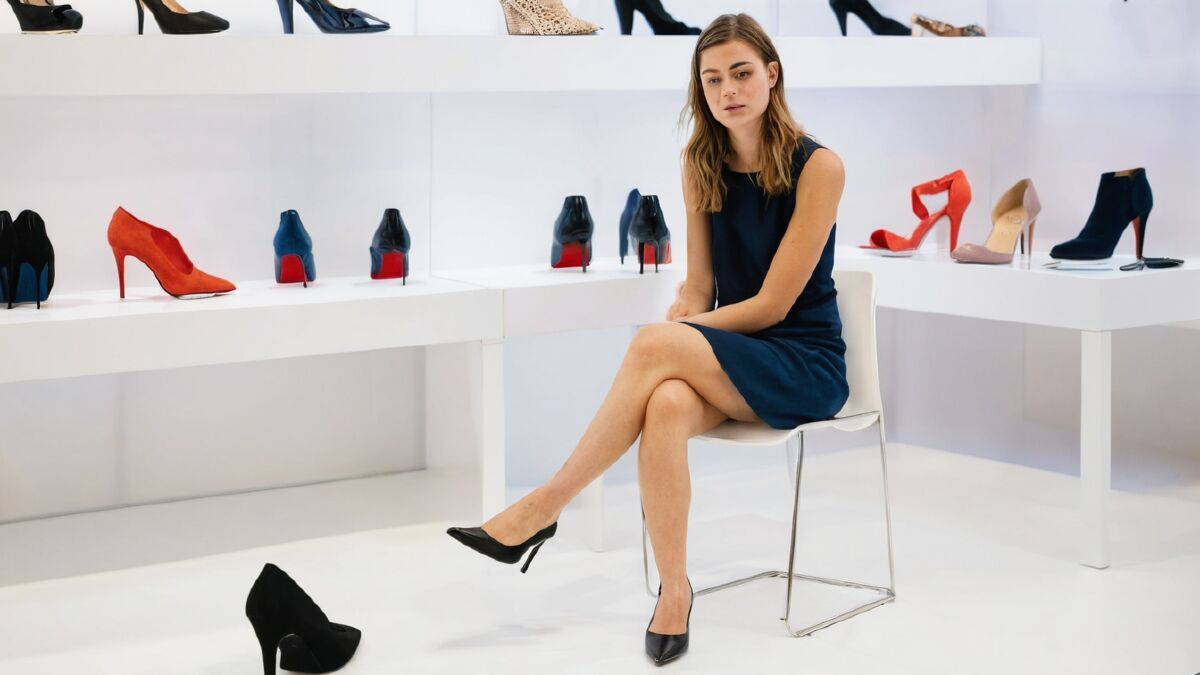
The most critical factor. Eight hours in heels on the hard floors of an exhibition center—whether in Mumbai, Hyderabad, or Chennai—is a challenge few can handle easily.
- Break in your shoes in advance, at least a week before the event.
- Bring a second pair of the same height but a different fit—changing the pressure point saves your feet.
- Silicone foot pads and anti-blister protection are mandatory.
- If the dress code allows for a minimal heel, choose that over a more striking but uncomfortable pair.
- Always keep bandages in your bag, not just when you've already developed a blister.
Legs and Back
- Compression stockings or socks under trousers significantly reduce swelling.
- Shift your weight from one foot to the other every hour, step around, and relieve pressure on your lower back.
- During breaks, raise your legs above hip level for at least five minutes.
- After the shift, use a contrast shower for your legs and stretch your calves.
- Avoid standing completely still: slow movement around the booth is less tiring than total immobility.
Voice
Exhibition halls are noisy, and you have to speak louder than usual all day. By the end of the second day, most people's voices begin to fail.
- Drink room-temperature water constantly, in small sips.
- Speak from the diaphragm without straining your throat.
- Move closer to the interlocutor instead of increasing your volume.
- During breaks, embrace silence rather than chatting with colleagues.
- Avoid drinking ice-cold beverages or eating overly spicy food during breaks.
Maintaining Appearance Throughout the Day
- Use long-wear makeup with a mattifying base; touch up during breaks.
- Choose a hairstyle that holds without constant adjustment—there is no time at the booth.
- Carry deodorant and a spare blouse if the uniform is light-colored.
- Keep jewelry to a minimum: it can get caught and be distracting.
- Maintain neat hands, as they are highly visible when handing over materials.
Interacting with Visitors
The ability to start a conversation is the primary skill in this segment, and it can be trained.
- Don't ask "Can I help you?" — the standard answer is "No, thanks." Use specific questions: "Are you looking for a solution for production or for an office?"
- Start with an open-ended question that cannot be answered with a simple yes or no.
- Maintain distance. Do not intercept people in the walkway or follow them.
- Know who to refer them to. Your task is often to guide an interested visitor to a specialist, not to make the sale yourself.
- Learn three to five key facts about the product and one short phrase explaining why it is useful.
- A smile and eye contact work better than any script, especially toward the end of the day when everyone is tired.
Difficult Situations
- Unwanted attention. This occurs regularly. Calmly shift to a professional tone; if it persists, notify the booth manager. Your safety is more important than politeness.
- Aggressive visitors. Do not engage in an argument; hand the situation over to the manager.
- Questions you cannot answer. "I will call a specialist for you right now" is the correct answer. Never make things up.
- Requests for photos. Clarify the booth policy in advance—some companies welcome it, while others prohibit it.
What to Clarify Before Agreeing
- Schedule: days, hours, number of breaks, and whether lunch is provided and paid.
- Dress code: whether a uniform is provided or you need your own; if the latter, specify exactly what, including color and heel height.
- Responsibilities: whether it's just greeting guests or involves sales, distribution, or physical handling of materials.
- Briefing: when and where it takes place, and if it is paid.
- Payment: the daily rate, payment terms, and whether the agency or the client pays.
- Food and water available on-site.
- Changing area and storage for personal belongings.
- Photography and posting requirements — whether you are allowed to post photos from the booth.
Regarding setup and teardown: sometimes models are asked to help pack materials after closing. This is additional work and should be negotiated separately.
Managing Energy Over Multiple Days
Exhibitions rarely last just one day. Three to five consecutive shifts of eight to ten hours is the typical format. The biggest mistake beginners make is giving their all on the first day.
- The first day is the most intense in terms of attention, but do not exhaust yourself physically: you have several more days ahead.
- Prepare your things the night before. When waking up at 6 AM, you won't have the energy for it.
- Eat proper meals, not just coffee and cookies from the booth. An energy crash by the middle of the second day is almost always a result of poor nutrition.
- Stick to a strict sleep schedule. Evening events after a shift are a direct path to working at half-capacity by the third day.
- Rotate your shoes between days, not just during the day.
- Arrange rotation with colleagues: who stands at the entrance and who stays deeper in the booth. Changing positions relieves both your legs and your mind.
Clients evaluate you based on the final day: by then, it's clear who maintains their level and who is just "putting in the time." Repeat invitations are based on this criterion.
How to Get More Bookings
- Work with multiple agencies. The exhibition market is split between organizers and contractors.
- Create a separate set of photos for this segment: a professional business look, a warm smile, and a clean portrait. High-fashion editorial shots work less effectively here.
- List your languages and proficiency levels—this is the main factor in increasing your rate.
- Ask for feedback from the booth manager after the exhibition; a good review ensures you'll be invited back next year.
- Follow the exhibition calendar in your city: large events form their teams months in advance.
- Be punctually to a fault. In this segment, reliability is valued above all else.
Pros and Cons of the Segment
Pros: predictable calendar, regular income, less rigid requirements for "look" than in high fashion, development of communication skills, networking across various industries, and frequent repeat bookings.
Cons: heavy physical load, monotony, limited benefit to a high-fashion portfolio, and the need to deal with large crowds, including unpleasant individuals.
For most, a sensible strategy is to keep this segment as a stable base without making it your only occupation. It complements acting and commercial work well, as exhibitions usually happen in blocks, leaving time in between.
Offers for exhibitions and events appear in the castings section—indicate your readiness for this type of work and your language skills in your profile.
Share


Author: Svetlana Lisa, Stylist and fashion designer
Publication date: 16 November 2026
Views: 37
About us and our editorial policy
Comments
Other materials in this section
Learn what a fitting is, why it matters to brands, and how to prepare professionally to ensure you secure the booking.

Discover who needs hand and foot models, the specific aesthetic requirements, how to maintain your skin and build a portfolio, and the earning potential of this accessible niche.
Discover how heavy daily makeup affects your skin, the correct way to remove it after a long shift, and how to restore your skin barrier and handle breakouts during a project.
Discover which segments hire plus size models, how requirements and measurements differ, and how to build a professional portfolio to launch your career.

Discover which segments hire mature models, how requirements differ from the youth market, and the practical steps to start a professional career later in life.
Why catalog shoots are the "bread and butter" for most models, how a day with a hundred looks is organized, and how to enter this high-demand segment.
 Auditions in India
 Casting calls in USA
 Castingi w Polsce
 Кастинги в Україні


