How actors are cast for commercials and why it differs from film
Behind the Scenes: Show Business: How actors are cast for commercials and why it differs from film

Advertising is the first real income for many performers and, for some, the main one for years. It runs on different rules from film: the casting works differently, the fee is calculated differently, and the rights over your image work very differently indeed.
Who takes the decision
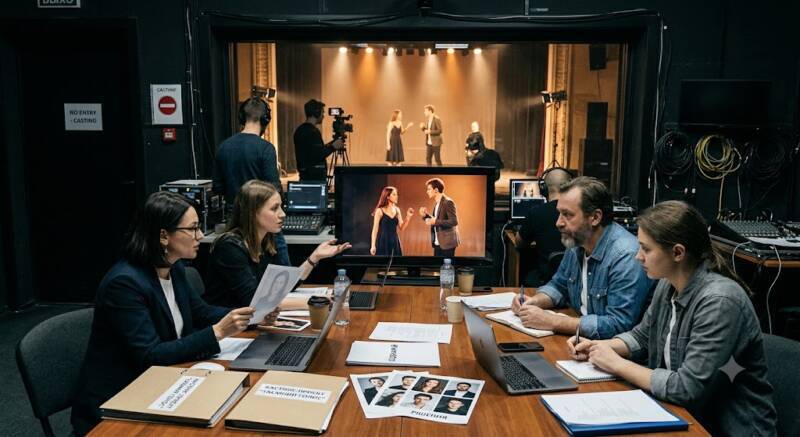
In film the director has the last word. In advertising the chain is longer: the film's director proposes, the agency gives an opinion, but the client — the brand — approves. That is why decisions can look unpredictable from an actor's side: the choice may fall on whoever fits the brand's image rather than whoever performed best.
It also explains the familiar sequence of a first call-back, then a second, then a third — each round is another set of decision-makers on the client's side.
Pace
Commercial production is short and dense. Two weeks often separate the casting call from the shoot day, and applications are collected over two or three days. The shoot itself is usually one day, occasionally a few.
The practical conclusion: in advertising, speed of response and ready materials decide. Anyone who needs a week to record a self-tape simply misses it.
What is being looked for
Advertising usually needs credibility rather than craft. The "ordinary person" type — a mother, a neighbour, a driver, an office worker — is in more demand than striking looks. Common requirements:
- Naturalness on camera and the ability to repeat the same thing identically ten times.
- Clear speech. For a national campaign, a neutral accent; for regional campaigns, fluency in the specific language, which is a genuine advantage in this market.
- Handling the product: holding, opening, eating, presenting — so that it looks unforced.
- A look that matches the brand's audience rather than a classical casting standard.
Usage rights — the essential difference
In film, rights over the material are usually granted without a time limit. In advertising it is the reverse: the film is bought for a defined term and a defined territory, and for specific media — television, digital, cinema, outdoor.
The larger part of the fee comes from that usage, not from the shoot day. So before signing, check:
- The term for which the brand acquires the rights and what happens when it expires.
- The territory — one state, all-India, or international as well.
- The media on which the film may run.
- Whether a renewal fee is provided for.
- Whether there is a category exclusivity clause — a bar on appearing for competing brands, and for how long.
That last one can be expensive: exclusivity in a popular category can shut you out of part of the market for a year.
Materials for a commercial casting
Usually a current unretouched photograph, a short video introduction and a self-tape to the brief are enough. Full make-up is not needed — the client wants to see how you actually look, because that is how you will look in the film.
Current calls for commercials and film productions are in the castings section.
Share


Author: Rohan Malhotra, entertainment industry writer
Publication date: 17 August 2026
Views: 47
Comments
Other materials in this section

Discover why productions are moving to regional locations, how to leverage local film commissions, and how to start your acting career without moving to a metro city.

Explore how demand works in series and web shows, why supporting roles offer more opportunities than feature films, and how to build a career through episodic work.
From the rise of OTT platforms to new contract terms and the shift in auditioning, here is how the digital revolution is reshaping the acting profession in India.

Learn who does what, how they are paid, when you actually need representation, and why a platform complements rather than replaces a professional intermediary.
Who is responsible for what in the industry, where your materials actually go, and why a rejection most often has nothing to do with your performance.
 Auditions in India
 Casting calls in USA
 Castingi w Polsce
 Кастинги в Україні
