Zelig



![Watch film Zelig — 35mm Theatrical Teaser Trailer [4K] [FTD-0893]](https://www.acmodasi.in/amdb/images/posters/9/5/zelig-1983-t3YmP.jpg)


Short description
Zelig is a mock documentary about Leonard Zelig, a modest Jewish office worker in New York who draws attention in the 1920s and 1930s because of an unusual condition. Lacking a firm identity of his own, he physically and mentally takes on the traits of the people around him, so that his appearance and manner shift depending on whose company he keeps. His hunger for affection, traced to an unhappy childhood as a marginalized Jewish boy, drives this chameleon-like behavior. As he becomes a public sensation, he is placed under the care of psychiatrist Dr. Eudora Nesbitt Fletcher, who tries to treat him. The film presents his story as a fictional documentary, placing its hero alongside real figures and events of the era through invented newsreel footage.
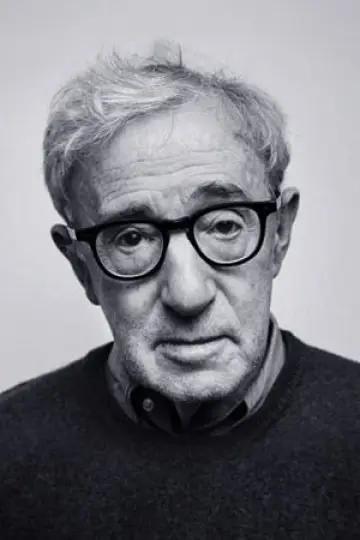
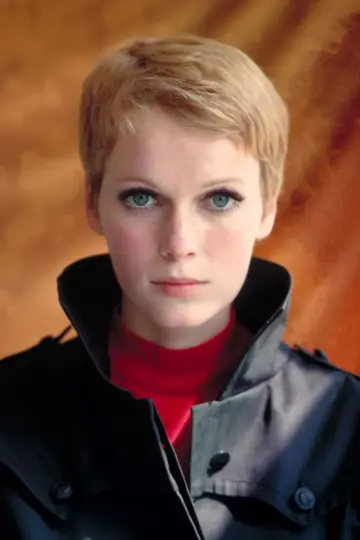
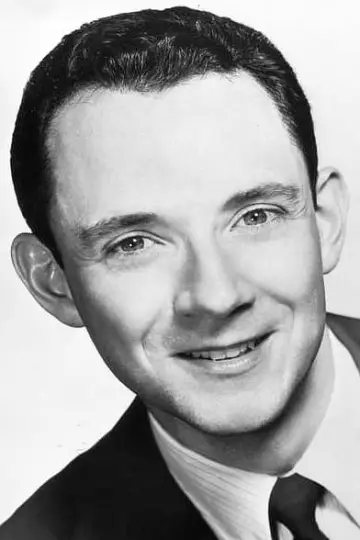
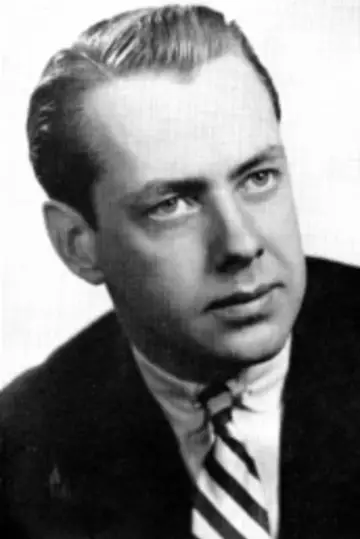
Woody Allen directed and wrote the screenplay, and the film is the tenth of the forty-eight features he has directed in chronological order, coming after Stardust Memories and before Broadway Danny Rose. Allen plays Zelig and Mia Farrow plays Dr. Fletcher, with Patrick Horgan narrating. Robert Greenhut produced, and the credited cast runs to 106 names.
Made for about 14 million US dollars, the film earned roughly 12 million worldwide. On IMDb it holds 7.6 out of 10 from around 46,000 votes, and on TMDB 7.4 out of 10 from 936 votes. A film critics' rating of 8.1 out of 10 from 32 reviews places critical opinion above the audience scores on both sites.
What's left behind the scenes
- In one scene, the narrator mentions a photograph of Leonard Zeliga as a pagliacci, which translates from Italian as "clowns." It would be more accurate to use the singular form of the word – pagliaccio.
- In 2007, Italian psychiatrists led by Giovanni Coniglia discovered a rare neurological disorder, the victims of which behave as the protagonist of this film does (psychologically, but not physically). They proposed naming this disorder Seligman syndrome.
- At the time, Woody Allen's friend Dick Cavett was hosting a series of historical programs for HBO in which his image was inserted into archival footage. Allen was so intrigued by the process that it served as the impetus for creating this film.
- Mae Questel, who voiced the animated character Betty Boop from 1931 to 1989, provided the voice for Helen Kane singing "Chameleon Days" in this film.
- While trying to make the film look like footage from old newsreels, Woody Allen managed to shoot two more films ('Sexual Comedy in a Summer Night', 1982, and 'Broadway Danny Rose', 1984). Allen later said that there were no mechanical ways to age the film, and they simply had to crumple and trample the negatives.
- To help make the film look like it was from the 1930s, DuArt, a data processing laboratory, called on its specialists who were already retired and who had the appropriate experience.
- The first cut of the film was only 45 minutes long, and Woody Allen had to add more archival footage and film several additional scenes to fill the time (mostly scenes with voice-over narration).
- One scene was filmed with silent film legend Lillian Gish. During filming, she scolded the cinematographer Gordon Willis about the lighting on set. While the stunned crew looked on, she gave Willis step-by-step instructions on how to redo the lighting. Willis agreed with her, but the scene never made it into the final version of the film.
- John Gielgud was originally cast as the narrator. He even recorded all of his lines, but Woody Allen, after listening to the recording, decided that his voice was not suitable because it sounded 'too majestic' for the role.
- The final scene was filmed in the same house that was used during the filming of 'Sexual Comedy in a Summer Night' (1982).
- Woody Allen initially wanted Greta Garbo to play the role of the journalist conducting the interview.
- The cinematographer used old lenses, cameras, sound and lighting equipment. Moreover, he trampled on the film to age it.
Similar movies






 Auditions in India
 Casting calls in USA
 Castingi w Polsce
 Кастинги в Україні
