The Testament of Dr. Mabuse



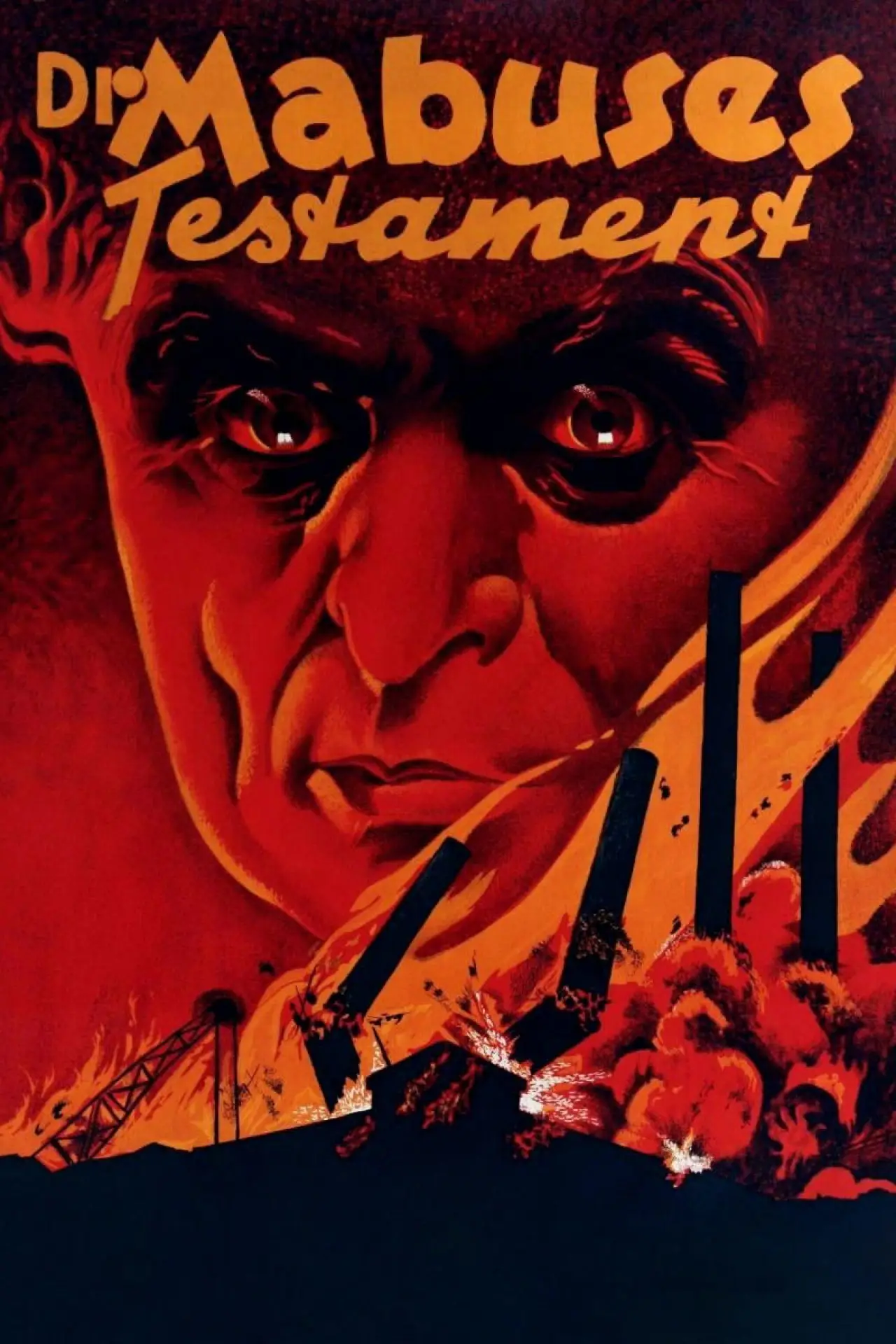
![Watch film The Testament of Dr. Mabuse — Original German Trailer [Subtitled]](https://www.acmodasi.in/amdb/images/posters/1/22/the-testament-of-dr-mabuse-1933-zqGOf.webp)
All actors and roles (10)
All team (15)
Short description
The Testament of Dr. Mabuse is a 1933 crime mystery thriller directed by Fritz Lang, who wrote the screenplay with Thea von Harbou. It was Lang's seventh film as director, following M (1931) and preceding Fury (1936). Rudolf Klein-Rogge plays the title role, with Otto Wernicke as Kommissar Lohmann and Oscar Beregi Sr. as Professor Baum.
The story concerns the criminal mastermind Dr. Mabuse, who is confined to a psychiatric institution under Professor Baum's care. There he compulsively produces writings outlining plans for further crimes, and a gang of criminals operating outside the asylum carries out robberies under a leader whose face no one sees and who issues orders from behind a curtain. Lohmann, the police commissioner, investigates the wave of crimes and traces them back toward Mabuse, whose hypnotic influence appears to reach beyond the institution where he is held, while accounts of the doctor's whereabouts remain contradictory.
Released in 1933, the film runs 122 minutes. It holds a rating of 7.9 out of 10 on IMDb from more than 12,700 votes and 7.6 out of 10 on TMDB from roughly 300 votes, while a critics' rating stands at 8.4 out of 10 from 21 reviews, placing critical appraisal above the audience scores on both platforms. Produced by Nero-Film AG across Germany and France, it was produced by Lang and Seymour Nebenzal.
What's left behind the scenes
- On March 29, 1933, the film was banned by Berlin censorship due to its threat to public order and safety.
- This is Lang's second sound film and the last he made before leaving Nazi Germany.
- On March 29, 1933, the film was banned by the Berlin censorship board under the chairmanship of government advisor Zimmerman due to its threat to public order and safety.
- One of the main characters of the film is Commissioner Karl Lohmann, who also appeared in Lang’s previous film “M” (1931).
Similar movies






 Auditions in India
 Casting calls in USA
 Castingi w Polsce
 Кастинги в Україні
