Colours of Time







Short description
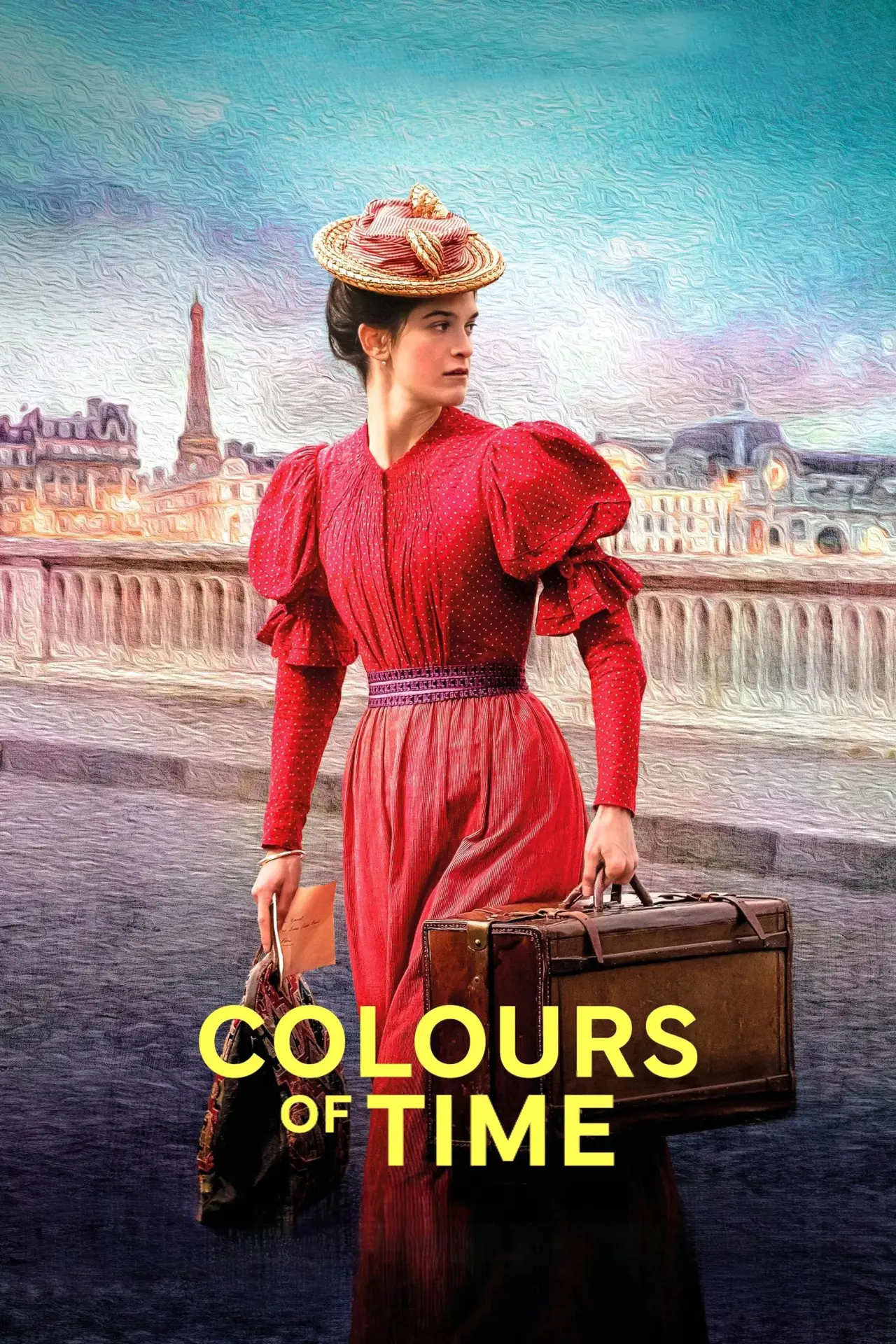
Four distant relatives visit an abandoned home in Normandy to conduct an inventory after learning they have inherited the property. While exploring the house, they uncover clues about a mysterious ancestor named Adèle. The story moves between the present and 1895, following Adèle as she leaves her hometown for Paris during a period of industrial and cultural change. As the descendants investigate their genealogy, they discover Adèle's experiences with the birth of Impressionism and the invention of photography, which in turn affects their own lives and ideals.
Directed by Cédric Klapisch, this film follows Rise in his career. He also co-wrote the screenplay with Santiago Amigorena and served as a producer. The cast features Suzanne Lindon as Adèle, alongside Abraham Wapler, Vincent Macaigne, Julia Piaton, Zinedine Soualem, and Paul Kircher. The production involved 102 credited actors and 66 crew members.
This Belgian-French co-production earned 10 million USD at the worldwide box office. It has received positive feedback from viewers, holding a 7.2 rating on IMDb from 3,500 votes and a 7.4 rating on TMDB from 292 votes. Film critics gave the movie a higher rating of 7.8 based on 14 reviews.
What's left behind the scenes
- The film's action unfolds in both the present and the past. Anamorphic lenses were used to film scenes from the past, while spherical lenses were used for scenes in the present. In the first case, the image was grainy and lacked contrast, with natural lighting. In the second case, the contrast was sharp, and the image was clear. This was done to make it easier for the viewer to perceive and transition between the two eras.
- Director and screenwriter Cédric Klapisch is not accustomed to working in the historical drama genre. The action in a significant portion of his films takes place in the present, but he has always had a certain attraction to 19th-century Paris (where, incidentally, his 1989 short film "Ce qui me meut" was set). In this film, he had to deal with the setting (we are talking about costumes for 80 extras, matching decorations and props, omnibuses, horses, and carriages), which complicated filming and staging.









 Auditions in India
 Casting calls in USA
 Castingi w Polsce
 Кастинги в Україні

