Crime Story








Short description
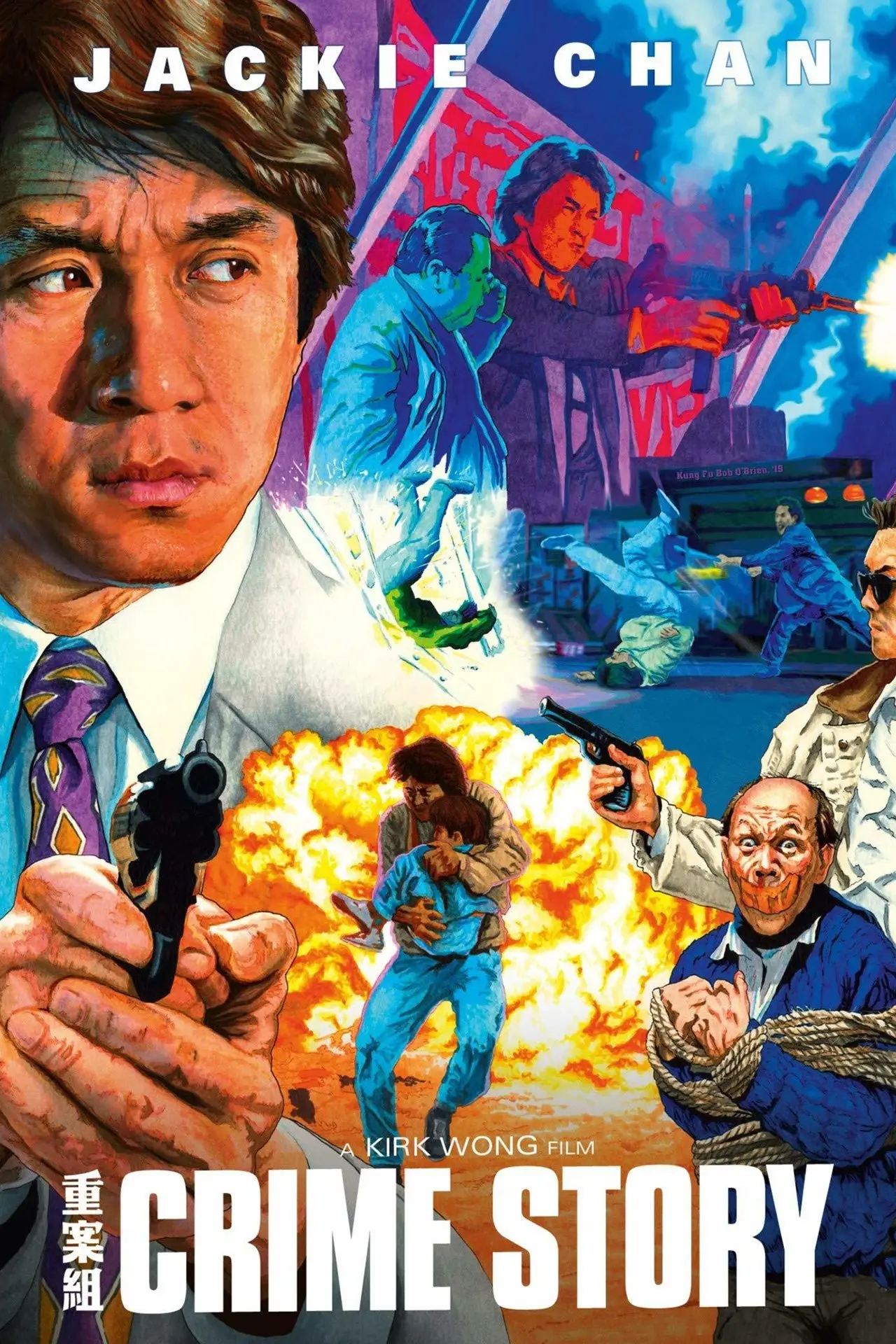
Jackie Chan stars as Inspector Eddie Chan, a Hong Kong police officer assigned to protect a wealthy businessman who believes a criminal group intends to kidnap him. When the abduction happens despite his efforts and a fellow officer is killed, Chan joins forces with veteran detective Hung Ting-Bong to track down the gang and recover the victim. What begins as a straightforward manhunt takes a more complicated turn, leading Chan to question who on the case he can actually trust.
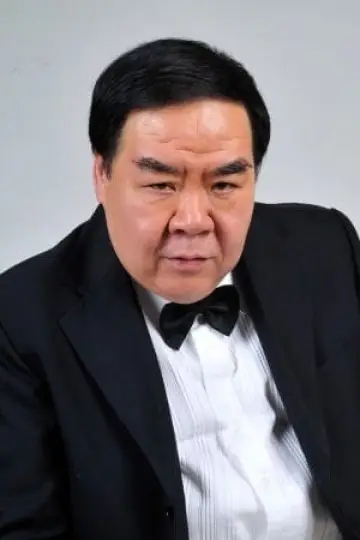
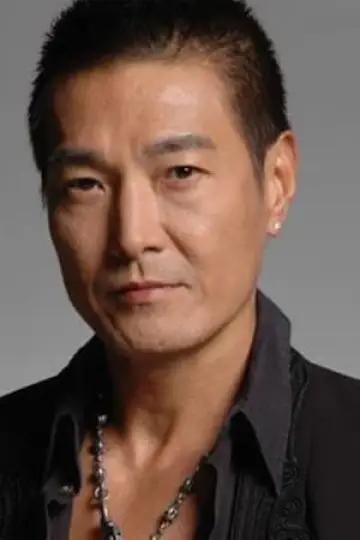
Directed by Kirk Wong Chi-Keung, Crime Story was released in 1993 and marked the first of the two films listed in his directing credits, followed later by The Big Hit. Chan plays the role largely straight, departing from the lighter tone of much of his other work, with Kent Cheng as Detective Hung and supporting turns from Christine Ng, Law Kar-Ying, Susanna Au-Yeung Pui-San and Poon Ling-Ling rounding out a credited cast of 58. The screenplay is credited to Cheung Chi-Sing, Tin-Nam Chun and Man Keung Chan, with Leonard Ho and Chua Lam producing.
The film took in roughly 9 million US dollars worldwide. It holds a 6.8 out of 10 rating on TMDB from 215 votes, while the critics' score stands at 6.6 out of 10 from 15 reviews, placing the two measures of reception fairly close together.
What's left behind the scenes
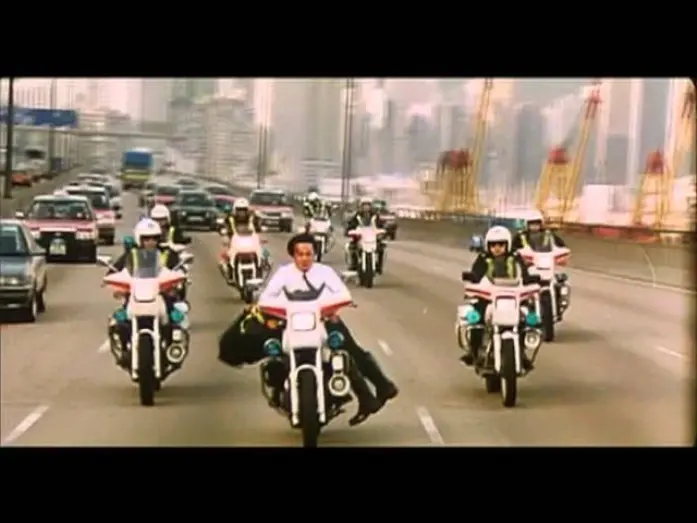
- During the filming of the chase scene, Jackie Chan was caught while jumping between two cars and broke both legs.
- Following the successful release of "Rumble in the Bronx" (1995) in the United States, Dimension Films wanted to release "Criminal Story" in American theaters. Jackie Chan opposed this, so "Police Story 3: Supercop" (1992) was released instead. Nevertheless, "Criminal Story" was shown in US cinemas just a year later, despite Jackie Chan's protests.
- In real life, the kidnapped businessman was never found, but the film opted for a happier ending.
- In the version of the film released by "Disney/Dimension Films", the protagonist's name was changed from "Eddie Chan" to "Jackie Chan".
- The role of Eddie Chan was originally intended for Jet Li. During pre-production of the film, his agent Jim Choy was shot by people from the triads, so Jet Li refused the leading role in a film about organized crime, fearing to attract unwanted attention to himself.
- A "dubbed" version of the film was released in Singapore, for which three additional scenes were filmed with Jackie Chan and Singaporean television actress Ling Ling Pan. The most complete version of the film can be found on the DVD released by Mega Star. Unlike the Chinese versions and the Dimension version, this disc features the original soundtrack in Cantonese.
- Since the film is based on real events, the original version includes additional information on screen. For example, during Wong Yiu-fai's kidnapping, text appears explaining what happened afterward in real life (such as information about a police officer who sustained serious injuries). Furthermore, in the original version, a text appears during a freeze-frame in the final scene explaining what ultimately happened to everyone involved in the case; an apology is also offered on behalf of the filmmakers, who were forced to "simplify" the story, accompanied by statistics on the number of kidnapping victims – the subject of the film. All of this was cut in the Dimension version.
- During the filming of the movie, Kirk Wong and Jackie Chan could not get along. Chan believed that Wong envisioned the main character as too gloomy and unwavering. He feared that such an attitude would negatively affect his image as a carefree hero. Eventually, with the support of the producers, Chan took over most of the filming. Kirk Wong was later fired. Despite this, Kirk Wong is still credited as the sole director in the credits.
- In some countries, the film was released under the incorrect title "Police Story 4".
- Initially, the script featured Eddie Chan experiencing serious psychological problems, which strongly affected his work performance. However, the protagonist's internal conflicts were softened at the request of Jackie Chan himself. This idea was later used in the film "New Police Story" (2004).
- Jackie Chan did not dub his character in the American version of the film. An actor imitating Chan's voice, who also dubbed him in the American version of "Project A" (1983) and in several excerpts from "Who Am I?" (2000), performed the dubbing.
- The following scenes were removed from the Dimension Films version: A conversation between the kidnappers, which takes place immediately after the opening credits and before the first scene, was cut. In one of the final scenes, Wong Yiu-fai's wife asks the driver to stop the car and then runs to Chan to personally thank him. Immediately after she returns, Chan takes Yiu-fai's wallet, containing his identification, burns it, and throws it into the river. Also, a scene where Yiu-fai and his wife are sitting in a car, preparing to leave Hong Kong forever, before Chan takes the envelope (having already burned the wallet) and walks away, was cut from the widescreen American version.
- One of the key episodes of the film was shot in Kowloon, a densely populated district of Hong Kong that was demolished in 1993 under an agreement between the British and Chinese governments. The impending demolition of the area allowed the filmmakers to shoot several spectacular scenes with explosions of the former residential buildings of the walled city.
Similar movies



 Auditions in India
 Casting calls in USA
 Castingi w Polsce
 Кастинги в Україні
