Dracula's Daughter



All team (26)
Short description
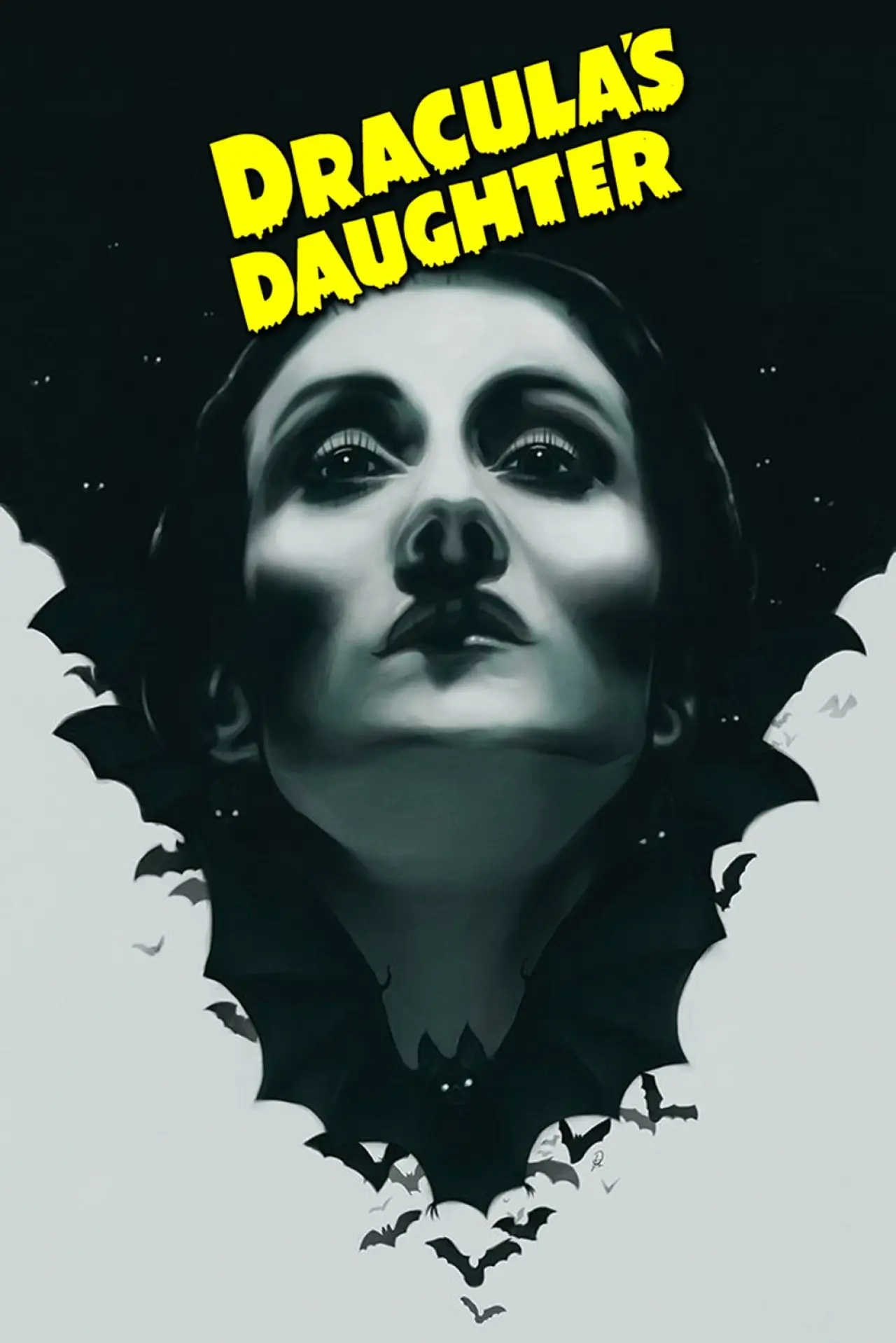
Dracula's Daughter follows Countess Marya Zaleska, a Transylvanian noblewoman living in London who is tormented by her vampiric nature. She seeks the help of psychiatrist Jeffrey Garth, hoping he can free her from the curse she has inherited, while her servant Sandor pulls her back toward her bloodthirsty instincts. The story continues from the events of the earlier Universal vampire film, with Professor Van Helsing facing suspicion over Dracula's death, and the countess becoming the focus of an investigation as bodies drained of blood appear in the city.
Directed by Lambert Hillyer and produced by E.M. Asher for Universal Pictures, the film was made as the studio's first follow-up to its 1931 Dracula. Garrett Fort wrote the screenplay, and the production was completed relatively quickly by Universal's standards of the period. Gloria Holden stars as the countess, with Otto Kruger as Dr. Garth, Marguerite Churchill as Janet, Edward Van Sloan reprising his role as Van Helsing, and Irving Pichel as Sandor. Forty-three performers are credited.
Released on May 11, 1936, the film runs seventy-one minutes. It came early in Hillyer's directing career, before Batman in 1943. On IMDb it holds a rating of 6.3 from around 9,100 votes, while on TMDB its rating is 5.9 from 232 votes. A critics' rating of 5.9 from 25 reviews places it close to the audience scores, suggesting a modest but enduring reputation rather than a strong divide between reviewers and viewers.
What's left behind the scenes
- Bela Lugosi was initially slated to play Dracula in this film (and rumors even circulated to that effect), but for unknown reasons, production moved forward and Lugosi did not participate in the filming. However, Lugosi had a contract and thus received one of his largest paychecks despite not even appearing on screen.
- Dracula's corpse is a wax figure made to resemble the Hungarian actor Bela Lugosi (1882-1956).
- Initially, the film company «Universal Pictures» intended to shoot a sequel based on Bram Stoker's story «Guest of Dracula» (1847-1912), and even consulted with the writer's widow, Florence (1858-1937), on this matter. During negotiations, however, it turned out that Stoker had not fulfilled a certain requirement of the US Copyright Office, as a result of which his novel «Dracula» was declared public domain. Florence wanted more creative control over the filming of the sequel, while Bela Lugosi demanded an increase in his fee for new filming in the role of Count Dracula, so the film company «Universal Pictures» simply turned to John L. Balderston (1889-1954), and he wrote a new screenplay.
- Although Professor Van Helsing appears in this film and is played by the same actor as in the film “Dracula” (1931), his name was changed to Professor Von Helsing. The reason for this is unknown.
- Dracula’s corpse is a wax figure made to resemble actor Bela Lugosi.
- Initially, the “Universal Pictures” film company intended to shoot a sequel based on Bram Stoker’s (1847-1912) story “Guest of Dracula,” and even consulted with the writer’s widow, Florence, on this matter. During negotiations, however, it turned out that Stoker had not fulfilled a certain requirement of the U.S. Copyright Office, as a result of which his novel “Dracula” was declared public domain. Florence wanted more creative control over the filming of the sequel, while Bela Lugosi demanded an increase in his fee for new filming in the role of Count Dracula, so the “Universal Pictures” film company simply turned to John L. Balderston (1889-1954), and he wrote a new script.
- When James Whale (1889-1957) refused to participate in the project, Albert Edward Sutherland (1895-1973) became the director. His contract included a clause according to which he was entitled to payments regardless of whether he actually worked on the film, so for the mere fact that Sutherland was considered the director of the future film for some time, he received $17,500. Before filming began, Sutherland left the project. He was replaced as director by Lambert Hiller (1889-1969), who had previously directed mainly “B” westerns. He was paid only $5,000 for directing.
Similar movies


 Auditions in India
 Casting calls in USA
 Castingi w Polsce
 Кастинги в Україні
