I Origins




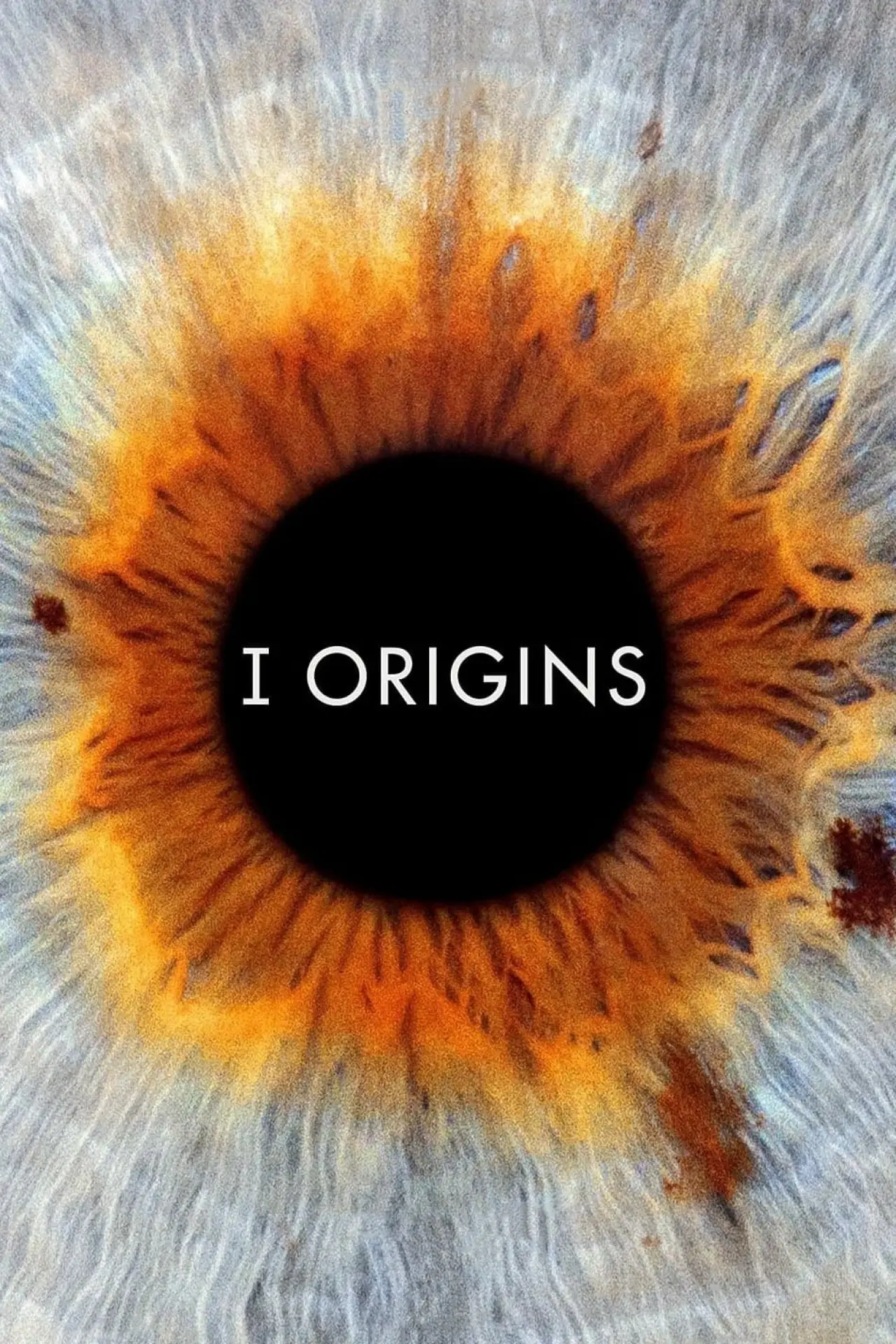










Short description
I Origins is a science-fiction drama about Ian Gray, a molecular biologist whose research focuses on the evolution of the human eye. He photographs irises and studies them as part of his work. He becomes involved with a young woman named Sofi, whose outlook on life is spiritual rather than scientific, and their differing views create tension between them. After a personal tragedy, Ian and his laboratory partner Karen make a discovery with implications that reach far beyond their field.
The film was directed by Mike Cahill, who also wrote the screenplay and produced it alongside Hunter Gray and Alex Orlovsky. It followed his 2011 debut Another Earth and was released in 2014. Michael Pitt plays Ian, with Brit Marling as Karen, Astrid Bergès-Frisbey as Sofi, Steven Yeun as Kenny, Archie Panjabi as Priya Varma and Cara Seymour as Dr. Jane Simmons. Made for roughly one million dollars, the film received a film critics' rating of 5.9 out of 10 from 105 reviews, while audiences rated it higher, at 7.3 out of 10 on IMDb from 141,000 votes and 7.6 out of 10 on TMDB.
What's left behind the scenes
- Sophie's eye color actually belongs to Astrid Berges-Frisbey, while the character Salome, who naturally has beautiful black eyes, had them digitally corrected.
- The main character, Jan, shares a name with Professor Ian Stevenson (1918–2007), best known for his scientific research in the field of reincarnation.
- At the end of the film, Salome completes the testing and scores 44%. The test included 25 questions from A to Y. 44% of 25 is 11. At the beginning of the film, this number is what led Jan to Sophie.
- At the end of the final credits, it is shown that the database has scanned the irises of world and historical figures (for example: John Kennedy, Adolf Hitler, Martin Luther King, Nelson Mandela), and currently someone supposedly has identical irises. The hidden meaning is that the afterlife is frequent earthly rebirths, that is, reincarnation. Thus, a parallel is drawn to Hindu (and other) religious beliefs.
- The protagonist photographs children in India with a Canon camera, using a 40mm lens. In a real-life situation, he would have to move at least three meters away to fit everyone in the frame.
- In one of the film's episodes, you can see the famous cover of National Geographic magazine from June 1985, featuring twelve-year-old Sharbat Gula. Her portrait is called the “Afghan Mona Lisa,” particularly because of her unusual and captivating gaze.
- At the beginning, when the film's title appears on the screen, only the letters I and O are visible for a while, forming “IOII”. In binary code, 1011 equals the number 11. This number appears several times throughout the film and plays an important role in the plot's development.
- The book Jan is reading in the cafe is Richard Dawkins' "The Blind Watchmaker".
Similar movies








 Auditions in India
 Casting calls in USA
 Castingi w Polsce
 Кастинги в Україні
