Dr. Jekyll and Mr. Hyde




Short description
Dr. Henry Jekyll is a respected London physician convinced that good and evil exist as separate forces within every person. He argues his case before skeptical colleagues, then tests it in his laboratory, using a chemical mixture he hopes will divide the two sides of human nature. The experiment works, but it also produces Edward Hyde, a violent alter ego through whom Jekyll acts on impulses he cannot control. His engagement to Muriel Carew is complicated by her father's opposition, while Hyde draws him toward Ivy Pearson, a music-hall performer he first meets when he intervenes on her behalf. Once the drug is withdrawn, reversing its effects proves impossible.
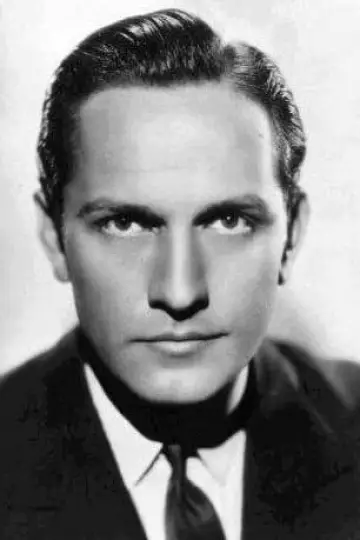
Rouben Mamoulian directed and produced the film, working from a screenplay by Samuel Hoffenstein and Percy Heath. Fredric March plays the dual title role, with Miriam Hopkins as Ivy, Rose Hobart as Muriel, Holmes Herbert as Dr. Lanyon, Halliwell Hobbes as Brigadier General Sir Danvers Carew, and Edgar Norton as Poole among a credited cast of twenty-six. Released in December 1931, it was the first feature Mamoulian directed, followed by Love Me Tonight, Becky Sharp, The Mark of Zorro and Silk Stockings.
Worldwide box office came to about one million dollars. It holds a TMDB rating of 7.2 out of 10 from 339 votes, while a film critics' rating stands at 8.5 out of 10 from 44 reviews, notably higher than the audience score.
What's left behind the scenes
- The shot of the beast-like Hyde pressed against the glass was used as one of the photographs of criminals in Sherlock Holmes's index card file in Igor Maslennikov's film "Sherlock Holmes and Doctor Watson: Introduction" (1979).
- Jekyll's transformation into Hyde corresponds precisely with the theory of psychiatrist Cesare Lombroso, who believed that criminal tendencies of a personality could be determined by appearance. In one of the later editions of Lombroso's work, a frame from this film was used as an illustration.
- The single-shot sequence of Jekyll's transformation into Mr. Hyde represented the pinnacle of technical progress in cinema at the time. Its filming utilized a complex system of color filters, allowing individual makeup elements to be highlighted sequentially, creating the illusion of fluid movement in his changing appearance. Later, Mario Bava would repeat the technique with color filters in his film "Vampires" (1956).
- The film is based on Robert Louis Stevenson's novella "Strange Case of Dr Jekyll and Mr Hyde" (1886).





 Auditions in India
 Casting calls in USA
 Castingi w Polsce
 Кастинги в Україні

