Visitor Q



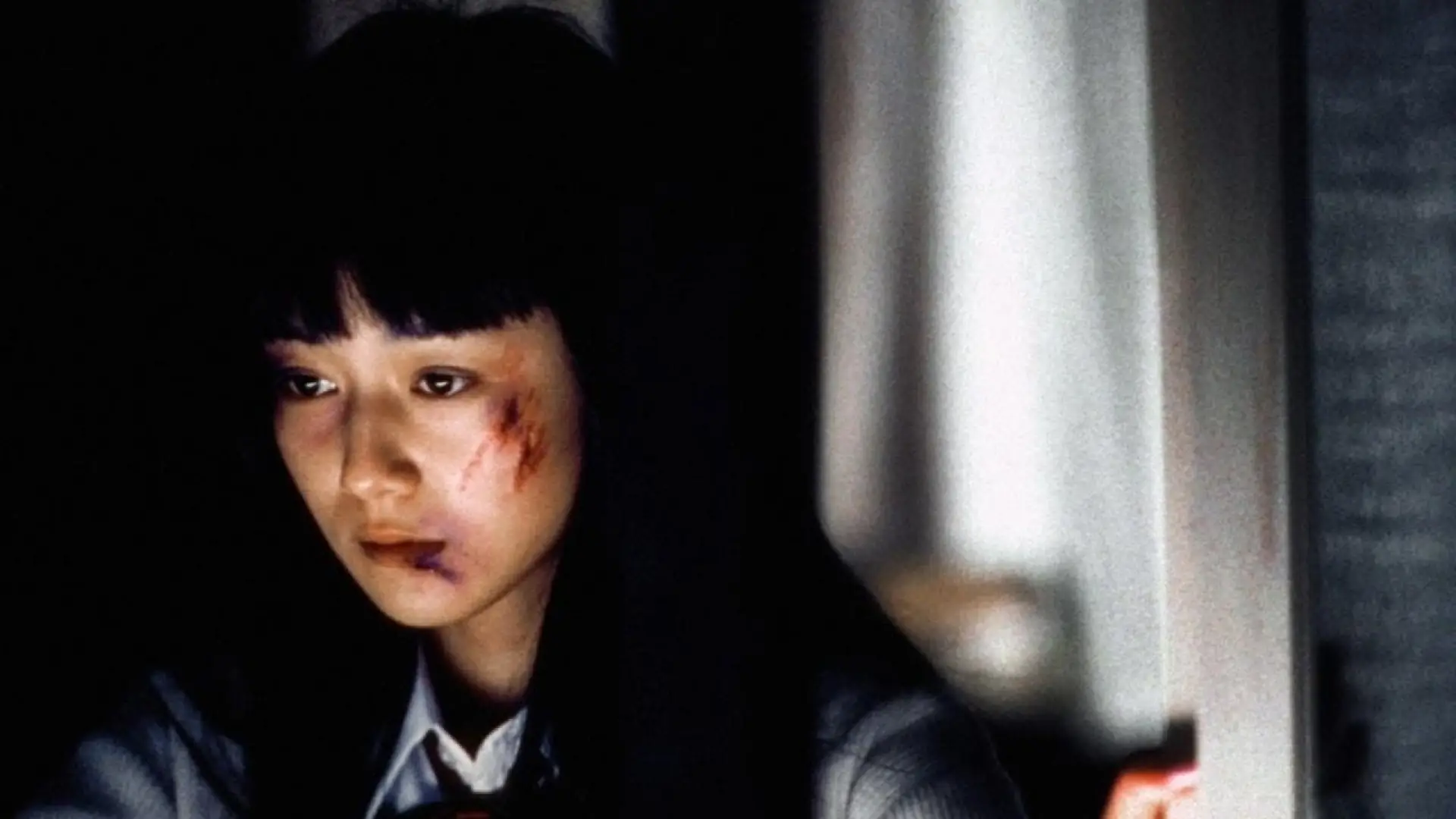








Short description
Visitor Q centers on a Japanese family in complete disorder. Kiyoshi, a former television journalist, has been cast aside by his employers and now wants to make a documentary about youth, sex and violence. His wife Keiko is addicted to heroin and occasionally sells her body to pay for it, while their son Takuya is bullied at school yet terrorizes his mother at home. The daughter, Miki, has left the house and supports herself through prostitution. Into this household comes a stranger whom the family calls Q. His arrival shifts the way each of them relates to the others, unsettling the household's grim routines.
The film was directed by Takashi Miike, the sixth of the forty-two features listed for him in chronological order, arriving between Ichi the Killer and The Happiness of the Katakuris. Itaru Era wrote the screenplay, and Reiko Arakawa, Seiichiro Kobayashi and Susumu Nakajima produced. Kenichi Endo plays the father and Shungicu Uchida the mother, with Kazushi Watanabe as Q, Jun Mutô as the son and Fujiko as the daughter. Made for a budget of roughly seven million dollars, it runs eighty-four minutes and mixes comedy, drama, horror and thriller elements.
Audience response has been moderate: on IMDb it holds 6.5 out of 10 from about 18,000 votes, while on TMDB it stands at 6.3 from 562 votes. A critics' rating of 6.4 from ten reviews places it close to those viewer scores.
What's left behind the scenes
- The film's director, Takashi Miike, insists that he was inspired by Pier Paolo Pasolini's film "Theorem" for the best scenes in the film (which he considers to be the scenes with murders and sex).
Similar movies








 Auditions in India
 Casting calls in USA
 Castingi w Polsce
 Кастинги в Україні
