Klute




Short description
A private investigator named John Klute is hired to look into the disappearance of Tom Gruneman, a friend and research engineer whose trail leads from Pennsylvania to New York City. The only real lead is Bree Daniels, a call girl Tom wrote letters to. Bree is independent and initially unwilling to help, but she has her own reasons to cooperate: someone has been following her and calling her at night, staying silent on the line. As Klute works his way through the city's underworld, the search for a missing man becomes a hunt for whoever is threatening her.
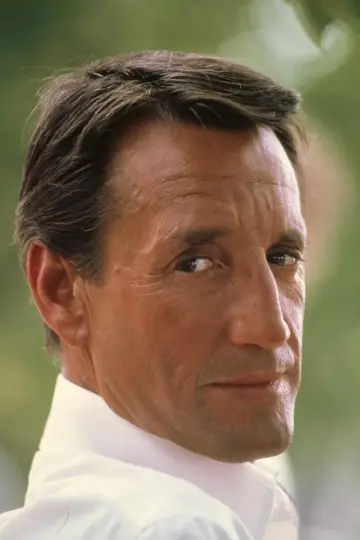
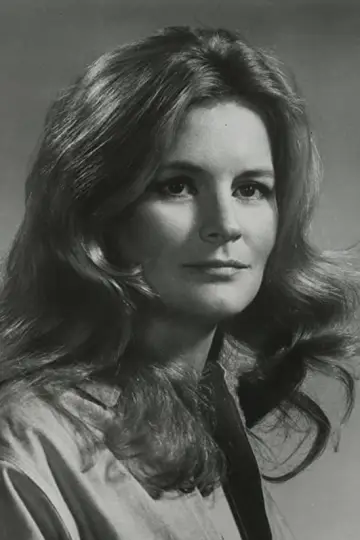
Alan J. Pakula directed this 1971 crime drama, the first title in the filmography listed for him, ahead of The Parallax View and All the President's Men. Jane Fonda plays Bree and Donald Sutherland plays Klute, with Charles Cioffi, Roy Scheider, Dorothy Tristan and Rita Gam in supporting roles. The screenplay is credited to Andy Lewis and David P. Lewis, and Pakula produced with David Lange.
Made for about three million dollars, the film returned roughly thirteen million worldwide. On IMDb it holds a rating of 6.8 from 539 votes, while critics rated it notably higher, at 8.2 from 45 reviews, a gap that suggests reviewers responded to the film more strongly than general audiences did.
What's left behind the scenes
- The role of Bree Daniels was offered to Barbra Streisand.
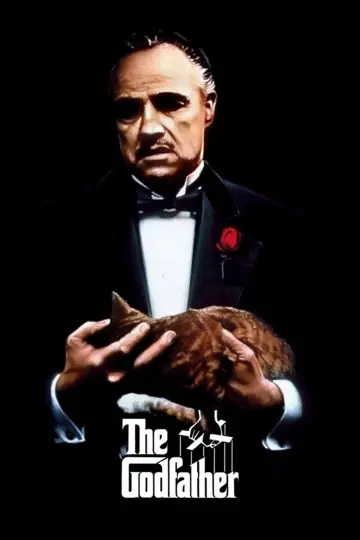
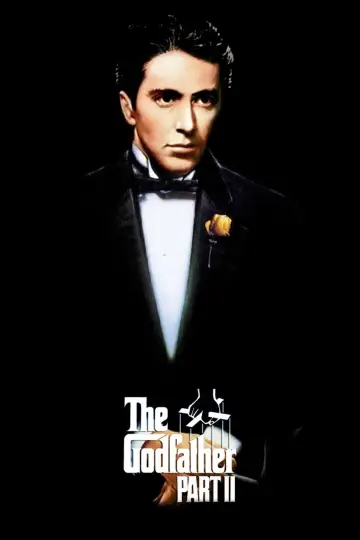
- The film became a calling card for cinematographer Gordon Willis, later nicknamed the "Prince of Darkness" for his ability to work in extremely low light. In addition to the dim lighting, Willis uses a number of unconventional techniques in his work with the image. Willis’s cinematography made such an impression on professionals that he was invited to work on a high-budget adaptation of the novel "The Godfather."
- As part of her preparation for the role of Bree, actress Jane Fonda spent a week in New York observing high-class call girls and madams; she even accompanied the girls to nightclubs where they went to find clients; Fonda was worried that men weren't showing any interest in her; she almost decided that she wasn't suitable for the role and asked director Alan J. Pakula (1928-1998) to release her from her contractual obligations and give the role to Faye Dunaway, but he refused.
- Jane Fonda was worried, in particular, that as a budding feminist, she shouldn't be playing a prostitute. Fonda shared these concerns with veteran feminists, and they allayed her doubts. To put an end to the thought that she was made of different stuff, the actress began to recall several call girls she had known in France, who worked for the famous madam Claude. She remembered that all of them, without exception, had experienced sexual abuse in childhood, and used this detail in developing the image of her character. This nuance also helped her understand Bree's motives for becoming a prostitute.
- In the original script, Bree’s psychiatrist was a man, but Bree decided during rehearsals that her character would never, ever confide in a man, and asked for the psychiatrist to be a woman. She even asked for the scenes with the psychiatrist to be filmed at the very end of the shooting period, so she would have time to fully get into the image of her character.
- In the scenes with the psychiatrist, the actresses mostly improvised. Pakula shot with only one camera, although he later admitted that he would have been better off shooting with two cameras, because the reaction of Vivian Nathan (1916-2015), who played the psychiatrist, to what was being said was extremely interesting, but the lens was focused on Jane Fonda.
- The sets for Brie's apartment were built in a pavilion at a New York studio, and Jane Fonda was allowed to spend the night there. At the director's request, a working toilet was even installed on the set within these decorations. The actress herself participated in the design of the apartment's interior; she came up with the idea that her character would be fond of reading romance novels and keeping a cat at home. Fonda remembered an actress from private acting classes taught by Lee Strasberg (1901-1982); this actress claimed that she had been called by John F. Kennedy (1917-1963) himself from time to time. Fonda decided that her character could also boast such an “achievement,” and a photograph of Kennedy with a personally signed autograph appeared on the wall in the apartment's decorations.



 Auditions in India
 Casting calls in USA
 Castingi w Polsce
 Кастинги в Україні

