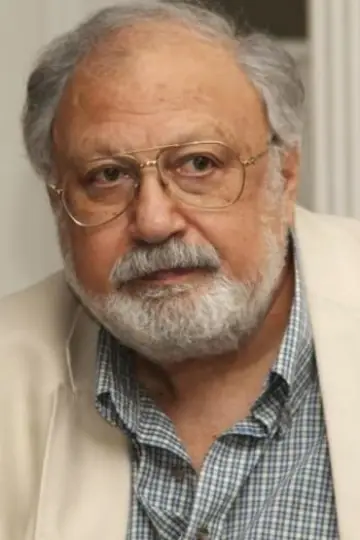
The Barber of Siberia - crew, film crew

The entire team, the film crew of the film "The Barber of Siberia"
Сибирский цирюльник (1998)
Timing: 3:0 (180 min)
The Barber of Siberia - TMDB rating
7.1/10
127
The Barber of Siberia - Kinopoisk rating
7.862/10
96091
The Barber of Siberia - IMDB rating
7.6/10
13000

Film crew

Director

Producer

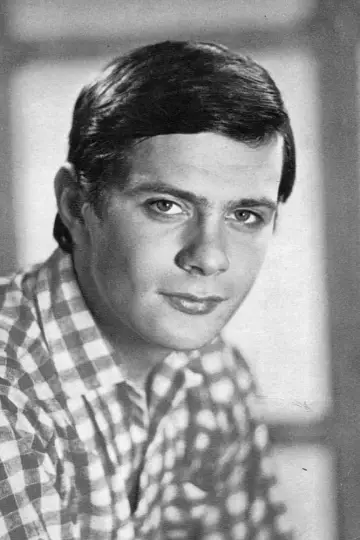
Photo António da Cunha Telles #154708
António da Cunha Telles
Producer

Executive Producer

Armand Barbault
Executive Producer

Writer

Rospo Pallenberg
Writer

Editor

Enzo Meniconi
Editor

Production Design

Jindřich Kočí
Production Design
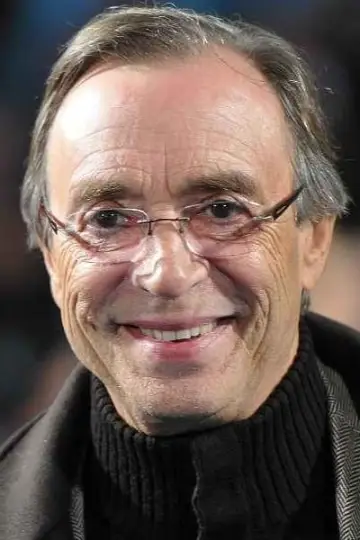
Photo Vladimir Aronin #287825
Vladimir Aronin
Production Design
Martin Martinec
Production Design
Vladimir Murzin
Production Design
Ilya Amursky
Production Design

Stunt Coordinator

Valeriy Derkach
Stunt Coordinator

Makeup Artist

Larisa Avdyushko
Makeup Artist
Natalya Chayka
Makeup Artist

Director of Photography

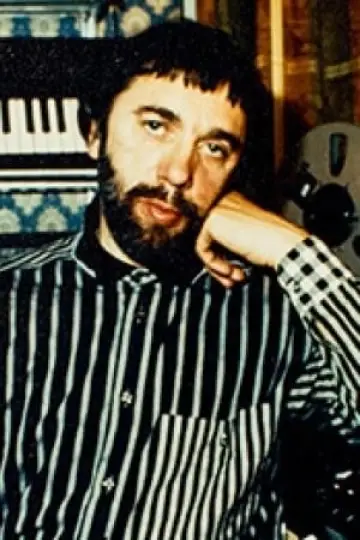
Photo Pavel Lebeshev #271066
Pavel Lebeshev
Director of Photography

Steadicam Operator

Jaromír Šedina
Steadicam Operator

Screenplay

Additional Director of Photography

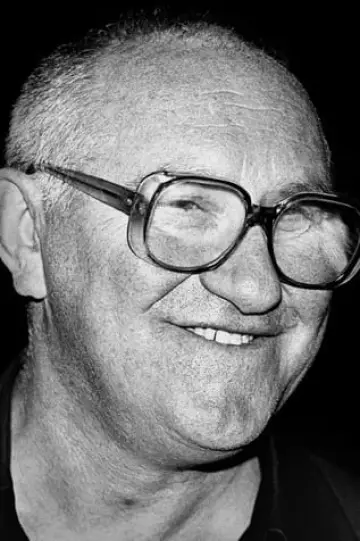
Photo Franco Di Giacomo #71013
Franco Di Giacomo
Additional Director of Photography
Martin Grošup
Additional Director of Photography

Photo Elizbar Karavayev #287828Photo Elizbar Karavayev #347926Photo Elizbar Karavayev #347927
Elizbar Karavayev
Additional Director of Photography
Sergei Naugolnykh
Additional Director of Photography

Assistant Director

Vladimir Krasinsky
Assistant Director

Music

Costume Assistant

Photo Alla Oleneva #287829
Alla Oleneva
Costume Assistant
Photo Sergey Struchev #307438
Sergey Struchev
Costume Assistant

Sound Director

Jean Umansky

Jean Umansky
Sound Director

What's left behind the scenes

  • Approximately 10 years passed between the writing of the screenplay for 'The Siberian Barber' and the completion of its filming. This lengthy period was mainly due to the difficulties in securing funding for such a large-scale project.
  • The role of General Radlov was to be played by Yuri Bogatyrev, who suddenly died at the age of 41 in 1989.
  • The total budget of the film (including the post-production stage) exceeded 40 million dollars. Thus, this film became the highest-budget production in the history of Russian cinema at that time (the record for the Soviet era is considered to be Sergei Bondarchuk’s 'War and Peace').
  • Filming, according to those involved, resembled a large-scale military operation. It involved more than 250 actors, several thousand extras, 40 film crews, and several airplanes and helicopters. Approximately 80 cars served the group daily.
  • All the tableware used in the film was custom-made by Czech glassblowers.
  • The 'Siberian Barber' machine itself – a state-of-the-art forestry harvester – was built specifically for the film at a secret military factory near Nizhny Novgorod. Thieves attempted to steal the machine during filming, but were unsuccessful – they couldn't handle it and drove the 'Barber...' into a ravine, where they became stuck and fled in disgrace.
  • Filming lasted 11 months, 6 days a week, with workdays ranging from 12 to 16 hours.
  • Since the winter of 1997 was surprisingly snowless, hundreds of tons of artificial snow had to be used when filming snowy Red Square and Moscow streets.
  • During the filming of Maslenitsa at the Novodevichy Pond, the temperature rose to 12 degrees Celsius. To prevent the rapidly melting ice from giving way with the actors and props, it was continuously covered with dry ice and sprayed with liquid nitrogen.
  • Specifically for the film's shooting, at the request of Mikhalkov, the internal illumination of the Kremlin stars was switched off for 10 hours by order of President B.N. Yeltsin. They were visible from Vasilyevsky Spusk, and rails were also laid for a horse-drawn tram through the Iverskiye Gates. Before this, the stars' illumination had been switched off only once—during the beginning of the Great Patriotic War.
  • The film was shot at several locations. Siberian scenes were filmed in Khakassia, Krasnoyarsk, and Nizhny Novgorod. Studio shooting (decorations of the school, apartments, etc.) was carried out in the Czech Republic, as the cost of renting a studio was significantly lower there than in Russia. 'American' episodes were filmed in Portugal, and Moscow—in reality in Moscow, including on Cathedral Square in the Kremlin.
  • Actors playing officers and cadets were trained for several months at the Kostroma Military School according to the drill and guard duty regulations of the late 19th century.
  • The first Russian film shot in the most modern Panavision format with sound recorded in Dolby CPD mode.
  • In the 2008 American film 'Indiana Jones and the Kingdom of the Crystal Skull,' a Soviet fantastical logging machine, breaking trees left and right, clears the road in South American jungles in 1957 for a column of KGB military vehicles. This is Spielberg's parody of the Siberian steam-powered logging mechanism from Nikita Mikhalkov’s film.
  • The television version has a runtime of 275 minutes.
  • At the beginning of the film, after the title card "1905," a close-up shows the United States flag on a flagpole at a military camp, but it is a modern flag: it has 50 stars (representing the number of states) arranged in 9 rows of 6 and 5. In 1905, the United States consisted of only 45 states, and the flag had the same number of stars, arranged in 6 rows of 8 and 7 stars per row.
  • The army gas masks shown in the film simply did not exist in 1905, as there were no chemical warfare agents at that time. Gas masks only appeared during World War I, 10 years later.
  • The film's main character, Jane, begins her journey to Russia in 1885. She speaks only English, although she is reading Leo Tolstoy's novel "Anna Karenina" on the train, which will not be translated into her native language for another two years – in 1887.
  • The total budget of the film (including the post-production stage) amounted to over $40 million. Thus, this film became the highest-budget production in the history of Russian cinema at that time (the record for the Soviet era is considered to be Sergei Bondarchuk's 'War and Peace').
  • In the 2008 American film 'Indiana Jones and the Kingdom of the Crystal Skull,' a Soviet fantasy logging machine, destroying trees left and right, clears the road in the South American jungle in 1957 for a column of KGB military vehicles. This is Spielberg's parody of the Siberian steam logging mechanism from Nikita Mikhalkov's film.
  • At the beginning of the film, after the title card '1905,' a close-up shows the American flag on a flagpole in a military camp, but it is a modern flag: it has 50 stars (representing the number of states) arranged in 6 rows of 6 and 9 rows of 5. In 1905, the United States consisted of only 45 states, and the flag had the same number of stars, arranged in 6 rows of 8 and 7 stars per row.
  • The film's protagonist, Jane, begins her journey to Russia in 1885. She speaks only English, although she is reading Leo Tolstoy’s novel “Anna Karenina” on the train, which will not be translated into her native language until two years later – in 1887.
Did you like the film?

© ACMODASI, 2010-2026

All rights reserved.
The materials (trademarks, videos, images and text) contained on this site are the property of their respective owners. It is forbidden to use any materials from this site without prior agreement with their owner.
When copying text and graphic materials (videos, images, text, screenshots of pages) from this site, an active link to the site www.acmodasi.in must necessarily accompany such material.
We are not responsible for any information posted on this site by third parties.