The Barber of Siberia










Short description
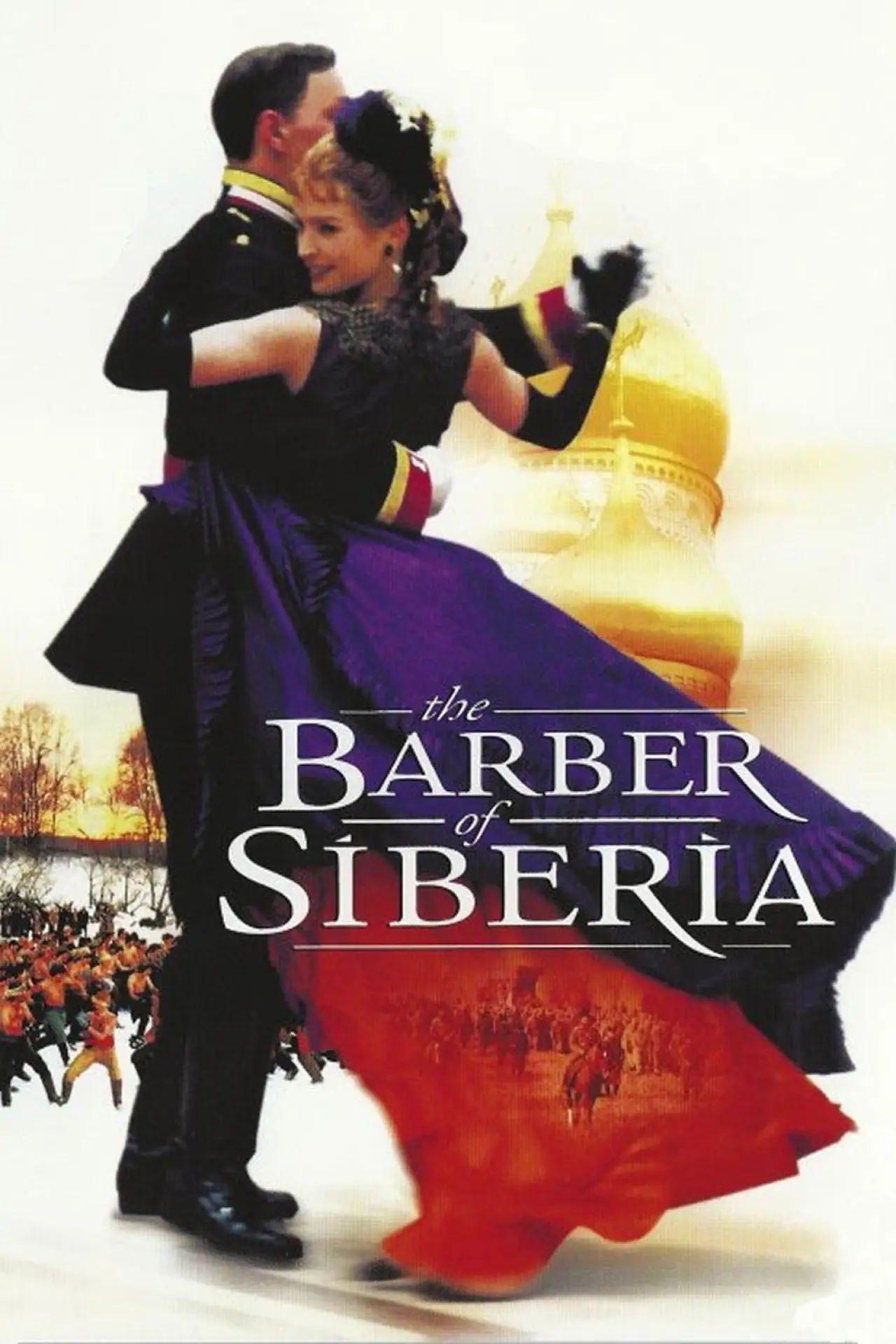
In 1885, an American inventor travels to Russia hoping to secure backing for a steam-powered timber harvester designed for the forests of Siberia. He sends his assistant, Jane Callahan, to Moscow to win over the officials whose approval he needs, among them General Radlov, who becomes infatuated with her. On her journey Jane also meets Andrei Tolstoi, a young cadet with a shared love of opera, and the feelings between them set off a conflict with consequences that reach far beyond the drawing room.
The Barber of Siberia is a Russian-French historical romance directed by Nikita Mikhalkov, who followed it with 12 in 2007. It was written by Rospo Pallenberg, Mikhalkov and Rustam Ibragimbekov, and produced by António da Cunha Telles, Michel Seydoux and Mikhalkov. Julia Ormond plays Jane, with Oleg Menshikov as Andrei Tolstoi, Aleksey Petrenko as General Radlov and Richard Harris as Douglas McCraken. The production, mounted at a reported budget of 35 million dollars, runs three hours and draws on a cast of 56 credited performers.
Audiences have responded far more warmly than critics. On IMDb it holds 7.6 out of 10 from around 13,000 votes, and on TMDB 7 out of 10 from 161 votes, while the critics' rating stands at 2 out of 10 from eight reviews.
What's left behind the scenes
- Actors playing officers and cadets were trained for several months at the Kostroma Military School according to the drill and guard duty regulations of the late 19th century.
- The first Russian film shot in the most modern Panavision format with sound recorded in Dolby CPD mode.
- Specifically for the film's shooting, at the request of Mikhalkov, the internal illumination of the Kremlin stars was switched off for 10 hours by order of President B.N. Yeltsin. They were visible from Vasilyevsky Spusk, and rails were also laid for a horse-drawn tram through the Iverskiye Gates. Before this, the stars' illumination had been switched off only once—during the beginning of the Great Patriotic War.
- Since the winter of 1997 was surprisingly snowless, hundreds of tons of artificial snow had to be used when filming snowy Red Square and Moscow streets.
- The army gas masks shown in the film simply did not exist in 1905, as there were no chemical warfare agents at that time. Gas masks only appeared during World War I, 10 years later.
- Filming, according to those involved, resembled a large-scale military operation. It involved more than 250 actors, several thousand extras, 40 film crews, and several airplanes and helicopters. Approximately 80 cars served the group daily.
- At the beginning of the film, after the title card '1905,' a close-up shows the American flag on a flagpole in a military camp, but it is a modern flag: it has 50 stars (representing the number of states) arranged in 6 rows of 6 and 9 rows of 5. In 1905, the United States consisted of only 45 states, and the flag had the same number of stars, arranged in 6 rows of 8 and 7 stars per row.
- All the tableware used in the film was custom-made by Czech glassblowers.
- The total budget of the film (including the post-production stage) amounted to over $40 million. Thus, this film became the highest-budget production in the history of Russian cinema at that time (the record for the Soviet era is considered to be Sergei Bondarchuk's 'War and Peace').
- Approximately 10 years passed between the writing of the screenplay for 'The Siberian Barber' and the completion of its filming. This lengthy period was mainly due to the difficulties in securing funding for such a large-scale project.
- The 'Siberian Barber' machine itself – a state-of-the-art forestry harvester – was built specifically for the film at a secret military factory near Nizhny Novgorod. Thieves attempted to steal the machine during filming, but were unsuccessful – they couldn't handle it and drove the 'Barber...' into a ravine, where they became stuck and fled in disgrace.
- The film's protagonist, Jane, begins her journey to Russia in 1885. She speaks only English, although she is reading Leo Tolstoy’s novel “Anna Karenina” on the train, which will not be translated into her native language until two years later – in 1887.
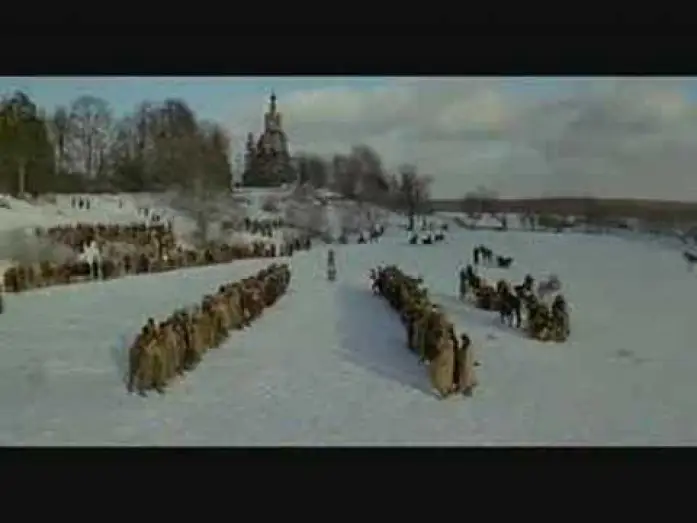
- During the filming of Maslenitsa at the Novodevichy Pond, the temperature rose to 12 degrees Celsius. To prevent the rapidly melting ice from giving way with the actors and props, it was continuously covered with dry ice and sprayed with liquid nitrogen.
- In the 2008 American film 'Indiana Jones and the Kingdom of the Crystal Skull,' a Soviet fantasy logging machine, destroying trees left and right, clears the road in the South American jungle in 1957 for a column of KGB military vehicles. This is Spielberg's parody of the Siberian steam logging mechanism from Nikita Mikhalkov's film.
- The television version has a runtime of 275 minutes.
- The film was shot at several locations. Siberian scenes were filmed in Khakassia, Krasnoyarsk, and Nizhny Novgorod. Studio shooting (decorations of the school, apartments, etc.) was carried out in the Czech Republic, as the cost of renting a studio was significantly lower there than in Russia. 'American' episodes were filmed in Portugal, and Moscow—in reality in Moscow, including on Cathedral Square in the Kremlin.
- Filming lasted 11 months, 6 days a week, with workdays ranging from 12 to 16 hours.
- The role of General Radlov was to be played by Yuri Bogatyrev, who suddenly died at the age of 41 in 1989.
Similar movies









 Auditions in India
 Casting calls in USA
 Castingi w Polsce
 Кастинги в Україні
