Romeo and Juliet




Short description
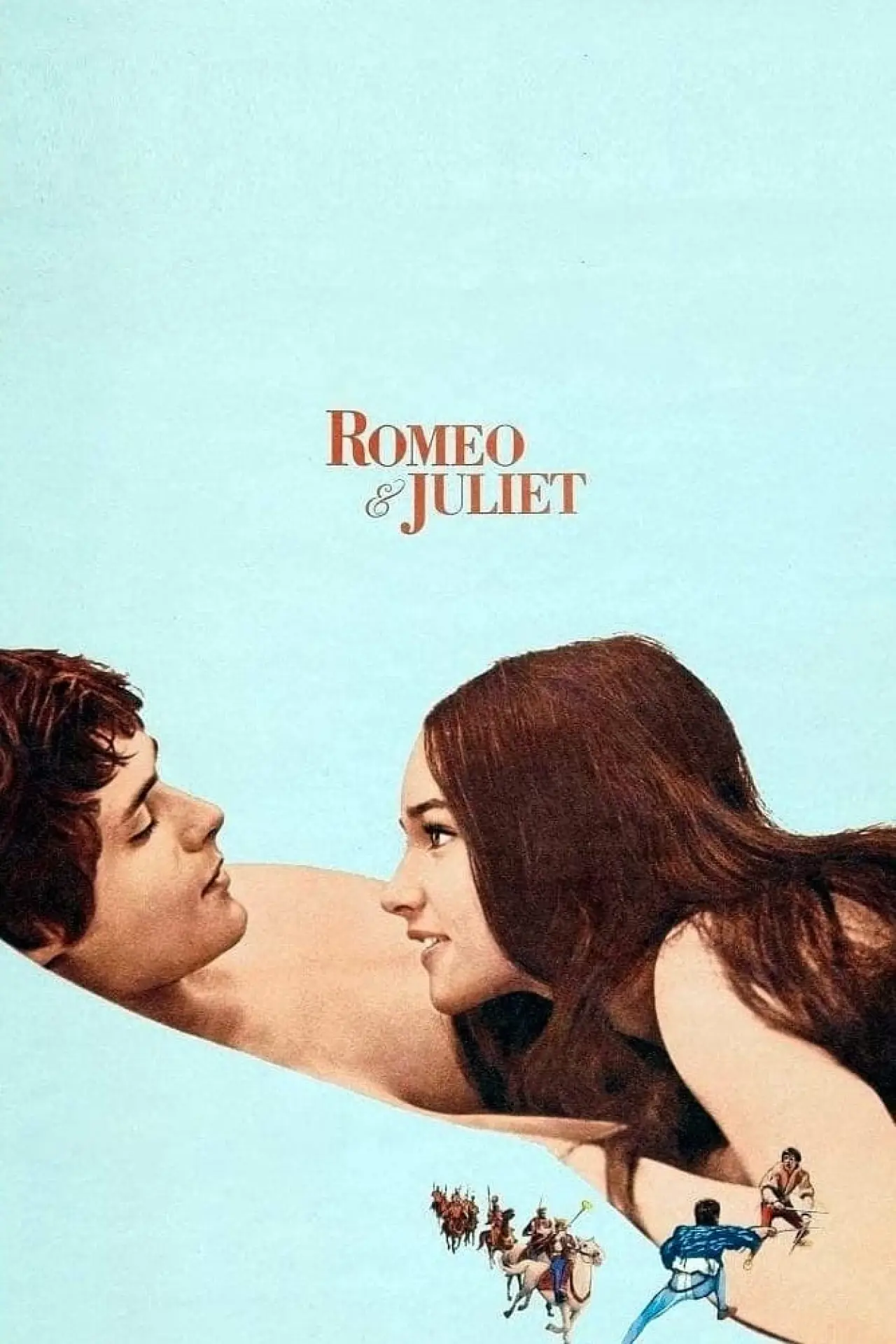
Franco Zeffirelli's adaptation of William Shakespeare's play centres on two young people in Verona whose families have been locked in a long and bitter feud. Romeo, heir to the Montagues, and Juliet, daughter of the Capulets, meet at a celebration held by her household and fall for each other at once. When they learn who the other is, the hostility between their families turns their love into something they can only pursue in secret.
The film was released in 1968 and runs 138 minutes. Zeffirelli directed and co-wrote the screenplay with Franco Brusati and Masolino D'Amico, and Anthony Havelock-Allan and John Brabourne produced it. It followed his earlier stage recording La Bohème - Teatro alla Scala and The Taming of the Shrew, and came before later films including The Champ, Endless Love and Hamlet. Leonard Whiting and Olivia Hussey play the leads, with John McEnery as Mercutio, Michael York as Tybalt, Milo O'Shea as Friar Laurence and Pat Heywood as the Nurse among a credited cast of 25.
Produced across the United Kingdom, Italy and the United States, the film took about 39 million dollars worldwide. Audience responses differ: it holds a rating of 6.6 out of 10 on IMDb, based on 407 votes, and 7.4 out of 10 on TMDB, based on 754 votes.
What's left behind the scenes
- The author's text is read by Laurence Olivier, who would later play Joseph of Arimathea in Zeffirelli's 'Jesus of Nazareth'.
- According to Leonardo Whiting, Olivia Hussey was his first love. After filming, they dated for about a year, but the distance (Leonardo lived in England, while Olivia lived in America) and their busy schedules (after 'Romeo and Juliet', young people received offers from various directors) prevented the relationship from becoming serious. Despite this, Whiting and Hussey are still friends.
- The costumes in the film are historically accurate and reflect the style of the 15th century. Since Zeffirelli defined the Capulets as nouveau riche and the Montagues as old aristocracy, the color scheme for the clothing of these rival families was selected in accordance with his concept. The Capulet clan's costumes in the film feature bright ochre-red tones, while subdued blue-brown tones were chosen for the Montagues. Made from large volumes of brocade and velvet, embroidered with patterned metallic braid, the costumes sometimes weighed up to 25 kg.
- Laurence Olivier refused his fee. He said he participated in the creation of the film solely out of love for Shakespeare.
- The on-location shooting of the film, which according to the plot takes place in Verona, was carried out in various corners of Central Italy. Only the foggy panorama of the city, opening the film narrative, is a view of the real Verona. In the town of Tuscania (Lazio region), in the ancient Basilica of San Pietro, scenes of the wedding and death of Romeo and Juliet were filmed, as well as episodes, according to the script, taking place within the monastery and church. In the ancient town of Gubbio (Umbria region), the first appearance of Romeo and other scenes “near the Montague house,” a brawl between townspeople, the duel between Romeo and Tybalt, and the episode “in Mantua” were filmed. In Pienza (Tuscany region), a small town near Siena, the Palazzo Piccolomini was used to film the Capulet house and the inner courtyard, and the square in front of the palace – the scene with Romeo’s friends rushing to the ball and Mercutio’s speech about Queen Mab. In the locality of Artena, near Rome, on the territory of the Palazzo Borghese, filming took place for the night scene at the wall of the Capulet garden, scenes in the garden and on Juliet’s balcony (specially built for the filming). The view of the Veronese square with the facade of the church and the city fountain was created in a pavilion at the Cinecittà Roman film studio. The image of the church facade repeats the architectural forms of the ancient basilicas of Tuscania. The ball scene was filmed in the studio, in sets created by Renzo Mongiardino.
- According to a survey of Soviet viewers, “Romeo and Juliet” was named the best film of the year, and Olivia Hussey received the audience sympathy award.
- In 2003, when maestro Franco Zeffirelli celebrated his 80th birthday (born February 12, 1923), the residents of Verona, the hometown of Romeo and Juliet, paid special tribute to his famous 1968 film adaptation. On this occasion, the Verona museum "Juliet's House" acquired exhibits donated by Zeffirelli himself. One of the museum's rooms now houses the legendary bridal bed and two costumes from the main characters of "Romeo and Juliet," as well as several sketches made by the director.
- Olivia Hussey was not allowed to attend the London premiere of the film because she was not yet 18 years old at the time, and the film contained scenes where Olivia appeared partially nude.
- In the fall of 2014, Olivia Hussey and Leonard Whiting participated in the filming of "Social Suicide," a film by British director Bruce Webb. This modern version of the Shakespearean plot tells the story of Romeo and Juliet of the YouTube generation. The police are investigating the tragic events that occurred as a result of a secret kiss between Rhys and Julia (as Romeo and Juliet are renamed in the film) captured on video and spread on social media. Leonard Whiting and Olivia Hussey play Julia's parents, with Olivia's real daughter, twenty-year-old actress India Eisley, in the role of Julia.
- Rumors circulated that Olivia Hussey, who played Juliet, was the daughter of the film’s director, Franco Zeffirelli. This, of course, is untrue. Moreover, Zeffirelli initially rejected Hussey, considering her to be overweight. The actress he had chosen cut her hair shortly before filming, which greatly disappointed the director. Hussey came to a second audition, and this time she managed to transform into a charming young woman. And she ultimately got the role.
- The film is based on William Shakespeare’s play “Romeo and Juliet” (The Most Excellent and Lamentable Tragedie of Romeo and Juliet, 1597).
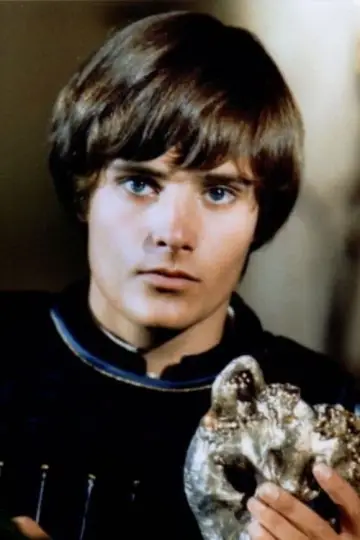
- Director Franco Zeffirelli described his choice of Leonardo Whiting from 300 young men he auditioned over three months as follows: 'He has an attractive face, a gentle melancholy, sweetness, the type of perfect youth that Romeo should be.'
- The song to the music of Nino Rota and lyrics by Eugene Walter, 'What Is a Youth,' named after its first line, has long gained independent popularity. For example, it is often used as the main musical theme for figure skating programs.
- Dissatisfied with Hussey's weight, Zeffirelli forbade her from eating spaghetti during filming. According to Zeffirelli's autobiographical book, the role of Romeo was initially offered to Paul McCartney.
- Zeffirelli's film 'Romeo and Juliet' was preceded by a stage version, which the director successfully staged in 1960 at the Old Vic theater in London, starring John Stride and Judi Dench. In 1964, the same play was staged by him in Italy (in Verona, then in Rome), and in 1966 it was shown on the Moscow stage. This production already revealed many characteristic features of the future famous 1968 film adaptation.
- This is the first major film adaptation of Shakespeare’s tragedy “Romeo and Juliet” in which the actors playing the main roles were very close in age to the characters in the play. Zeffirelli even needed special permission to show 16-year-old Hussey’s bare chest on camera.
- The filming dates coincided with the seventeenth birthday of Leonard Whiting, the actor who played Romeo.
- The music written by Nino Rota for Zeffirelli's play later became part of the film's soundtrack, to which the composer added new musical themes.
- During the fight scene between Mercutio and Tybalt, Mercutio throws his sword at Tybalt’s feet, and only the shadow of Mercutio is visible at that moment. This is not the shadow of the actor playing Mercutio, but the shadow of Franco Zeffirelli, who stood in for the actor who was ill that day.
- It ranks 79th in attendance among foreign films in Soviet cinema distribution.
- While working on his role, Leonard Whiting noted that the difficulty of Shakespeare's text lies in the fact that some very famous lines are anticipated by the audience five minutes before the characters say them, and therefore, if they are not delivered correctly, all of their effect is lost.





 Auditions in India
 Casting calls in USA
 Castingi w Polsce
 Кастинги в Україні

