Battleship Potemkin
Revolution is the only lawful, equal, effectual war. It was in Russia that this war was declared and begun.



Country
Production
Budget
$0
Revenue
$45 100
Director
Actors
Aleksandr Antonov, Vladimir Barsky, Grigori Aleksandrov, Ivan Bobrov, Mikhail Gomorov, Aleksandr Levshin, Nina Poltavtseva, Konstantin Feldman, Prokhorenko, A. Glauberman
All actors and roles (10)
All actors and roles (10)
Scenario
Sergei Eisenstein, Nina Agadzhanova
Producer
Yakov Bliokh, Mikhail Kapchinsky
Operator
Composer
Edmund Meisel
Artist
Audition
Short description
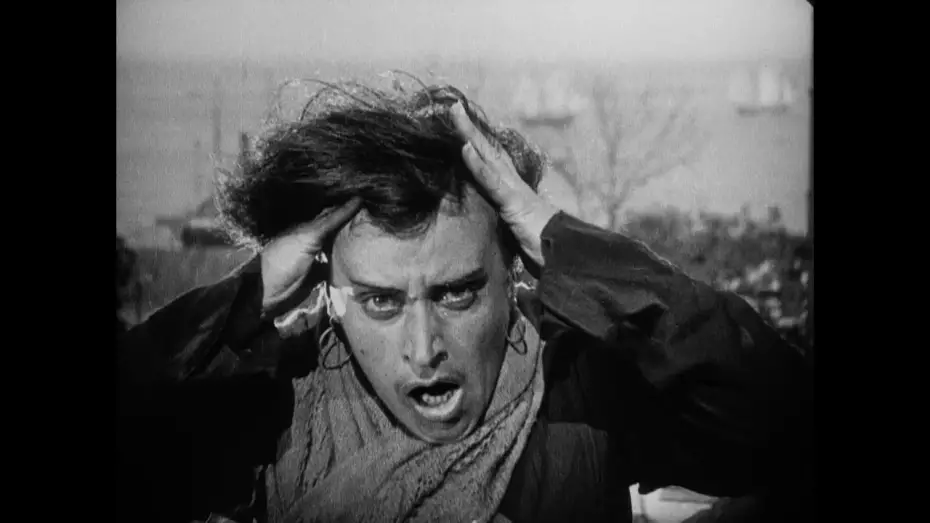
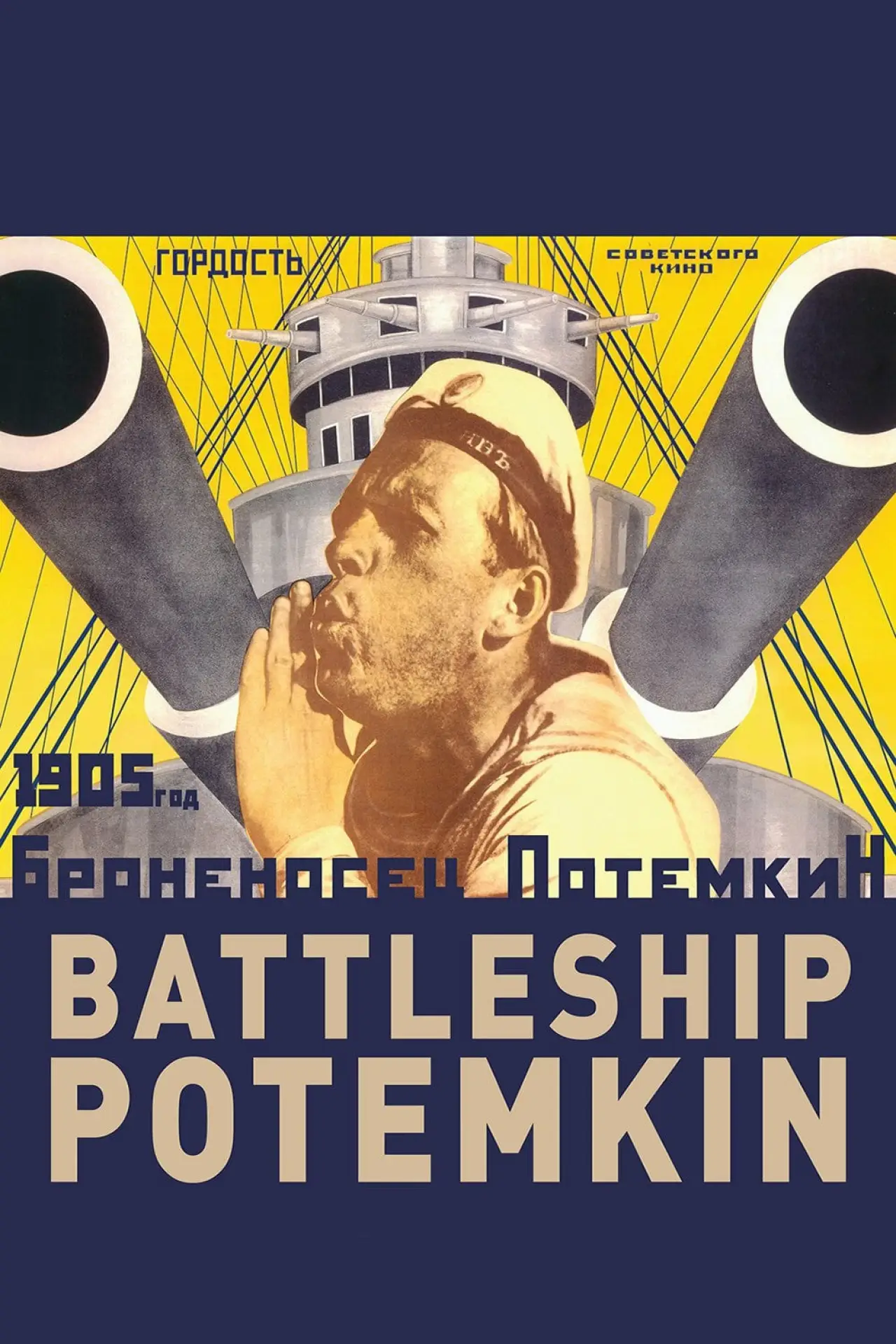
A dramatized account of a great Russian naval mutiny and a resultant public demonstration, showing support, which brought on a police massacre.
What's left behind the scenes
- By the time of filming, the battleship "Prince Potemkin-Tavrichesky" had been decommissioned, was being prepared for dismantling, and was in poor condition. Instead, the battleship "Twelve Apostles," which was located in the port of Odessa, was used in the film. By this time, it had been converted into a floating mine depot, which complicated filming. Scenes taking place in the interior were filmed on the cruiser "Comintern."
- The film was shot in Odessa, which at that time was one of the centers of film production, and where a suitable ship for filming was found.
- The film has been repeatedly cited and parodied in cinema, with the legendary scene of the massacre on the Potemkin Steps receiving the most attention (in the films "The Return of the Battleship", "Goodbye Lenin!", "Naked Gun 33 1/3", "Brazil", and the animated series "The Simpsons").
- According to Eisenstein himself, the idea to film the famous Odessa Steps came to him while he was sitting on those very steps, eating cherries, and the pits were bouncing down the stairs.
- In the ranking of the ten most significant films in world cinema, published every ten years by the British magazine Sight & Sound (since 1952) and based on the opinions of more than a hundred film critics and directors from around the world, "Battleship Potemkin" has been included every time, ranking from fourth to seventh place. Besides it, only one other film consistently made the list—Jean Renoir's "The Rules of the Game." It also took third place on Empire magazine's list of "The 100 Best Films of World Cinema," compiled in 2010.
- In 1925, after the film's negative was sold to Germany and remounted by director Piel Jutzi, "Battleship Potemkin" was released internationally in a version differing from the director's original intent: the shooting of the sailors was moved from the beginning to the end of the film. It was subsequently subjected to censorship in the USSR as well: some shots and intertitles were removed, and the words of Leon Trotsky in the prologue were replaced with a quote from Vladimir Lenin. In 2005, under the joint direction of the Deutsche Kinemathek Foundation, Gosfilmofond, and the Russian State Archive of Literature and Art, the director's version of the film was restored.
- Sergei Mikhailovich Eisenstein was put on a tight schedule: the film had to be completed by the end of the year, although the script was not approved until June 4th. Objectively assessing the situation, Sergei Eisenstein decided to abandon the original script and limit himself to just one of its episodes – the mutiny on the battleship 'Potemkin,' which occupied only a few pages (41 shots) in the extensive script by Agadzhanova. Sergei Eisenstein, together with Grigori Alexandrov, significantly reworked and expanded the script. Furthermore, episodes not included in either Agadzhanova's script or Eisenstein's own scenario outlines were added to the film during production, such as the storm scene with which the film begins. As a result, the film's content was very far from Agadzhanova’s original script.
- According to eyewitnesses, Meisel's music so impressed Eisenstein that he asked the composer to write music for his next film – "October."
- The red revolutionary flag was hand-colored onto the film.
- On one of the ships of the Black Sea Fleet squadron, a triple-turret main battery is visible. In 1905, Russian battleships with triple turrets were not yet in the design stage, and battleships were equipped with twin turrets.
- The original script was intended to cover a whole series of episodes related to the 1905 revolution: the Russo-Japanese War, the Armenian Massacre, revolutionary events in St. Petersburg, and fighting in Moscow. Filming was planned to take place in a number of cities throughout the USSR.
- The film was first dubbed in 1930, then restored and re-dubbed in 1950 (by composer Nikolai Kryukov), and finally, in 1965, the music for the film was written by Dmitri Shostakovich.
- The film received high praise from Joseph Goebbels, the Minister of Propaganda for the Third Reich. At a meeting with filmmakers on March 28, 1933, he said: 'This is a wonderful film. From a cinematic point of view, it is unsurpassed. Anyone who is not firm in their convictions might even become a Bolshevik after seeing it. This once again proves that a certain tendency can be successfully embedded in a masterpiece. Even the worst ideas can be propagated through artistic means.'
- In the scene of the shooting of the crowd, a woman with a child falls dead with her feet facing the soldiers, and a minute later, when they begin to descend, she is lying with her head facing them. Moreover, as they begin to descend, she manages to slightly move her legs apart.
- The film's premiere took place on December 21, 1925, at a solemn meeting dedicated to the anniversary of the 1905 revolution in the Bolshoi Theatre.
Similar movies
8.1/10

8.1/10

7.8/10

7.8/10
7.4/10

6.9/10

6.5/10

6.5/10
6/10

5/10


 Auditions in India
 Casting calls in USA
 Castingi w Polsce
 Кастинги в Україні
