Planet of the Apes







Short description
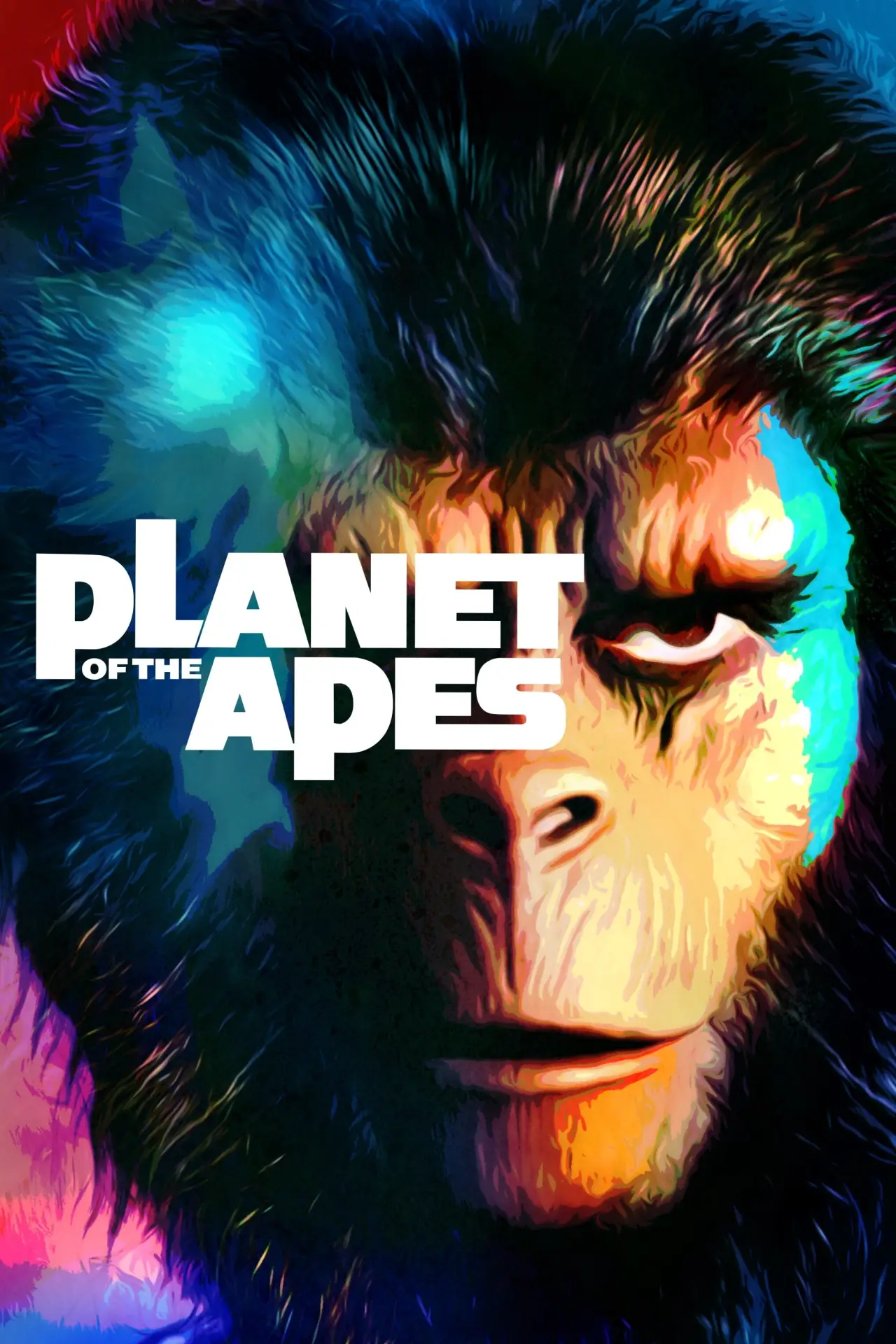
A United States spacecraft on a long-range mission crashes on an unfamiliar world. The survivors, led by astronaut George Taylor, find the planet inhabited by primitive humans who cannot speak and are hunted, enslaved and used in experiments by an intelligent society of apes. Taylor's capture forces him into that order, where a chimpanzee scientist and her colleagues take an interest in him, while the orangutan leader Dr. Zaius treats his presence as a threat. The story follows Taylor's struggle to survive and to be heard in a world where humans hold no standing, and it ends on a revelation rather than a resolution.
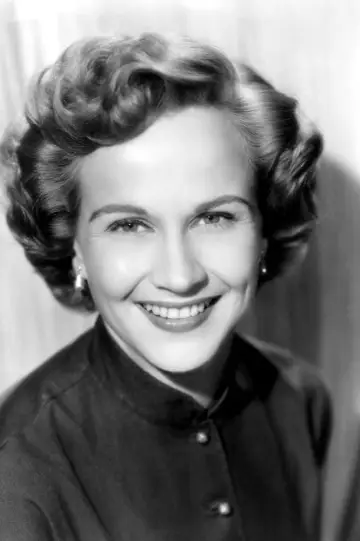
Franklin J. Schaffner directed the film, which sits early in his career, between The War Lord and Patton. Michael Wilson and Rod Serling wrote the screenplay, and Arthur P. Jacobs produced. Charlton Heston plays Taylor, with Roddy McDowall, Kim Hunter and Maurice Evans as the apes, among a credited cast of 44 and crew of 70. The production cost about 6 million dollars and returned roughly 33 million worldwide, a strong result for its time.
On TMDB the film holds 7.7 out of 10 from 4,115 votes, indicating a widely favorable audience response that has stayed steady across decades. Its premise and imagery carried the story into several further films and television, making this the starting point of a long-running series.
What's left behind the scenes
- Composer Jerry Goldsmith came up with an interesting way to create the necessary sounds—simply by rolling stainless steel balls. This made the sound feel organic.
- Jeff Burton, who played Dodge, fainted from the heat during the filming of the desert scenes.
- When Charlton Heston delivered his famous 'stinking paws' speech, he had a terrible flu, which is why his voice sounded raspy. To add to his suffering, in the scene where his character is chased by apes, he had to run half-naked through patches of poison ivy.
- According to the film's script, the wild women were to be topless, but Fox 'dressed' them to avoid issues with the rating.
- The movie was filmed in Arizona.
- The veteran actor Roddy McDowall advised his castmates to scratch themselves, blink, and perform other similar actions more often to add realism and prevent the audience from focusing on the makeup, which looked too much like masks.
- During one of the film's test screenings, a woman approached Charlton Heston and asked him a trivial question. Heston had no idea who she was until she told him her name was Kim Hunter (the actress who played Zira). Heston had never seen her without makeup before and, naturally, did not recognize her.
- Ingrid Bergman later deeply regretted turning down the role of Zira. The success of the franchise genuinely surprised her, and she once confessed to her daughter, Isabella Rossellini, that she would have loved to have starred in a movie with Charlton Heston.
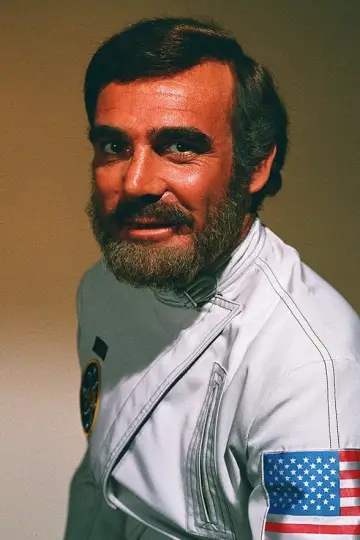
- While working on the actors' makeup, John Chambers applied procedures and techniques he had used during World War II to restore the appearance of disfigured soldiers and officers. Chambers spent a great deal of time at the Los Angeles Zoo studying the facial expressions of monkeys. The best Hollywood makeup artists of the era were involved in this film, meaning work on several other projects had to be put on hold. The remaining makeup was later used to transform Michael Conrad into an ape-like representative of an alien civilization in the series 'Lost in Space' (1965-1968).
- Upon becoming the film's director, Franklin J. Schaffner's first priority was to rethink the appearance of the ape civilization. According to the script Schaffner received, the world of the apes was highly developed, but Schaffner made it noticeably more primitive. (In addition to all other considerations, this significantly reduced budget expenditures.)
- Actors in ape costumes and makeup had to eat lunch in front of a mirror to keep an eye on themselves and avoid accidentally smudging their makeup. They had to drink through straws. Since many actors smoked, they were provided with cigarette holders. Kim Hunter grew so tired of these complications that she stopped eating lunch entirely while in makeup.
- Eighty makeup artists were employed in the making of the film.
- The design of the ape settlement reveals influences from the works of legendary architect Antoni Gaudí and the cave complex in Göreme in Turkish Cappadocia.
- The management of 20th Century Fox hesitated to greenlight the shoot for a long time, unsure of how the apes' faces would look on screen. Eventually, the studio allocated $5,000 to film a test scene featuring Charlton Heston, Edward G. Robinson, and James Broilin. The management liked the results, but they stalled on granting final permission for another six months. Approval was only given after the release of Richard Fleischer's 'Fantastic Voyage' (1966), whose box-office success confirmed the cinematic potential of the science fiction genre. Filming began without Robinson, whose poor health led him to declare that he could not endure filming in an ape costume and makeup.
- Director Franklin J. Schaffner intentionally used handheld camera work with unusual, skewed angles to emphasize that Charlton Heston's character was completely disoriented in a world entirely new to him.
- The actors' day began with the makeup process at 5 a.m. First, a special protective compound was applied to the eyebrows and sideburns. Then, an adhesive solution was applied to the upper inner part of the mask, and the mask was glued to the actor's face. After this, the ears were added, which noticeably affected the actors' hearing. The actors' teeth were painted black, and a chin piece was attached. Finally, four hairy patches were fixed to the face (carefully ensuring they blended into one) and a wig was put on. The entire procedure took 3 hours, and the actors had to remain in makeup and costume for up to 12 hours a day.
- The actors playing chimpanzees envied those playing other apes because the ears of gorillas and orangutans were hidden under the hair, meaning the actors in those roles didn't have to spend as much time in the makeup chair. Additionally, the orangutans had simple wigs that could be removed during breaks in the heat. Extras were given simple masks if they had no close-up shots scheduled for that day.
- In the eponymous novel (1963) by Pierre Boulle, which served as the literary basis for the screenplay, the ape civilization was technologically comparable to human civilization of the 1950s or 1960s—with cities, cars, television, etc., consisting of what remained of the humans who once inhabited the planet. Due to budget constraints, it was decided to make the ape civilization more primitive.
- The filmmakers were constantly looking for ways to save money, especially on the makeup process. One such method was the decision to bring actors to the set already in makeup. Since it was impossible to travel by car during filming—as people on the highway would be shocked to see a chimpanzee behind the wheel—helicopters were used to transport the actors in makeup to the filming location.
- The film's finale differs significantly from the novel's ending—in the original source, the protagonist returns to Earth only to discover that it, too, is under the control of apes. At the end of the film, however, upon seeing the remains of the Statue of Liberty, he realizes that the 'planet of the apes' is actually Earth (which suggests the possibility that human civilization was destroyed in a suicidal nuclear war, rather than as a result of an ape uprising, as stated in the film's sequels).
- The shot of the Statue of Liberty protruding from the sand on the shore was created using a technique known as 'matte painting.' This is a composite filming technology where a live-action portion of the frame is combined with a painting to create the illusion of an environment. The shot of the character played by Charlton Heston (from a top-down view) was filmed from scaffolding over 20 meters high, erected over a papier-mâché model of the Statue of Liberty.





 Auditions in India
 Casting calls in USA
 Castingi w Polsce
 Кастинги в Україні

