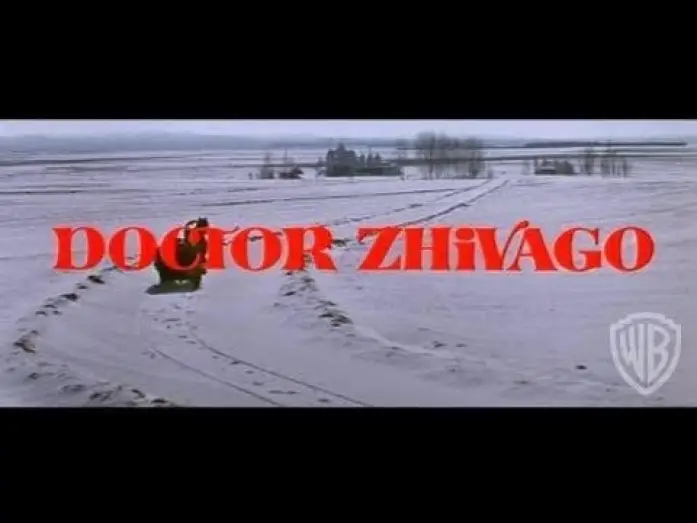
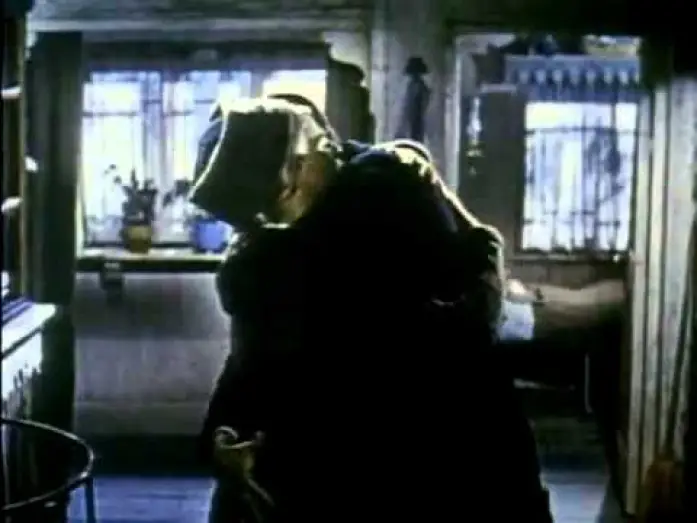
Doctor Zhivago - videos, teasers and stills from filming

All videos, teasers and footage from the filming of the film "Doctor Zhivago"
Doctor Zhivago (1965)
Timing: 3:20 (200 min)
Doctor Zhivago - TMDB rating
7.5/10
1103
Doctor Zhivago - Kinopoisk rating
7.129/10
7649
Doctor Zhivago - IMDB rating
7.9/10
86000

What's left behind the scenes

  • The film is based on Boris Pasternak's novel "Doctor Zhivago" (1955).
  • The film was shot in Spain, Canada, and Finland.
  • In 1963, producer Carlo Ponti acquired the film rights from the communist publisher Feltrinelli, who had secretly received them from Pasternak himself in 1956.
  • Director David Lean agreed to sign a contract for the film on the condition that part of his filming fee would be paid in advance, Robert Bolt would be the screenwriter, and the producer would not interfere with the working process.
  • Work on the screenplay began in the summer of 1963 in Venice, where Bolt resided and where Lin would come for consultations. The screenplay preparation was significantly delayed due to Bolt's divorce. The epic scope of the literary source, which needed to be condensed into a specific timeframe, also presented difficulties. Bolt even estimated that if the novel were filmed uncut, it would take approximately 50 hours of screen time. In November 1964, work on the screenplay continued in Madrid. The screenplay was fully completed in February 1965, when filming was already underway. The over 500-page novel was reduced to a 284-page screenplay.
  • From the very beginning, Ponti intended to cast his wife, Sophia Loren, in the lead role, but she did not pass the audition. The 30-year-old Loren appeared too sensual and mature a woman to portray the initially naive 17-year-old Lara in the early part of the film.
  • The studio considered various candidates for the role of Lara, including Yvette Mimieux and Jane Fonda.
  • Julie Christie received the lead role in the film after being noticed by Lin in "Billy Liar".
  • Terence Stamp was initially considered for the role of the revolutionary Pasha Antipov, but Lin gave it to Courtney.
  • David Lean first noticed the dancer Geraldine Chaplin on the cover of a fashion magazine, after which he invited her to play the role of Tonya Gromeko as her debut in English-language cinema. He even had to contact her parents, Charles Chaplin and Una Chaplin, to obtain their permission.
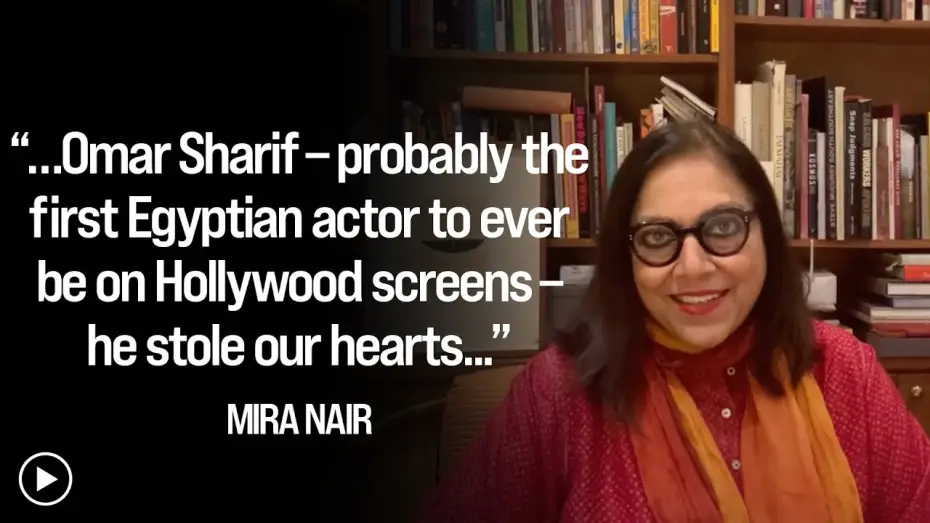
  • Peter O'Toole, Paul Newman, and Max von Sydow were all contenders for the leading male role. Ultimately, Omar Sharif received the role, a candidate suggested to the director by his girlfriend, Barbara Coull. Sharif, when contacted, initially found it difficult to believe the seriousness of the intentions. He, an Egyptian with dark skin, believed he did not fit the Russian type at all. However, Lean managed to convince him that transformation and makeup would do the trick, the main thing was to imagine himself as Russian. The actor later recalled how much effort the makeup artist had to put in during filming to give his face a more Slavic appearance, although his Eastern features gave Yuri Zhivago a unique flavor.
  • Carlo Ponti understood that the film was unlikely to be allowed to be shot in the Soviet Union, but he still wanted to film where the events of the novel took place. He decided to try through diplomatic channels and sent a request to the USSR, but the Soviet side refused such an opportunity.
  • Lean hoped to get Freddie Young on the team, but the cinematographer was already busy on the film 'Khartoum'. Instead, he had to hire Nicholas Roeg for the position.
  • One of the main problems during filming was the constant disputes between the director and the film's cinematographer, Nicholas Roeg. The director envisioned the film in dark and cold tones. Even the love scenes were supposed to be filmed without warmth, with a feeling of hopelessness. The cinematographer, who had been the director's assistant on a previous project, saw the film quite differently and much more optimistically. This ended in a disagreement. Lean waited for the contract on 'Khartoum' to expire and invited cinematographer Freddie Young, with whom he had worked for many years, to join the film.
  • Filming took place under challenging conditions. The total production time for the film exceeded 10 months, and some winter scenes had to be shot in the summer. The temperature reached 47 °C in the shade, and the trailers were not equipped with air conditioning. It was particularly unpleasant for the actors to wear fur clothing. Bolt later lamented that when he was writing the screenplay, he hadn't considered the time of year or location of the filming. Costume designer Phyllis Dalton had to closely monitor the actors to ensure they didn't 'forget' to wear warm clothes.
  • Around 7,000 daffodil bulbs were purchased and planted to depict a blooming field. This took place in January, but due to an abnormally warm winter, the flowers still sprouted quickly and began to bloom before filming was completed. Workers had to hastily dig them up and move them to a cooler location.
  • Location and studio filming was completed on October 7, 1965, and took 232 days. For a film lasting 197 minutes, this was an exceptionally long schedule by Hollywood standards. Lean had planned the premiere for March 1966, but MGM management strongly recommended finishing the editing by December 1965—the most commercially suitable time. The company president informed the crew that he had already booked cinemas and concert halls in New York and Los Angeles, as he was confident the film would win an Academy Award. After the box office failure of the expensive 'Mutiny on the Bounty,' MGM desperately needed a success. The director initially said this was unrealistic, but then, after thinking about it, he agreed. David Lean and editor Norman Savage were given every opportunity to work around the clock at MGM's California studio in Culver City. In 10 weeks of frantic rushing, 31 hours of footage was edited down to 197 minutes. Sound mixing was completed. On December 14th, eight days before the premiere, all musical tracks were recorded. Lean finalized the final edit in the last hours, and the film reel was delivered to New York the day before the premiere.
  • Both the book and the film were banned in the Soviet era. The book was published in the USSR in 1988 during Perestroika, and the film was first shown in Russian cinemas in 1994.
  • David Lean was deeply upset by the scathing criticism of the film, which continued even after its worldwide premiere. He believed that the film's proper perception was hindered by the rushed editing and a misunderstanding of his artistic intent. During a promotional tour for the film in the UK, Lean even engaged in an aggressive debate with one of the local film critics. After 'Doctor Zhivago,' Lean stepped away from professional activity for a long time and didn't direct another film until 1970.
  • Doctor Zhivago was the first color blockbuster since World War II to be set entirely in Russia and the USSR.
  • Following the film's release, women's rounded fur hats and men's papakhas in the UK are still referred to as the Zhivago style. Yves Saint Laurent and Dior fashion houses released winter collections in 1966 inspired by the film's mood and the characters' outfits. Beards and mustaches, worn by the characters, even became fashionable for men. In October 1966, Esquire magazine, impressed by the hype surrounding the film's release, wrote: 'This year, vodka will overtake gin in sales volume.'
  • The composer Lean was finally approved when filming was nearing completion, so Maurice Jarre had only about 6 weeks to compose the music.
  • The most difficult moment during filming occurred during the scene of Yuri's departure with his family. A camera was installed on a freight car where Omar Sharif was standing, filming events from Yuri's point of view. A peasant woman (Lili Murati) was supposed to catch up to the car, throw a child into it, and then try to jump onto the moving train. During the filming, Sharif caught the actress's hand, but could not hold her, and Lili fell down under the wheels. Filming was immediately stopped. Fortunately, the car did not run her over, but Lili broke her leg. The director ordered the actress to be taken to the hospital and then urgently dressed and made up a stunt double so that filming of the technically complex episode would not be delayed.
  • Julie Christie refused to film the seduction scene in a bright red dress, believing it didn't suit her. David Lean convinced the actress otherwise. The dress was a gift from the detestable Komarovsky, and her dissatisfaction on camera would look quite appropriate.
  • For the demonstration scene, the film's art consultant Andrew Mollo recommended using the Internationale as accompaniment. The consultant and director failed to consider that filming was taking place in Francoist Spain, where the communist party was banned. A police patrol, who watched in astonishment as thousands of extras marched with red flags to the Internationale, had to explain that they were filming a historical film.
  • The scene where Lara holds a candle to the frozen windowpane and thaws a circle had to be carefully prepared. Water ice was replaced with dry ice, which was melted by directing a stream of warm air onto the window from outside. Ice crystals were replaced with flakes of mica. Considerable ingenuity was required to depict the frozen lake crossed by the Red Cavalry. That episode was also filmed in summer. A vast, level area had to be concreted and covered with marble chips, which were further crushed with a roller. The director needed to achieve the effect of horses slipping on ice, a trick that Lin had observed from Sergei Eisenstein in the scene of the ice battle. Steel sheets were placed on the concrete in some areas and then covered with the chips.
  • When Yuri returns to Yuryatin, a sign reading “YURYATIN” hangs at the station.
  • The film is based on Boris Pasternak's novel "Doctor Zhivago" (1955).
  • Julie Christie received the lead role in the film after being noticed by Lean in "Billy Liar".
  • Peter O'Toole, Paul Newman, and Max von Sydow were contenders for the male lead. Ultimately, Omar Sharif received the role, whose candidacy was suggested to the director by his girlfriend, Barbara Cole. Sharif, when contacted, could hardly believe the seriousness of the intentions for a long time. He, an Egyptian with dark skin, believed that he did not fit the Russian type at all. However, Lean managed to convince him that transformation and makeup would do the trick, the main thing was to imagine himself as a Russian. The actor later recalled how much effort was required from the makeup artist during filming to give his face a more Slavic appearance, although his Eastern features added a peculiar flavor to Yuri Zhivago.
  • Lyn hoped to get Freddy Young on the team, but the cinematographer was already busy with the film "Khartoum." Instead, he had to hire Nicholas Roeg for the position.
  • One of the main problems during filming was the constant disagreements between the director and the film's cinematographer, Nicholas Roeg. The director envisioned the film in dark and cold tones. Even love scenes were to be filmed without warmth, with a feeling of hopelessness. The cinematographer, who had been the director's assistant on a previous project, saw the film as quite different and much more optimistic. This ended in a falling out. Lyn waited for the contract on "Khartoum" to end and invited cinematographer Freddy Young to the film, with whom he had worked for many years.
  • Filming took place under difficult conditions. The total production time for the film exceeded 10 months, and some winter scenes were sometimes shot in the summer. The temperature reached 47 °C in the shade, and the trailers were not equipped with air conditioning. It was particularly unpleasant for the actors to wear fur clothing. Bolt later complained that when he was writing the script, he hadn't thought about what time of year and where the filming would take place. Costume designer Phyllis Dalton had to closely monitor that the actors didn't "forget" to wear warm clothes.
  • Location and studio filming was completed on October 7, 1965, and took 232 days. For a film lasting 197 minutes, this was an exceptionally long schedule in Hollywood practice. Lyn planned the premiere for March 1966, but MGM management strongly recommended completing the editing by December 1965 – the most commercially suitable time. The company president informed the film crew that he had already booked cinemas and concert halls in New York and Los Angeles, as he was confident that the film would win an American Academy Award. After the box office failure of the expensive "Mutiny on the Bounty," MGM desperately needed a success. The director initially said this was unrealistic, but then, after thinking about it, he agreed. David Lyn and editor Norman Savage were given every opportunity to work around the clock at the MGM studio in Culver City, California. In 10 weeks of frantic rushing, 31 hours of footage was edited down to 197 minutes. Dubbing was completed. On December 14th, eight days before the premiere, all music tracks were recorded. Lyn completed the final editing in the last hours, and the reel of film was delivered to New York the day before the premiere.
  • David Lyn was deeply upset by the scathing criticism of the film, which continued even after its premiere around the world. He believed that the correct perception of the film was hindered by the hasty editing and a misunderstanding of the author's intent. During a promotional tour to promote the film in the UK, Lyn even engaged in an aggressive debate with one of the local film critics. After "Doctor Zhivago," Lyn stepped away from professional activity for a long time and didn't shoot his next film until 1970.
  • "Doctor Zhivago" was the first color blockbuster since World War II to be set entirely in Russia and the USSR.
  • When Yuri returns to Yuryatin, a sign reading “YURYATINЪ” hangs at the station.
Did you like the film?

© ACMODASI, 2010-2026

All rights reserved.
The materials (trademarks, videos, images and text) contained on this site are the property of their respective owners. It is forbidden to use any materials from this site without prior agreement with their owner.
When copying text and graphic materials (videos, images, text, screenshots of pages) from this site, an active link to the site www.acmodasi.in must necessarily accompany such material.
We are not responsible for any information posted on this site by third parties.