Prince of Persia: The Sands of Time









Short description
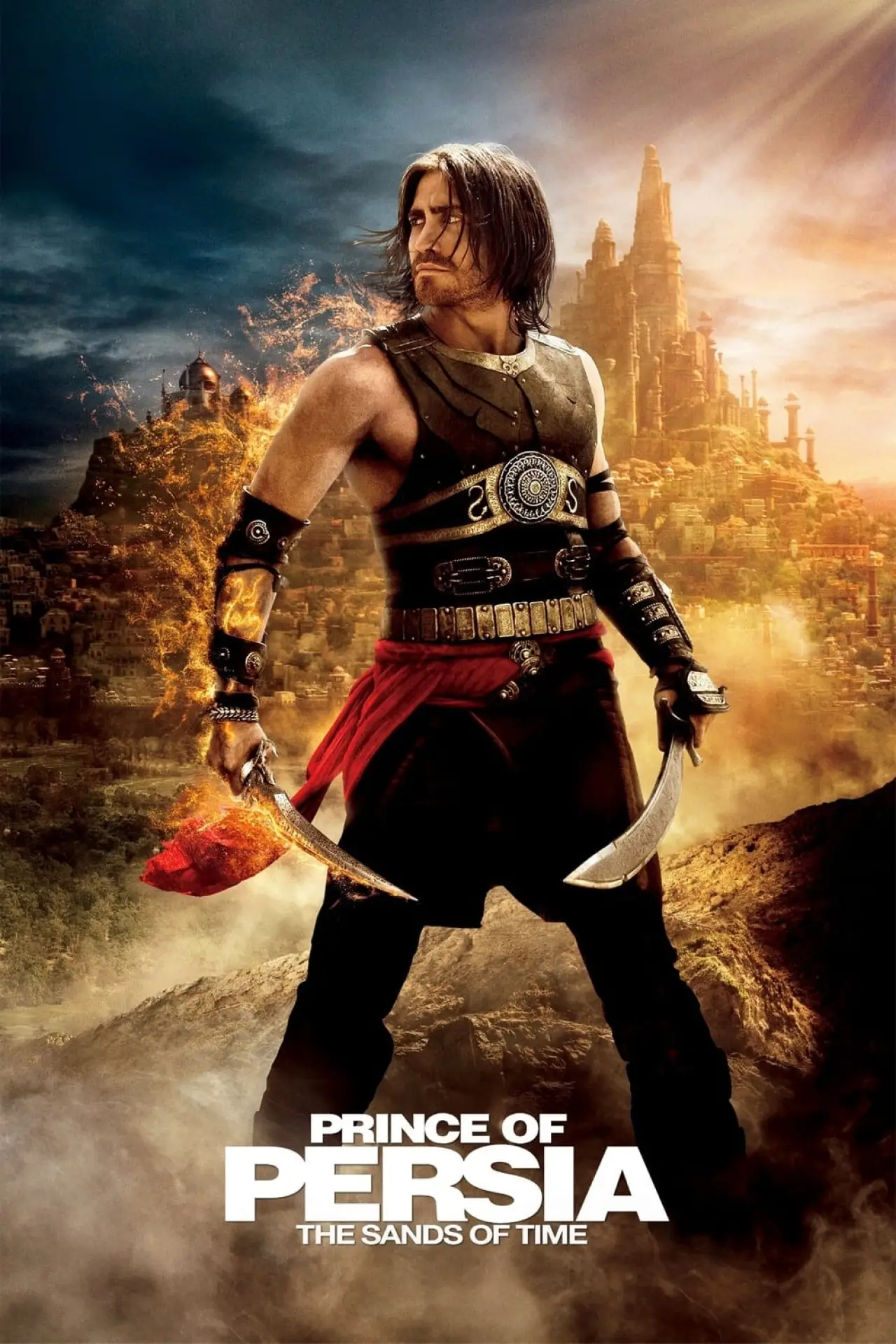
In ancient Persia, an orphaned street thief named Dastan is taken in by King Sharaman after the king witnesses his courage. Years later, Dastan fights alongside the king's sons, Tus and Garsiv, as a prince of Persia. When their uncle Nizam claims that the holy city of Alamut is supplying weapons to Persia's enemies, the princes launch an attack and capture the city. Dastan seizes a dagger from the battle, a weapon that holds the Sands of Time and can turn back time, giving its holder power over the world. Accused of a crime he did not commit, Dastan flees, joined reluctantly by the princess Tamina of Alamut, and the two must keep the dagger from those who would abuse it.
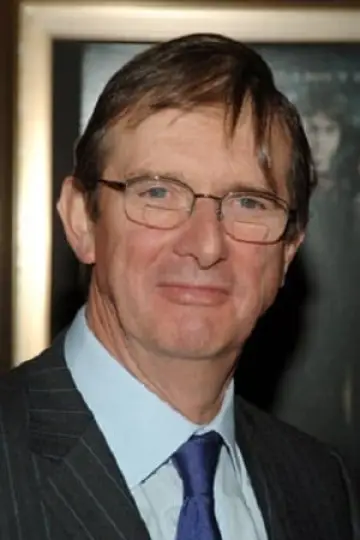
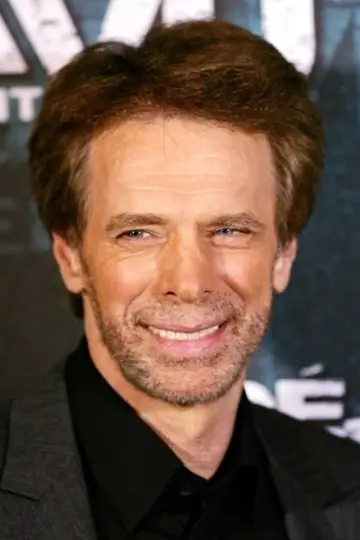
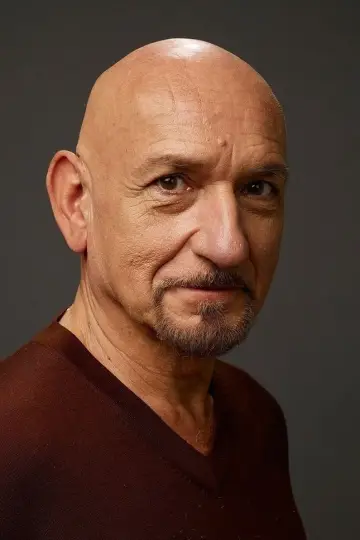
The film is a live-action adaptation of the video game series, directed by Mike Newell, the ninth of the eleven features listed in his filmography, following Harry Potter and the Goblet of Fire and Love in the Time of Cholera. Jake Gyllenhaal and Gemma Arterton lead a cast that includes Ben Kingsley, Alfred Molina, Steve Toussaint and Toby Kebbell. Jerry Bruckheimer produced for Walt Disney Pictures.
With a budget of 200 million dollars, the film returned 336 million dollars worldwide, a modest result against its cost. On IMDb it holds 6.5 out of 10 from roughly 317,000 votes, and on TMDB 6.3 out of 10 from over 7,000 votes. A critics' rating of 5.1 out of 10 from 227 reviews places it below both audience scores.
What's left behind the scenes
- The film is based on the computer game "Prince of Persia: The Sands of Time" (2003, Ubisoft).
- The temperature in Morocco rarely dropped below +35°C. A huge tent, the size of a football field, with air conditioning was erected on the grounds of Lycee Hassan II in Marrakech. Here, costume designers and makeup artists worked on the appearance of the extras. A separate tent had to be set up for washing and drying costumes. On the last day of filming in Marrakech, the temperature exceeded +50°C – they were shooting in the Merzouga sand dunes. According to an official statement by the Moroccan filming coordinator, Gregor Movo, during the filming of 'Prince of Persia,' filmmakers consumed 1,114,894 bottles of water.
- Dastan, the prince’s name in this film, means “Champion,” “Hero” (from Persian).
- Around 20 different models of the Dagger, which contained the Sands of Time, were created for filming. These ranged from a “hero” version forged from real metal to rubber props used for stunt scenes.
- Most often in the film, it was not the charming Gemma Arterton as Princess Tamina who had to change outfits, as viewers might assume. She was surpassed in the number of costume changes by Prince Dastan’s uncle, Nizam, played by Sir Ben Kingsley.
- The first poster for the film appeared in the movie "Confessions of a Shopaholic" produced by the same Jerry Bruckheimer.
- The city of Nasaf, where the film takes place, is now called Karshi. It is located in southern Uzbekistan.
- The film crew had to battle severe sandstorms several times.
- In addition to "Prince of Persia," representatives of Disney Studios had already filmed ostrich races, in 1960 – in the film "Swiss Family Robinson." The scene from "Prince of Persia: The Sands of Time" in which Sheikh Amar, played by Alfred Molina, kisses his favorite ostrich on the neck was a complete improvisation. "I was convinced that either the bird would peck out my eye, or we would get a very funny episode," the actor recalls.
- The series is based on the novel of the same name by Alexandre Dumas.
- Prop master Richard Hooper and his “forge” staff forged and assembled approximately 3500 weapons, including swords, scabbards, shields, spears, axes, arrows, bows, quivers, daggers, and other weaponry.
- The film crew in Morocco consisted of 1350 people, including the behind-the-scenes team and actors. More than half, 800 people, were locals. Taking into account the 500 people who worked on the film during the editing and post-production period, the total size of the film crew was 1850 people.
- The exterior of the city of Alamut was built around an ancient 700-year-old wall in the village of Tammaslot, 20 kilometers southwest of Marrakech. Production designer Wolf Kruger needed approximately 48 kilometers of pipes to erect scaffolding and 400 tons of plaster for the construction. 350 people were involved in the construction. The colorful frescoes and panels that decorated the set were painted over 7 weeks. A model of the Eastern Gates of Alamut was built under the direction of Wolf Kruger in Pavilion No. 7 at Pinewood Studios in London. The construction required 3000 wooden beams of 2.4x1x2 meters, 21 meters of boards 7.5x2.5 centimeters, and 40 tons of plaster for cladding. Work on the gates took about 14 weeks.
- The Nasaf market and city gates were built directly adjacent to the UNESCO-protected world architectural monument – the abandoned city of Ait Ben Haddou. Filmmakers avoided the original structures.
- Alfred Molina’s patchwork attire, as Sheikh Amar, was sewn from fragments of numerous covers with Indian designs. The effect of wear and tear, revealing the multi-layered material, was achieved by rubbing cheese shavings into the fabric. Other costumes were aged using a more barbaric method – they were processed in a concrete mixer filled with stones.
- In February 2008, Iranian star Golshifteh Farahani, along with Gemma Arterton, was invited to London for auditions for the role of Tamina, but was arrested at the airport by Iranian authorities due to her participation in Ridley Scott's film "Body of Lies" (2008). As a result, the actress was banned from leaving the country for six months.
- A local professional was hired to clear the filming location of snakes and scorpions. He was easily recognizable by his t-shirt with the amusing inscription: 'Snake Friend'.
- Frenchman David Belle, the inventor of this sport, served as a parkour consultant on set.
- Bollywood actor Hrithik Roshan turned down the lead role in the film, which later went to Jake Gyllenhaal.
- Over 7,000 costumes were sewn for the filming. Costume designer Penny Rose, in doing so, broke her own record – this number even exceeded the amount of costumes she worked on for the "Pirates of the Caribbean" films.
- Ray-Phillip Santos was replaced by actor Toby Kebbell due to a motorcycle accident during location shooting.









 Auditions in India
 Casting calls in USA
 Castingi w Polsce
 Кастинги в Україні

