The Manchurian Candidate




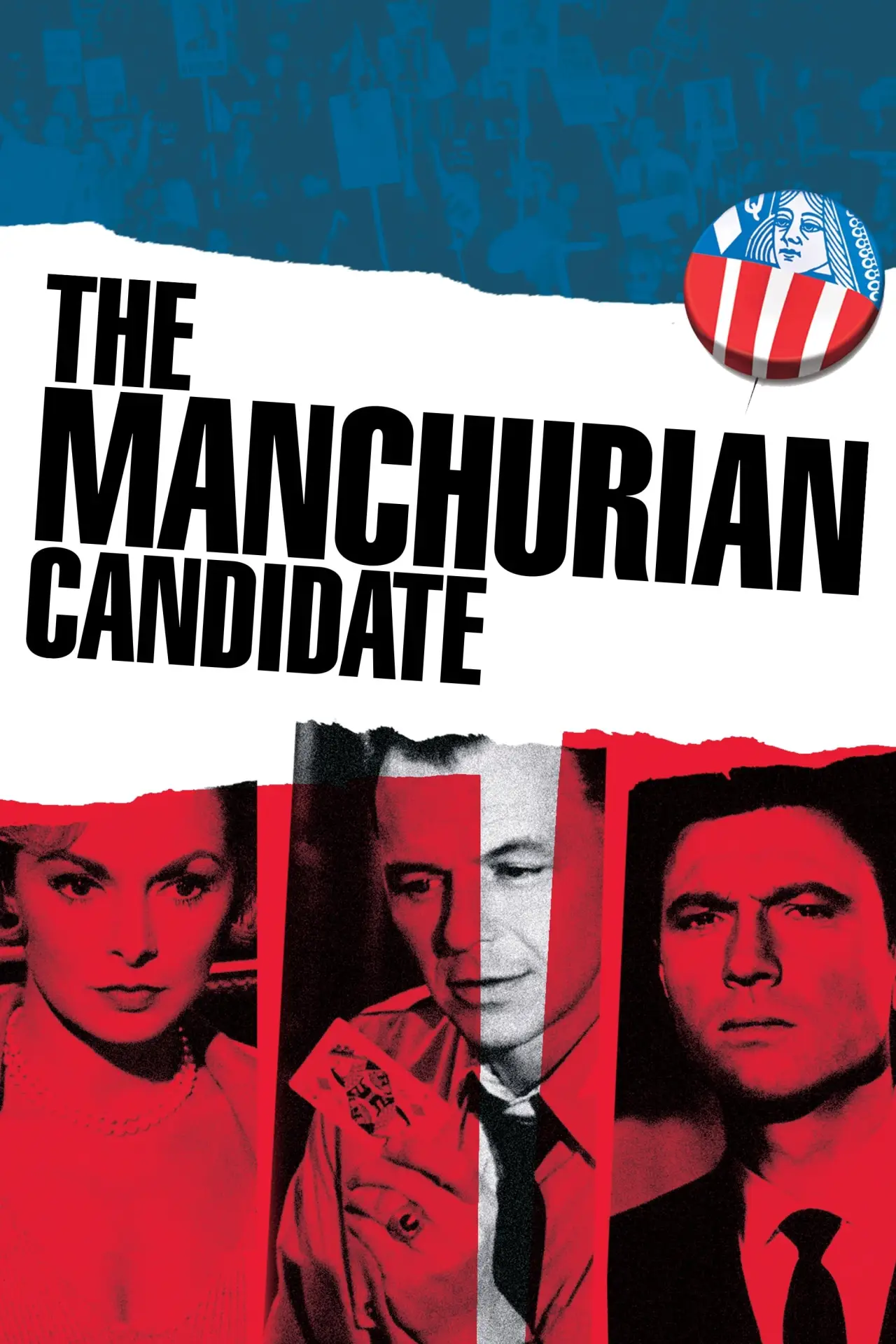
Short description
A platoon of American soldiers is captured during the Korean War and subjected to brainwashing by their communist captors. After the war, Sergeant Raymond Shaw comes home celebrated as a hero for bringing his men out alive, though he has no clear memory of what happened. Captain Bennett Marco, who served with him, is troubled by recurring nightmares and begins to suspect that something was done to the platoon, setting him on a search for the truth behind Shaw's supposed heroism and the forces controlling him.
John Frankenheimer directed this adaptation of Richard Condon's novel, working from a screenplay by George Axelrod; both men also produced. Frankenheimer had already made a number of features before this one, and he followed it the same year with Birdman of Alcatraz. Frank Sinatra plays Marco, Laurence Harvey plays Raymond Shaw, and Angela Lansbury appears as Mrs. Iselin, with Janet Leigh, James Gregory and Henry Silva among the credited cast of thirty-two. Filmed in black and white on a budget of about two million dollars, it took roughly three million at the worldwide box office.
Critics rated the film 9.1 out of 10 across sixty-eight reviews, while audiences give it 7.9 on IMDb from around eighty-four thousand votes and 7.5 on TMDB from a much smaller sample of voters. The gap suggests the film has long been held in higher regard by professional critics than by casual viewers.
What's left behind the scenes
- According to his own claims, Frank Sinatra performed any scene best on the very first take. The film's screenwriter, director, and producer John Frankenheimer (1930-2002) also preferred using the first take; consequently, nearly all of Sinatra's key scenes are first takes, except for a few where the first take was ruined by purely technical issues.
- While filming a fight scene with the character played by Henry Silva, Frank Sinatra (1915-1998) broke the pinky finger of his right hand. He was unable to treat the injury properly due to the filming schedule, causing the fracture to heal incorrectly, which resulted in discomfort for the actor for the rest of his life.
- Joe Adams (1922-2018), who played the psychiatrist, was the first African American actor to appear in a role where the character's race was not specifically mentioned in the script.
- When they were preparing to film the movie based on the novel of the same name (1959), Arthur Krim, then president of United Artists and an influential figure in the Democratic Party of the United States, was very concerned about the sensitive nature of the plot. Frank Sinatra's friend, President J.F. Kennedy (1917-1963), specifically called Krim to assure him that there would be no objections.
- The murder scene was filmed for 4 days at Madison Square Garden in New York and at a sports facility in Los Angeles, and then it was assembled.
- Normally, a shooting day begins before dawn, but the shooting day for this film started at 11 a.m. at the request of Frank Sinatra, who didn't go to bed until 5 a.m.
- The brainwashing scene was filmed entirely three times on three sets constructed in such a way that the camera could make a full rotation around its axis on each of them. The footage from all three cameras was then edited together.
- The scene in which Laurence Harvey (1928-1973)'s character jumps into the lake in Central Park was filmed on February 12th, the coldest day in the last 30 years. Before filming, the ice on the lake had to be broken with a bulldozer rented specifically for that purpose.
- The film's plot was considered so politically sensitive that it was censored and outright banned in the countries of the former Eastern Bloc, namely Poland, Czechoslovakia, Hungary, Romania, and Bulgaria, as well as in neutral Finland and Sweden. The film was only released in cinemas in these countries after the collapse of the Soviet Union, in 1993.
Similar movies


 Auditions in India
 Casting calls in USA
 Castingi w Polsce
 Кастинги в Україні
