Seven Days in May




Short description
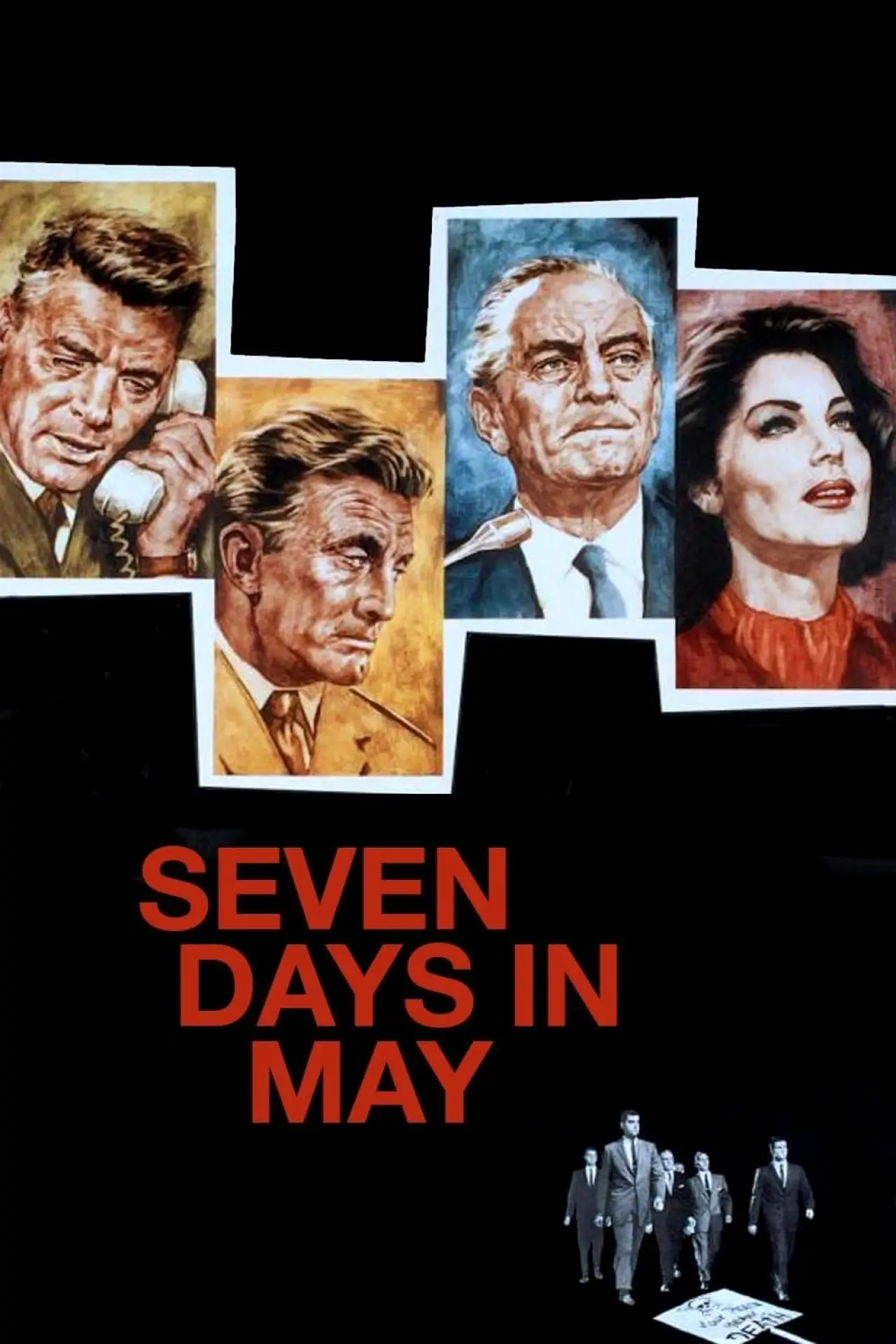
Seven Days in May is a Cold War political thriller about an attempted military takeover in the United States. A Marine Corps colonel discovers that senior officers, unhappy with the president's push for a nuclear disarmament treaty with the Soviet Union, are plotting to remove him from office. The colonel takes his warning to the president, but hard evidence is scarce and time is short: the coup is only days away. The film follows the effort to prove the conspiracy and stop it before it succeeds.
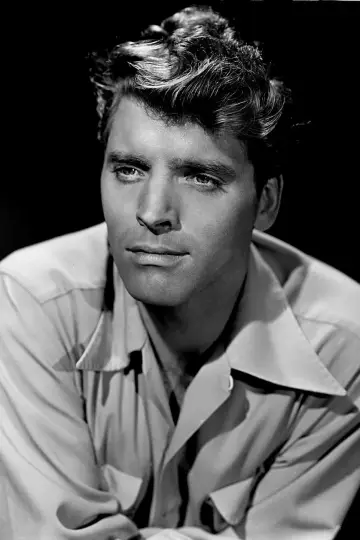
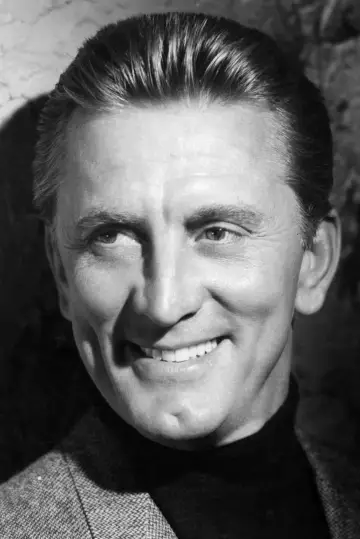
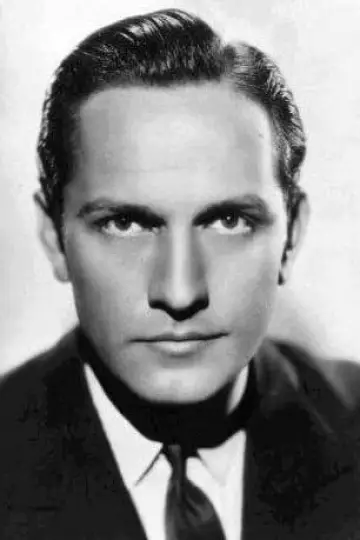
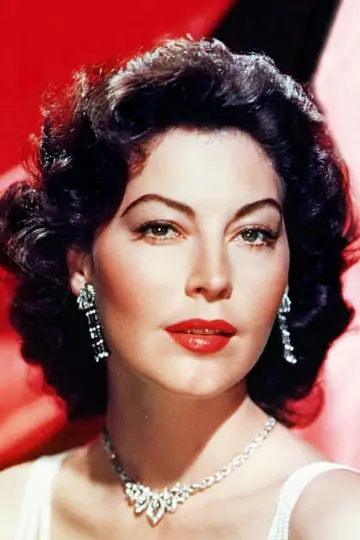
John Frankenheimer directed, working from a screenplay by Rod Serling, with Edward Lewis producing. It was Frankenheimer's fourth film as director, arriving between The Train and Seconds. The cast is led by Burt Lancaster as General James Mattoon Scott and Kirk Douglas as Colonel Martin "Jiggs" Casey, alongside Fredric March as President Jordan Lyman, Ava Gardner as Eleanor Holbrook, Edmond O'Brien as Senator Raymond Clark and Martin Balsam as Paul Girard. Sixty-eight credited cast members and sixty-three credited crew members worked on the production.
Released in February 1964 and running 118 minutes, the film drew a critics' rating of 7.9 out of 10 from 24 reviews, while audiences on TMDB rate it 7.4 out of 10 from 236 votes, a close alignment between the two groups.
What's left behind the scenes
- Based on the novel of the same name by Fletcher Knebel and Charles W. Bailey II.
- According to Frankenheimer himself, 'Seven Days in May' is his best film of his career.
- After reading the novel, Frankenheimer realized this was his subject. “This was a film that you shouldn’t have to understand the whole American political system to enjoy,” he said.
- Actor Kirk Douglas, who played the lead role of Colonel Casey, launched the production of the film. Douglas owned the film company Joel Productions, which invested half the cost of acquiring the rights to adapt the book, while director Frankenheimer added the other half.
- Douglas was initially considered for the role of General Scott, but then Frankenheimer realized that in that case, there would simply be no one to play Colonel Casey.
- Fredric March was approved for the role of President Lyman without any auditions, as the director had envisioned him in this role even before the script was written. There were practically no questions regarding Edmond O'Brien, except for his age – Frankenheimer wasn't sure if the 50-year-old actor could handle the role of an elderly, Southern, alcoholic senator, but all doubts vanished after auditions with makeup. Frankenheimer enjoyed working with March the most.
- It took almost three months to make the film, of which a month and a half was spent shooting on sets and almost another month on location. Frankenheimer filmed in Washington and Arizona for over a week and used numerous locations in California.
- Even before starting filming, Frankenheimer knew that the film should not exceed two hours, as the entire story shouldn't be that long. The final version of the film cost $25,000 less than the allocated budget.
- "Seven Days in May" received approval from the Soviet leadership, and the country's film press was allowed to praise the film. However, they didn't dare to buy it for distribution in the USSR, as Nikita Khrushchev had recently been removed from his leadership position as a result of a conspiracy similar to the one shown in the film.
- Initially, the film was scheduled for release in December 1963, but due to the assassination of US President John F. Kennedy (1917-1963), Burt Lancaster (1913-1994) insisted that the premiere be postponed to a later date. The same happened with the release of Stanley Kubrick's film "Dr. Strangelove or: How I Learned to Stop Worrying and Love the Bomb," which was delayed until 1964.
- Due to the military coup on April 1, 1964, in Brazil, the film was never released in that country. The coup participants banned it, believing it drew too many parallels with their own actions.
- The administration in the White House was always ready to assist the filmmakers. President's Press Secretary Pierre Salinger (1925-2004) arranged for the film crew to have access to John F. Kennedy's office and other rooms so they could build authentic sets.
- The Pentagon does not allow filming near the entrance to its buildings, but director John Frankenheimer (1930-2002) wanted to film Kirk Douglas entering them. The camera and equipment were hidden in a van that was driven up to the steps at the Pentagon entrance, after which Douglas, dressed as a Marine Corps Colonel, walked up the steps. Officers and guards descending the stairs saluted him at the door, unaware that he was an actor.
Similar movies




 Auditions in India
 Casting calls in USA
 Castingi w Polsce
 Кастинги в Україні
